Journalist-turned-mathematician Alex Bellos on puzzle writing, the Abel Prize, and why reporting habits make him a useful guide to hard ideas.
Alex Bellos won this year's Christopher Zeeman medal for communicating mathematics, but talk to him for ten minutes and the reporter comes through. He goes to the primary sources, calls the people who study a subject, and then works out how to turn dense material into something a reader will actually finish.
He didn't start out in maths communication. He studied maths and philosophy at Oxford and joined the university newspaper, which set him on a journalism path. He later became the Guardian's foreign correspondent in Rio de Janeiro, covering all of South America. After five years he moved back to the UK without a job waiting for him. A run of entrepreneurial ideas went nowhere, and that failure is what pushed him toward writing about mathematics.
A homework sheet sparks a book
The push came through his agent. Her friend, an editor at a well-known imprint, had dinner with another parent whose child had just started primary school. That parent had looked at the maths homework and felt lost. It was full of unfamiliar terms like "chunking," and she said she simply didn't understand it. The editor responded with a challenge: if someone could write a book for parents like her, explaining the new maths, she'd commission it on the spot.
Alex started by asking primary school teachers what all the fuss was about. The answer surprised him. The new methods weren't more complicated than the old ones. The difference was mostly vocabulary. "I thought, oh God, I don't want to write a book about that. That sounds really boring."
Here's the thing about pitching a book, as Alex sees it: an editor needs to hear why this book, why now, and why this author. Plenty of popular maths books had left him cold, and that gave him an angle. "I should be writing about maths … I can bring something new, which is the fact that I'm a journalist."
His first book, Futebol: The Brazilian way of life, had been a foreign correspondent's book, and he saw the same structure would work here. "I'm living in this foreign culture, I speak the language and I'm going to go explore the culture for you and then translate it into fun stories which you can read by the fire back in England." Maths, in his telling, became another foreign country. "All of a sudden, I had why this book, I had why now, and I had why me." The material overlaps with plenty of other titles, he admits, but the approach is different. His goal is simple: "I want to persuade someone who doesn't like maths that maths is interesting."
Puzzles and the cost of getting it wrong
Alex has written several puzzle books, and for the past 11 years he has run the Guardian's puzzle column. His route into puzzle writing began with a blog post about a puzzle known as Cheryl's birthday. The wording was loose enough that two answers were valid, depending on how you read the question. The result was a fierce argument, with readers insisting their answer was the only correct one. The post went viral and became the number one story on the Guardian website.
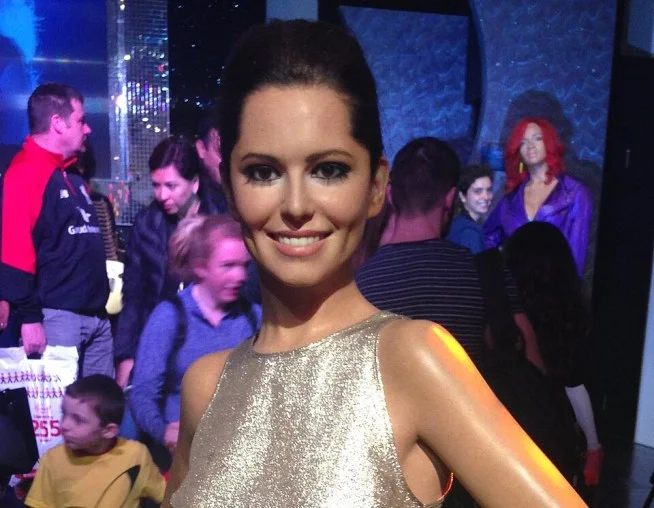
Cheryl, seen here in wax, has her birthday on 30 June. Image: Luke Rauscher, CC BY 2.0.
That controversy helped him win the column, even though he didn't think of himself as a puzzle person at the time. He admits he knew little about the recreational maths puzzle world. He caught up the way he'd approach any beat: read everything available, talk to specialists, then synthesise.
Very few of his puzzles are originals. Nearly all are rewrites, and he pitches them at a smart 14-year-old. Such a reader might not solve the puzzle, but should be able to follow the question and the explanation. He spends more effort on the explanation than on the puzzle itself. Clarity matters more than cleverness.
Puzzle writing also has a rougher side. When readers get stuck or feel misled, they get angry, and Alex reads every comment. When someone flags a problem, he edits and corrects the puzzle and checks that nothing in the wording gives away the answer. Careful wording is the whole job, as the Cheryl's birthday episode showed.
Cheryl's birthday puzzle
Albert and Bernard have just become friends with Cheryl and want to know her birthday. Cheryl gives them a list of 10 possible dates: 15 May, 16 May, 19 May, 17 June, 18 June, 14 July, 16 July, 14 August, 15 August and 17 August. She then tells Albert the month and Bernard the day, separately.
Albert: I don't know when Cheryl's birthday is, but I know that Bernard doesn't know either.
Bernard: At first I didn't know when Cheryl's birthday is, but I know now.
Albert: Then I also know when Cheryl's birthday is.
So when is Cheryl's birthday?
Reading the Abel Prize citations
The Abel Prize is awarded annually by the King of Norway for outstanding scientific work in mathematics. From 2015 to 2023, Alex wrote the publicity material for it. The routine was tight. "They'd call me up and say, this person's won it. And then I'd have six weeks to research what they'd done without them finding out."
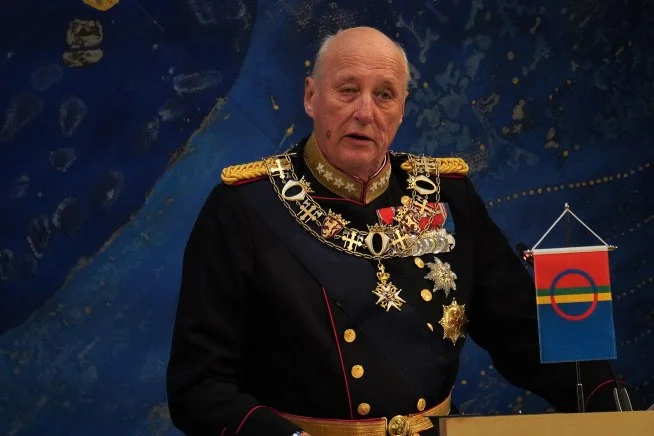
King Harald V of Norway, who presents the Abel Prize. Image: Vaino Rensberg/Sametinget, CC BY 2.0
The job covered the press release and short videos about each winner. Usually Alex started out not understanding the work he was describing. Maths rewards patience, and he found that understanding often arrived only after he'd spent time with the material.
Take the 2021 winners, Avi Wigderson and László Lovász, recognised for foundational work in theoretical computer science and discrete mathematics. Parts of the citation clicked immediately. "One of the things they won for was for coming up with a theory about how to get out of a maze without using a coin. So even though I might not understand how they did it, I can understand what a coin is. I got really interested and I had to find out more."
That episode also annoyed him. "At the time, there was amazingly interesting stuff going on in theoretical computer science, but I was never made aware of it even though it was incredibly close to what I was writing my dissertation on." His undergraduate dissertation covered first-order logic, specifically the Löwenheim–Skolem theorem. His regret is pointed: "I wish my tutors would have told me that, by the way, Alan Turing was also thinking about the exact same things like two years after the exact period that you're studying, and this caused him to invent the theory of computation, the birth of theoretical computer science. But no one made that link and it was only me five years ago when I was forced to discover it."
A book about randomness
That late discovery led to a new project. "Computation is the greatest, or the most impactful, invention of the last hundred years," Alex argues. Given that, he expected a rich body of popular writing. He found very little. "When you look at all the major popularisation pieces of work, there's almost nothing there. My book introduces concepts and notions from theoretical computer science that aren't in any major popular book."
The book is called Random and will be published in 2027. It follows how computer scientists came to embrace randomness, learned to control it, and found many fascinating applications for it. Given the subject, it's a fair bet that the book will test whether his reporter's method can handle ideas that feel more abstract than a football culture or a puzzle column.
A lonely job, and a welcome recognition
Writing is a solitary trade for Alex. Most days are spent at his desk, broken up by interviews and school visits. "I feel I don't really mix with many other people in the maths communication world," he says. That isolation makes recognition from peers matter more.
He received an email with a warm citation that began "Congratulations, you've won it with your acceptance." He describes the reaction as feeling seen, delighted and thrilled. In 2026, the LMS awarded him the Christopher Zeeman medal for communication of mathematics. The society says his work shows that engagement with maths can be accessible, entertaining and intellectually rewarding for everyone.
Asked what the award meant, Alex put it in terms of his peers: "To have the community say, yes, this person has communicated to the extent that we feel we can put him on the same award that all these other brilliant people have won, it felt amazing."
The useful takeaway from his career is that a background in reporting, with its habits of asking dumb questions, checking sources and writing for the reader, works well in technical territory. The next test is Random in 2027, when readers will see whether that approach can carry a book about one of the most significant inventions of the last century.

Discussion
Sign in to join the discussion.