As measles spreads, the architects of focused protection face calls to offer concrete ways to protect people at greatest risk.
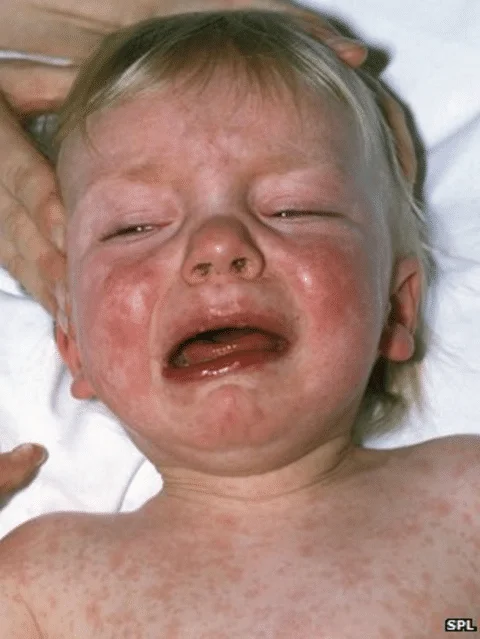
Focused protection faces a test in the measles outbreak
Three people have died of measles this week: a baby in New York, a 21-year-old woman in Pennsylvania, and another infant in Wisconsin. Those deaths are only part of the harm measles can cause; other serious outcomes are possible, too. Each case puts a practical question in front of public health leaders: how do they reduce exposure and protect people who face greater risks as the outbreak grows? That work calls for more than statements about individual responsibility. It requires a clear account of who needs help, what help is feasible, and how it will reach them.
That question lands awkwardly for Drs. Jay Bhattacharya and Martin Kulldorff. While measles was claiming lives, the two were appearing at a lecture, revisiting the ideas that made them prominent during COVID. Their signature proposal, the Great Barrington Declaration (GBD), called for “focused protection” of people at greatest risk. The argument was that society could continue more normal activity while directing stronger safeguards toward those most vulnerable to severe disease. That distinction sounds straightforward in principle; in practice, it depends on identifying risks and delivering protection reliably. If the proposal was workable then, measles is a chance to show what it means in practice now.
Put the proposal to work
The GBD’s FAQ offered a concrete example: “During high transmission times, older people should be offered home delivery of groceries and other essentials.” Bhattacharya and Kulldorff should organize comparable support in communities where measles is spreading, alongside other measures they believe can protect vulnerable people. The example matters because it turns a broad principle into a service someone could actually receive. It also raises the questions that any such plan has to answer: who would arrange deliveries, how would people learn they could get help, and what other needs would make it possible to reduce exposure? The FAQ doesn’t settle those details, but advocates of focused protection should be able to explain how they’d approach them.
There’s a real test here. In 2021, Bhattacharya criticized public health officials for giving up on focused protection, arguing that they had “all kinds of creative ideas” for helping people avoid disease. In one interview, he suggested that older people could receive free DoorDash, with the details worked out locally. He and Kulldorff also promoted their ideas for protecting vulnerable people and set out the approach in the GBD FAQ. The proposal put the burden on officials to move past general appeals and find workable ways to help people at risk. That standard now applies to its proponents, too.
Measles isn’t COVID, and the same support won’t necessarily fit both diseases or every community. A proposal made for one outbreak can’t simply be copied into another without considering how transmission and individual risk differ. But that doesn’t make the comparison pointless. It makes the need for specifics sharper: what protection is being proposed, who would provide it, and how would its limits be explained? (And this is the part most people overlook.) Focused protection is a claim about implementation as much as it is a claim about priorities. Good intentions don’t tell the public whether a plan can be carried out.
Now they hold far more influence in public health than they did when they issued that challenge. If you're working in this field, the standard they set for their predecessors should apply to them, too: offer specific, practical ways to protect people at risk. Whether the same measures fit measles is a fair question; the declaration alone doesn’t answer it. But that’s precisely why concrete proposals matter. People can assess a proposed intervention, ask who it reaches, and judge whether it addresses the risks being discussed. They can’t do much with a slogan whose practical meaning is left open.
What the outbreak tests
So far, Bhattacharya has said he has done his best. If the architects of focused protection can’t describe what it should look like during a measles outbreak, their earlier confidence deserves scrutiny. The consequences of failing to protect people are measured in illness and death, not in arguments about who was right six years ago. That’s why the present test isn’t just rhetorical: it asks whether the people who called for creative protections can make their own proposal legible and useful under pressure. The numbers here are underwhelming as a measure of the outbreak’s full human cost, because each death represents an outcome that a discussion of policy can otherwise flatten into a talking point.
This is more significant than it looks. Public health arguments often turn on broad principles, but people facing disease need guidance that translates those principles into action. A credible account of focused protection would explain what support is available, who it is meant to reach, and how it can be adapted when circumstances differ. It should also acknowledge what the approach can’t promise. That kind of detail would let others evaluate the idea on its merits instead of treating it as a badge of past disagreement.
For now, the central question remains open: what would focused protection mean in the communities affected by measles? Bhattacharya and Kulldorff have argued that officials should have been more imaginative about protecting vulnerable people. Their current influence gives that argument a practical consequence. They can show what they mean, in terms the public can examine. Or they can leave the proposal at the level of an old challenge. A test, then, of follow-through.
About the author
Jonathan Howard, a neurologist and psychiatrist, has followed vaccine debates since before COVID-19. His book, We Want Them Infected: How the failed quest for herd immunity led doctors to embrace the anti-vaccine movement and blinded Americans to the threat of COVID, examines how those debates shaped public understanding of the pandemic. That background informs his focus here on the gap between public claims about protecting vulnerable people and the practical steps those claims require. Read his other posts.
The article is filed under Science and Medicine, a category that places the argument among broader questions about evidence, health policy, and public responsibility.


Discussion
Sign in to join the discussion.