Visual artist Azadeh Akhlaghi's new exhibit captures pivotal moments in Iranian history, highlighting the complex truth behind historical narratives.
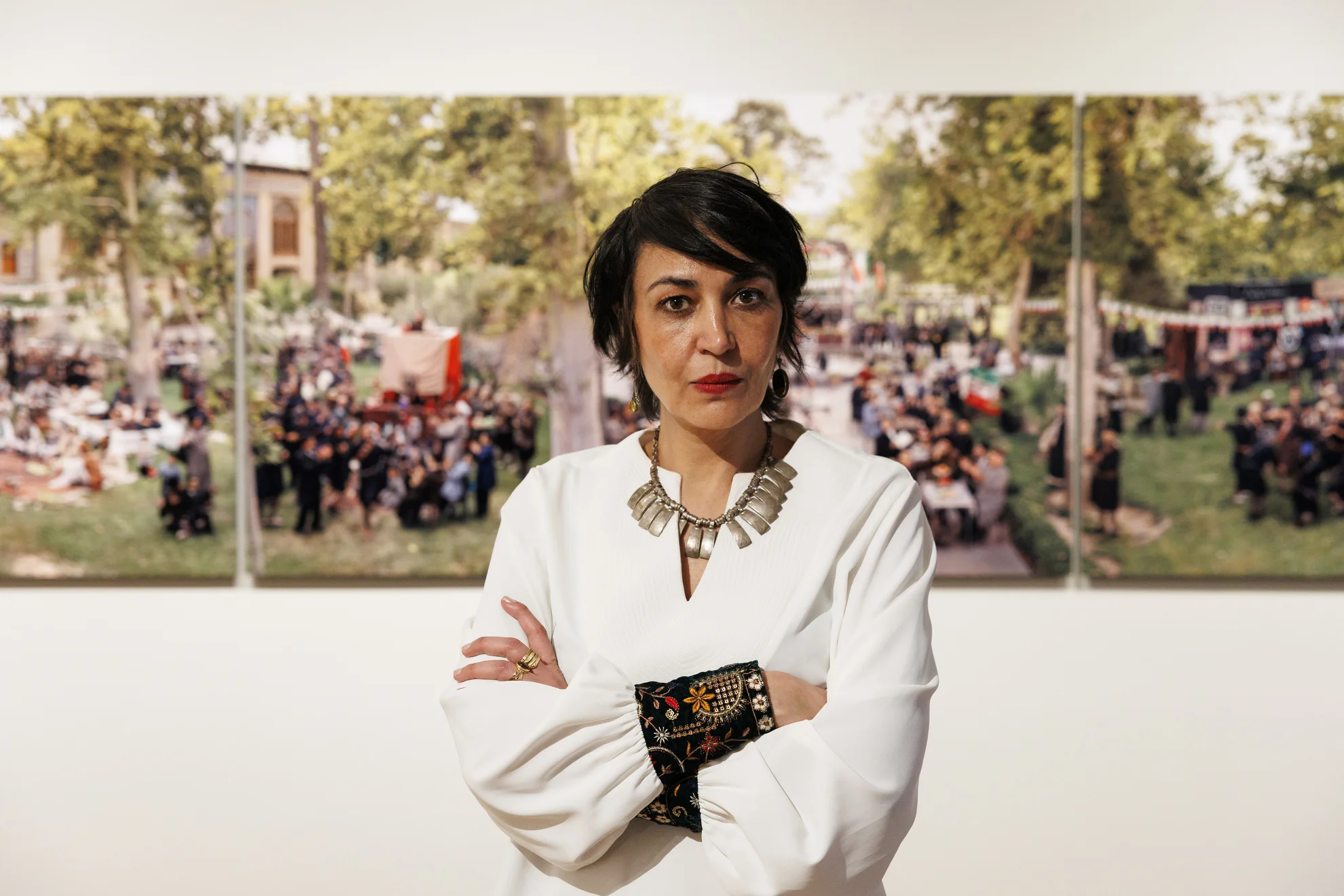
Visual artist Azadeh Akhlaghi has taken a unique approach to storytelling through her latest exhibit, “From Iran: A Visual Testimony,” now on display at the Peabody Museum of Archaeology & Ethnology. The exhibit comprises 11 large-scale staged photographs that portray significant events in Iran's 20th-century history, spanning from the 1908 Constitutional Revolution to the 1979 Islamic Revolution.
Akhlaghi embarked on this project with the intent to document pivotal historical moments with as much accuracy as possible through extensive research. However, the journey revealed complexities she didn't anticipate. “I encountered numerous contradictions in the records,” she noted. “People often censor themselves in interviews, and many official documents remain inaccessible even decades later.”
Reconstructing Historical Moments
Each piece in the exhibit is meticulously crafted, drawing not only from historical texts and documents but also from the stories of individuals who experienced these events firsthand. The largest image measures an impressive 3 feet by 15 feet, emphasizing the importance of scale in conveying the weight of history.
Akhlaghi's previous body of work, “By an Eyewitness,” served as a precursor to this project. Originating from the tumult around the Green Movement in 2009, this series reconstructed moments surrounding the deaths of Iranian freedom fighters and journalists. The loss of life in these historical narratives haunted her, especially when depicted without a camera to document the events as they unfolded. This motivation set the stage for her current exploration of historical turning points in Iranian society.
Highlighting Underrepresented Narratives
In detailing key moments, Akhlaghi aims to illuminate the stories that have been overshadowed within history, focusing particularly on the cyclical nature of oppression and resistance. “I wanted to delve into the repetitive themes of military coups and national resistance,” she explained. Her work emphasizes not just those who made history but also those who are often relegated to footnotes.
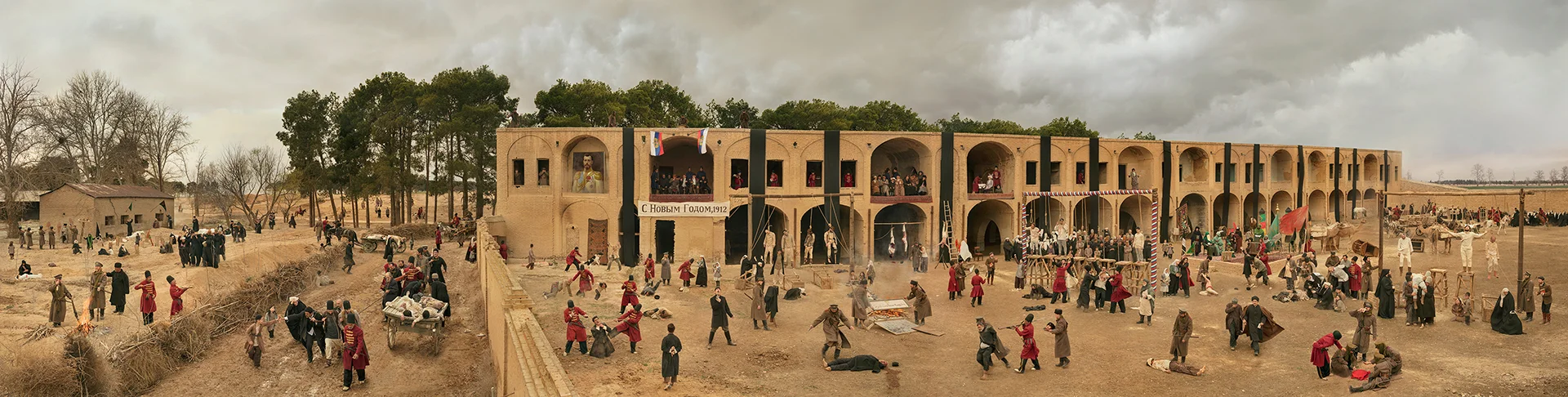
“The Mother of Tabriz” reflects on Russian troops’ invasion and occupation from 1911 to 1917.
© Azadeh Akhlaghi
Women’s Movements and Resistance
Akhlaghi's portrayal of women in her piece titled “The First Iranian Women’s Movement” draws inspiration from historical accounts that capture the strength and bravery of women activists. “In the 1910s, the women's movement gained significant momentum, reflecting similar movements in the U.S. and Britain,” she stated. The image features 300 armed women storming Parliament, a powerful moment in the nation's history that she strives to recreate.
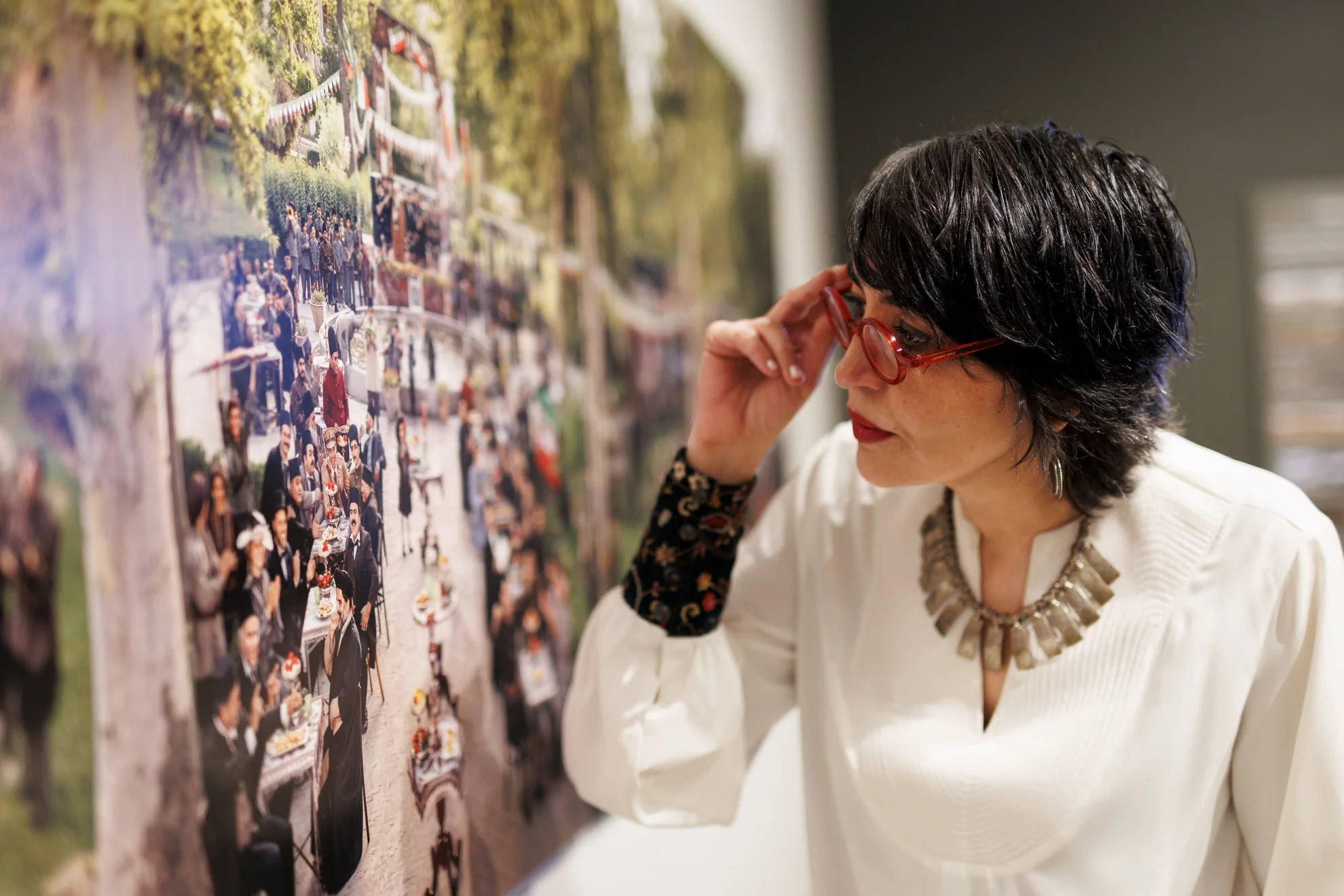
“I wanted them to feel like the huge history paintings like you might see in the Louvre,” Akhlaghi expressed.
Niles Singer/Harvard Staff Photographer
Balancing Artistic Interpretation and Historical Truth
The question of authenticity in staged photography is one that Akhlaghi has grappled with throughout her work. Initially, she believed she could unveil historical truths, but the complexities of her findings have led her to a different understanding. “There are multiple narratives and truths to be found,” she said. To communicate this idea, she often places herself in her images as a contemporary observer in a red scarf—a method of signaling her interpretation amid her artistry.
Reflections on Contemporary Context
Launching this exhibit amidst current political tensions in the region adds another layer of significance. “While I’m honored to showcase this work at the Peabody Museum, it's bittersweet not to share it in Tehran, where my heart is,” Akhlaghi lamented. With limited access to the internet and censorship in Iran, she worries about the future of her art and its ability to resonate with her homeland.
Akhlaghi concludes with a poignant reminder of the cyclic nature of Iranian history. “This exhibition reflects not just my country but the universal experiences of struggle and resilience. A mourning mother exists everywhere,” she reflects, inviting viewers to connect with their own narratives of loss and resistance.



Discussion
Sign in to join the discussion.