A newly developed quantum algorithm allows for rapid X-ray simulations, drastically reducing computational time while maintaining accuracy for medical and industrial applications.
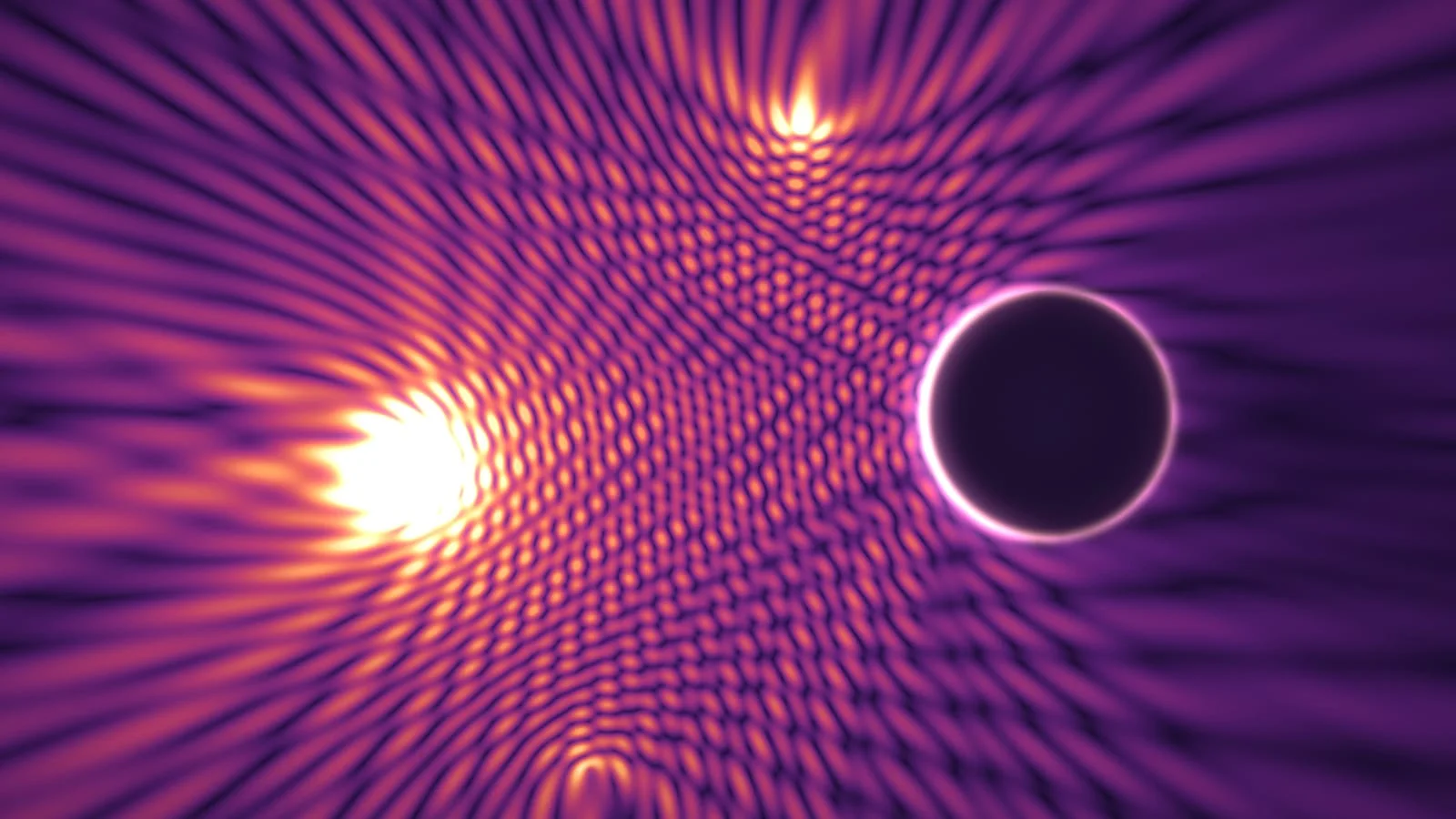
A promising new quantum algorithm developed by researchers at the Fraunhofer Institute and the University of Passau simulates X-ray interactions with materials, offering an efficient alternative to traditional methods used in medical imaging and industrial inspection. By leveraging the principles of quantum mechanics, this approach processes multiple scattering histories simultaneously, significantly speeding up radiographic projection generation.
Traditional simulations of X-ray paths demand considerable computational resources, requiring researchers to trace each potential route an X-ray photon can take through an object. This process becomes increasingly complex with denser materials or intricate geometries. The new quantum method encodes these pathways into a single quantum state, utilizing superposition to concurrently process various scattering events—an approach that fundamentally changes the efficiency of X-ray simulations.
Rapid Simulations Through Quantum Efficiency
The computational demands of traditional methods highlight the inefficiencies in current imaging technology. Generating initial radiographic projections via classical algorithms typically takes about 28 seconds to complete, even for first-order scattering. When you consider that these projections are often the basis for further analysis and decision-making, this delay can become a bottleneck in medical and industrial settings where time is of the essence. In stark contrast, the newly proposed quantum algorithm reduces this time to just 57 milliseconds for primary images. This dramatic leap in processing capability reveals not just a faster method, but a potential transformation in how imaging studies can be approached.
With this enhanced speed, researchers can now explore advanced virtual imaging studies that were previously deemed impractical due to high computational expenses. This is especially true for complex multi-scattering phenomena, which have become more relevant as precision imaging techniques evolve. The encoding of all possible photon pathways into a singular quantum state enables researchers to address both unscattered and scattered photons effectively. Even more notably, the quantum algorithm achieves this while producing representations closely aligned with results obtained from classical simulations, despite acknowledging certain limitations due to its simplified physical modeling.
Addressing Computational Limits Without Altering Physics
Importantly, while the quantum algorithm speeds up the simulation process, it does not fundamentally alter the physics of X-ray interactions with matter. Instead, it proposes an innovative computational framework that respects the established principles of photon transport. Researchers recognize that current computational limits often stem from simplifying assumptions made about material properties such as density variations and chemical compositions. These approximations are necessary for practical purposes but can cloud the accuracy of imaging results.
The approach offers crucial insights into how X-rays traverse different materials, mirroring established radiographic projections effectively. This ability to capture the nuances of multiple scattering events makes it particularly valuable across a variety of applications. It's a step that builds a bridge between theoretical physics and practical, everyday usage, enhancing access to various imaging modalities beyond conventional linear simulation methods. Those in industries reliant on precise imaging—from healthcare diagnostics to manufacturing quality control—stand to benefit significantly.
What truly distinguishes this quantum walk algorithm is its efficiency in simulating photon transport through materials. It captures the complexities of X-ray behavior without necessitating exhaustive path tracing, a labor-intensive effort that can bog down even the most advanced computational systems. This capability presents substantial implications for fields demanding accurate imaging, enabling advancements in diagnostics in healthcare and material inspections in diverse manufacturing processes.
Implications and Future Outlook
The ramifications of this breakthrough extend well beyond the laboratory. As researchers continue to refine these algorithms, this quantum approach may become standard in both medical and industrial imaging settings. If you’re working in this space or interested in the future of imaging technology, here's the thing: the shift toward quantum algorithms could lead to a new era of efficiency and accuracy in diagnostics and material analysis.
Moreover, the very principles that underlie this quantum method hint at even broader applications. Industries like aerospace, automotive, and construction could integrate these technologies to enhance safety and performance. Imagine the power of real-time imaging that accurately measures the integrity of materials during production processes. As industries seek to become more data-driven, the role of swift and precise imaging will only grow. This advancement not only underscores the potential of quantum algorithms in practical applications but also shapes the future of X-ray technology as a whole. As this technology matures, we might see scenarios where imaging's efficiency no longer limits our analytical capabilities, drawing the path for smarter material assessments across various sectors.
👉 More information
🗞 QCxSimulation: Scatter-Aware X-Ray Projection Radiography via Discrete-Time Quantum Walks
✍️ Anja Heim, Theobald Fuchs, Thomas Lang, Dimitri Prjamkov, Kilian Dremel, Stefan Kasperl, and Christoph Heinzl
🧠 ArXiv: https://arxiv.org/abs/2609.07089
This algorithm is more significant than it looks. If current trends hold, we may find ourselves in a position where quantum-based imaging is the norm rather than the exception. As we stand on the threshold of this potential paradigm shift in imaging technology, the continuous refinement of quantum approaches will undoubtedly be critical to unlocking new capabilities and applications previously thought impossible.



Discussion
Sign in to join the discussion.