Diraq and Dell's collaboration integrates quantum processing with high-performance computing, enhancing efficiency and real-time operations in complex workflows.
A New Era in Quantum-Classical Integration
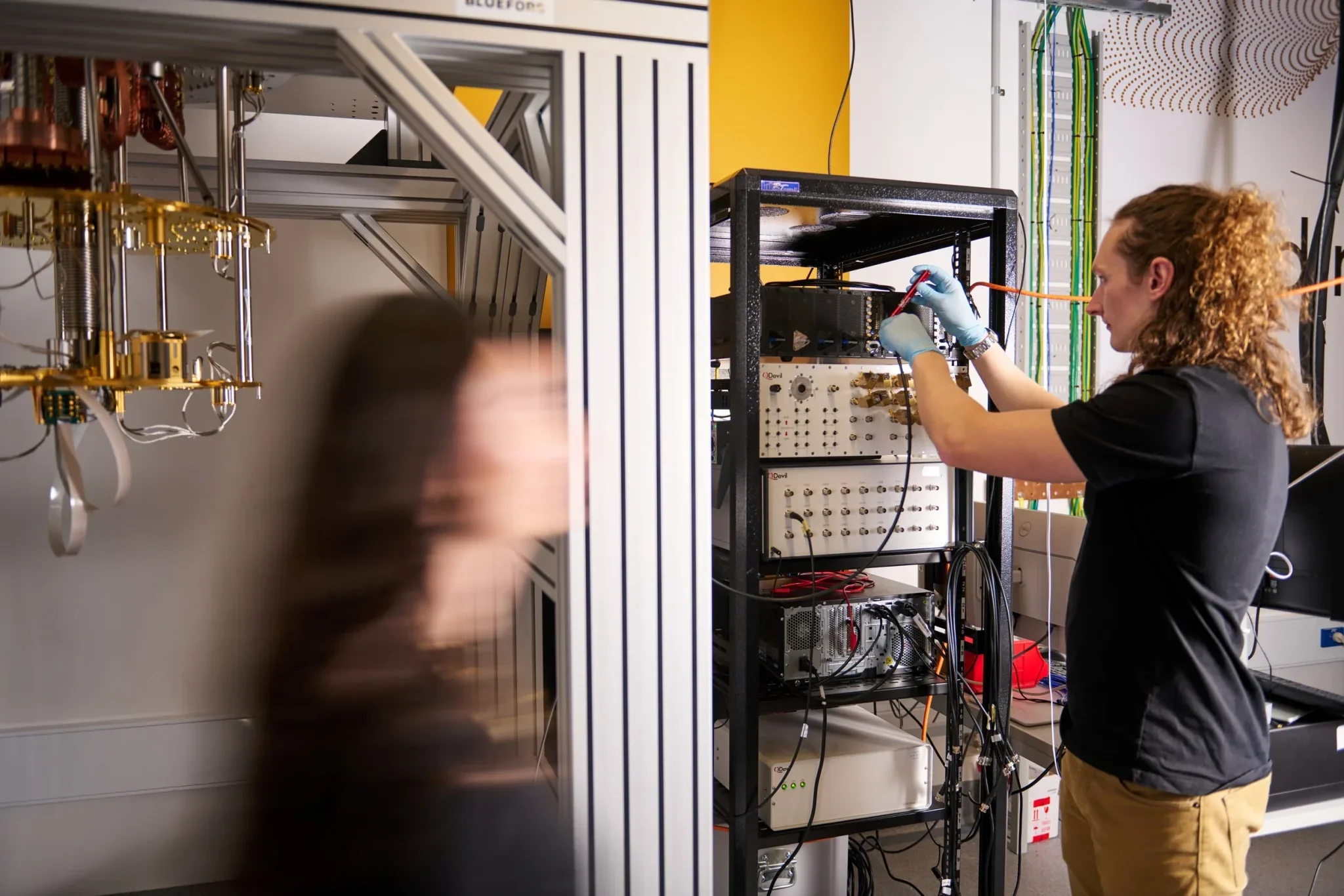
Diraq has embarked on a significant venture with Dell Technologies, establishing a high-performance computing (HPC) cluster directly within Diraq’s Sydney lab. This proactive co-location seeks to tackle latency issues that typically plague quantum computing workflows, especially for Diraq’s rapidly operating silicon spin qubits.
In the words of Diraq’s CEO Andrew Dzurak, “We’re working with Dell to create integrated systems that call classical AI and CPUs for the big number crunching.” This setup is designed to demonstrate that classical computing infrastructure can effectively bolster quantum processing capabilities, particularly when addressing specific complex problems.
Co-Location: Enhancing Quantum Performance
The initial tests of this integrated environment have already yielded valuable insights into the baseline latency necessary for hybrid quantum-classical operations. Unlike traditional setups that merely establish a connection between two systems, this arrangement enables a tight synchronization that minimizes information travel time, crucial for efficient quantum computations.
This collaboration is not just about hardware; it extends into orchestration. By adapting Dell’s capabilities to better manage how tasks flow between classical servers and the quantum processor, they are developing a system that can dynamically schedule computations, translating complex workloads into actionable sequences. One notable application involves automated qubit calibration and tuning, where classical computing resources swiftly process data to recalibrate quantum components.
Strategic Vision for Scalable Quantum Computing
Diraq's manufacturing approach—constructing qubits on standard CMOS foundry lines—speaks to its ambition for scalability. The company aims to pack millions of qubits onto a single chip, allowing a compact, utility-scale quantum computer that could be smoothly integrated into data centers globally. This stands in contrast to approaches that would necessitate bulky external control systems, as Diraq emphasizes that on-chip qubit density is far more critical than quality alone.
The partnership with NVIDIA, struck in October 2025, focused on the need for low-latency connections between quantum and classical systems. “It’s vital that we create hybrid systems with quantum computers working alongside high-performance AI,” Dzurak stresses, noting that quantum computers are particularly suited for challenges that might be too complex for AI to solve alone.
Applications under exploration include drug discovery—where both AI models and simulation demand significant computational resources—and various optimization problems in logistics and finance, where classical algorithms often falter due to exponential complexity. Dell's Global CTO, John Roese, nicely encapsulated the strategic intent: “The really complex problems in the world need systems that bring different types of compute together.”
Expanding Horizon with New Tech Hubs
Diraq is expanding its reach, having just launched a tech hub in Los Angeles and adding to its workforce to support these advanced hybrid workflows. Their commitment to growing beyond Australia is evident, as the company recently assembled a team of 20 in the U.S. This growth aligns with Diraq’s targets, which include integrating over two million silicon spin qubits into a single chip by 2031.
“We’re getting closer to real systems, and it’s great to see the focus on qubits that can be democratized around the world and can actually solve problems at scale,” Dzurak noted, indicating a clear vision for broader accessibility to quantum computing capabilities. Diraq currently employs around 130 staff members and has raised over $140 million in funding, positioning itself as a key player in DARPA’s Quantum Benchmarking Initiative.
Projecting the Future
The collaboration between Dell and Diraq stands to redefine how quantum processors can be incorporated within existing computing paradigms, eschewing the need for radically new infrastructures. This integrated approach not only hints at a future where quantum technologies can genuinely work side by side with classical systems but also opens doors to addressing some of the most pressing challenges across various sectors.
With ambitions to develop both hardware and applications that leverage this intertwined approach, they are paving the way for advancements that could significantly enhance the operational efficiency of quantum computing. As Roese aptly put it, “The term of the day is hybrid quantum-classical computing.” The advancements we’ve observed so far suggest a promising outlook for the convergence of these powerful computing paradigms.



Discussion
Sign in to join the discussion.