A new rock opera follows a pregnant teenager toward the Jane Collective, linking its underground history to renewed debate over abortion access.
A personal journey opens onto a hidden history
“1972,” a new rock opera from American Repertory Theater, uses one young woman’s search for help to bring the Jane Collective’s history to the stage. Hannah is 19, pregnant, and fleeing an abusive relationship. In the early 1970s, abortion was largely illegal across much of the United States, and her journey leads her to activists who helped women find a way to end unwanted pregnancies.
The production opens Oct. 27 and runs through Nov. 22 at Farkas Hall. Its period setting gives the story historical distance, but the subject carries a present-day charge: the Supreme Court overturned Roe v. Wade in 2022, returning abortion access to a patchwork of state restrictions. For director and co-writer Jessie Nelson, that context makes Hannah’s story feel immediate. “This is so timely,” she said. “It’s so urgent. It really meets the moment in our world.”
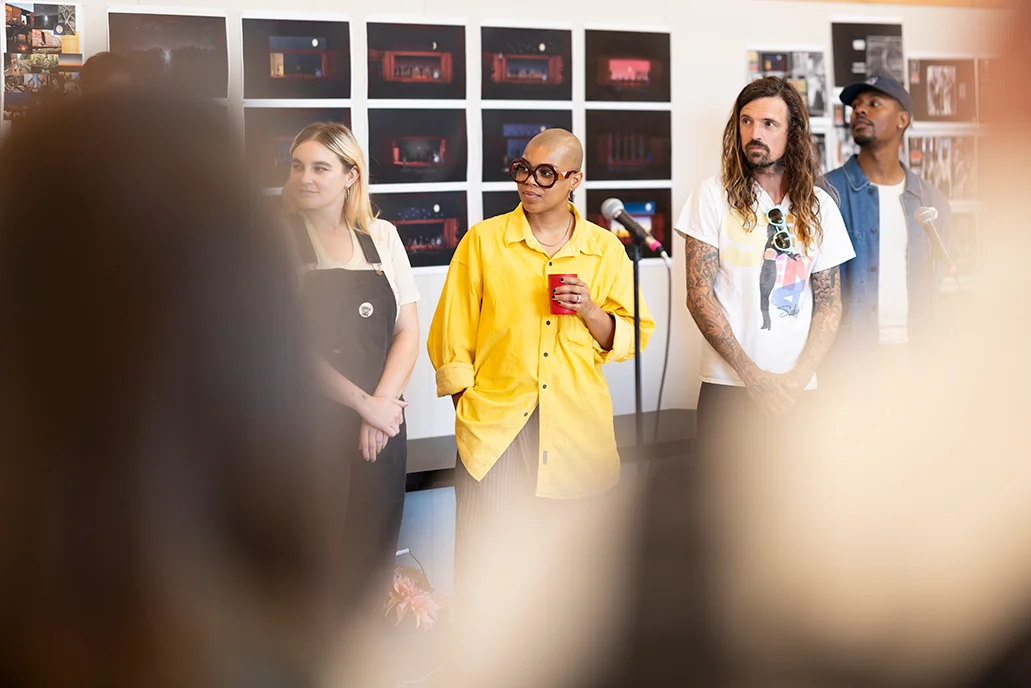
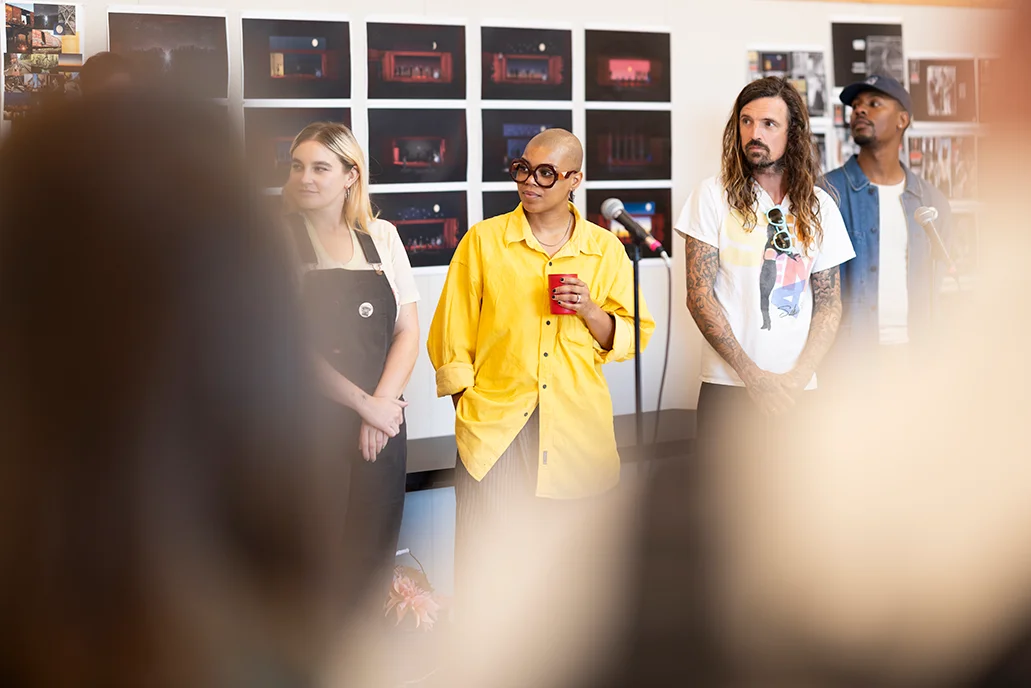
Gracie McGraw (Hannah), Khaila Wilcoxon (Harlan), JR King (Demi), and Jhardon DiShon Milton (Ensemble/Milt) at the first rehearsal for A.R.T.s world-premiere production of “1972.”
Photos by Maggie Hall
Chadwick Stokes, creator and composer of “1972,” began with the idea of a journey story. The Boston musician, known for the bands Dispatch and State Radio, had long been drawn to rock operas such as “Hair,” “Tommy,” and “The Wall.” He studied the form at New York University, where he even designed a course around composing his first rock opera.
For years, he considered a narrative built around travel. The 2022 reversal of Roe gave that concept a sharper direction: Hannah would be trying to get an abortion. But Stokes had yet to discover the real group that would give the story its destination.
Finding the Janes
Stokes learned about the Jane Collective, an underground Chicago network that connected women seeking abortions with doctors willing to perform them. A friend named Jane prompted the discovery. “You must know about the Janes,” she told him.
He was surprised that the group’s history had escaped him. “I love history, and I could not believe I’d never heard of these women,” he said. Learning about the collective changed the shape of the unfinished show. “Aha,” Stokes recalled thinking. “Now we know where the story ends.”
The real-life network gives Hannah’s fictional journey a historical anchor. The show’s title points to a specific moment, while the Janes’ work supplies a destination that Stokes hadn’t initially planned. The result joins a character-driven story to the experiences of women who organized practical help in a period when legal access was sharply limited.
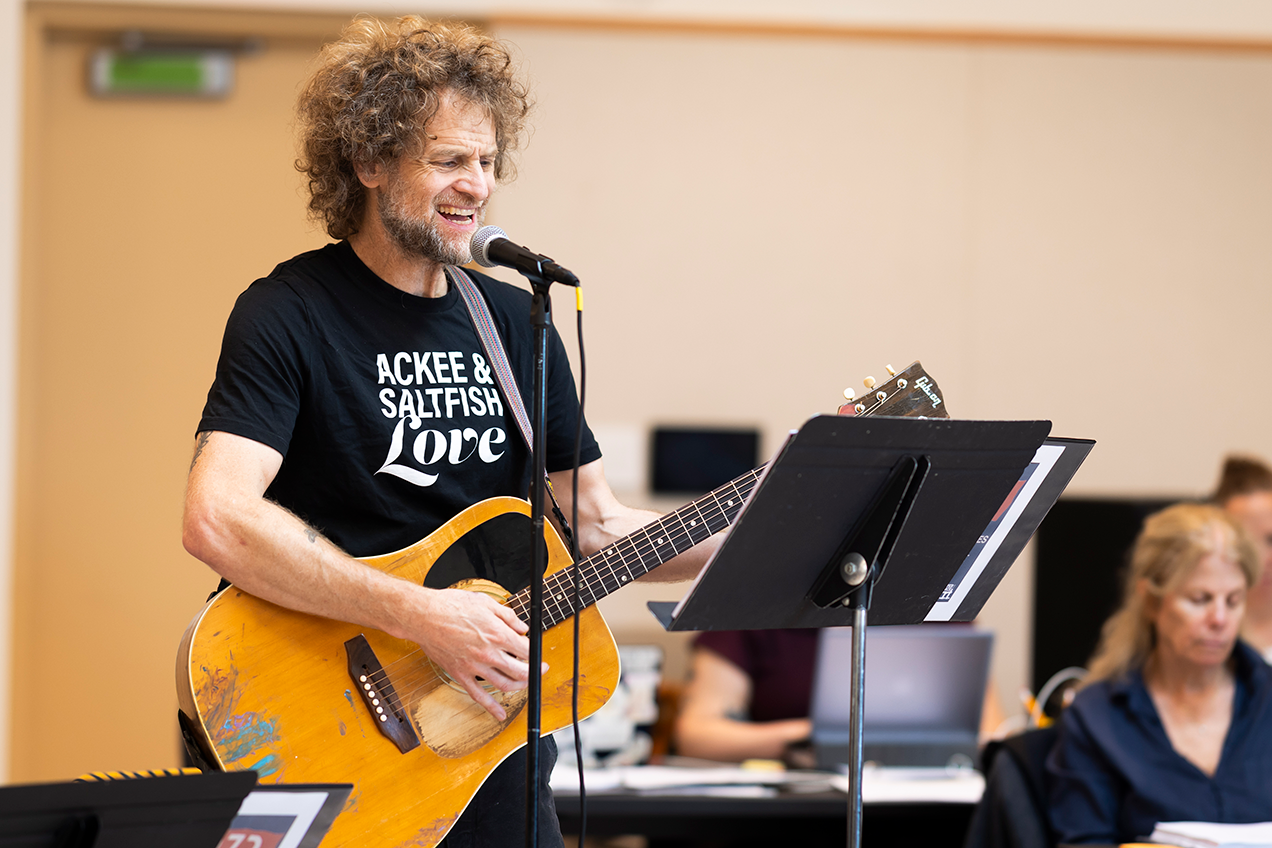
Chadwick Stokes (creator, composer, lyricist, co-writer, Depot) at the first rehearsal for A.R.T.’s world-premiere production of “1972.”
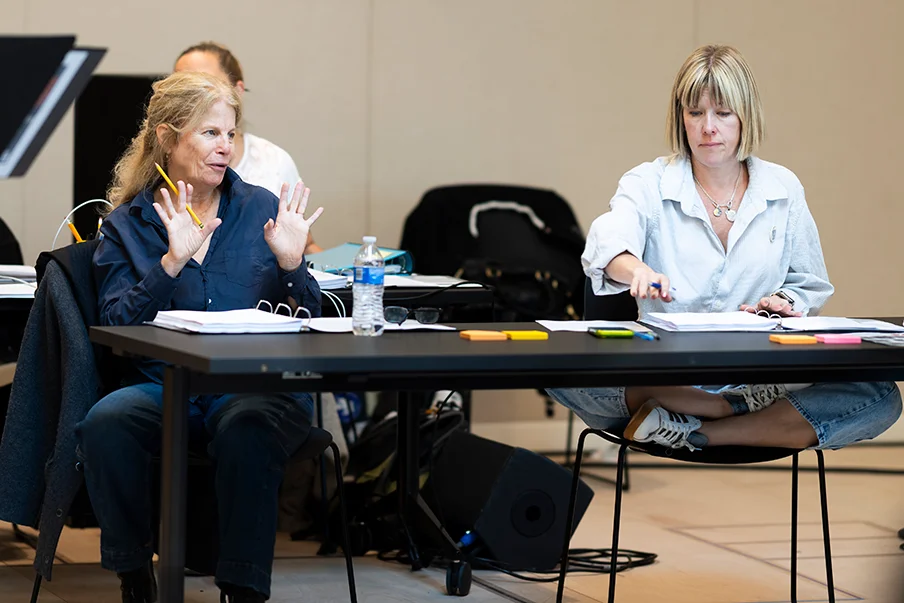
Jessie Nelson (director, co-writer) and Abbey O’Brien (associate director and
choreographer) at the first rehearsal for A.R.T.’s world-premiere production of “1972.”
Turning songs into a story
Stokes and Nelson met through mutual friends on Martha’s Vineyard a couple of years ago. Nelson brought years of musical-theater experience to his songs and early ideas. She had previously worked with musicians, including Sara Bareilles on “Waitress,” and saw an instinct for the stage in Stokes’s writing.
“When I heard all of the music he had written, it was this explosion of creativity,” Nelson said. Her work was to shape that abundance into a coherent dramatic arc: deciding what belonged, what could be reshaped, and how each scene could lead naturally to the next. She called Stokes a “natural,” adding that his abilities transferred to musical theater in a striking way.
The shaping happened in detail, often while Stokes was away on tour. From a hotel room in Cleveland, he would contact Nelson, and they would go through the script and lyrics together. Nelson described the process as examining each scene’s intention, identifying what needed emphasis, and finding the moment that could launch the following song. “We would just comb through it lyric by lyric by lyric, basically just sculpting,” she said.
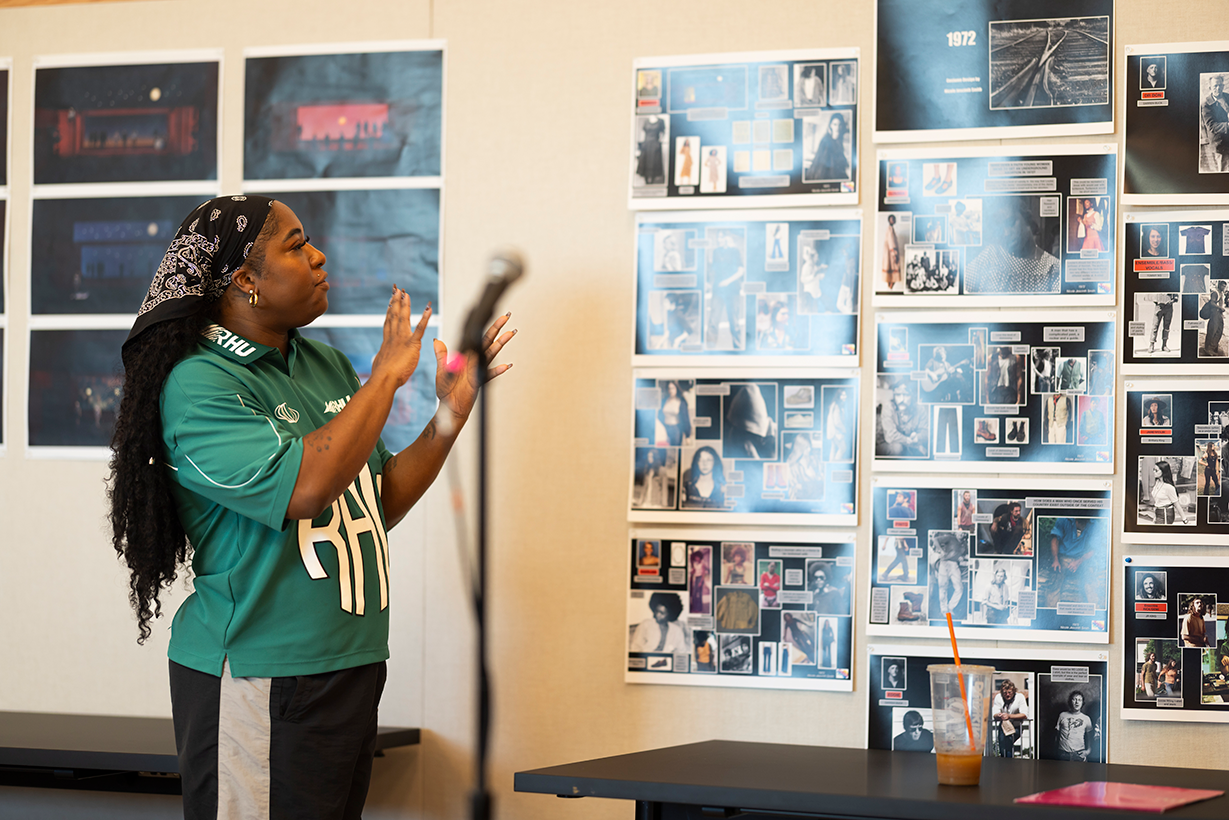
Some songs were tested at Joe’s Pub in New York City. Those workshop performances gave the collaborators a chance to hear what worked in front of an audience, then revise what didn’t. Nelson said they returned from each session asking which elements were landing and which needed adjustment.
Three surviving members of the Jane Collective attended some of those evenings. After one performance, Stokes and Nelson spoke with them. The Janes shared additional information and a sense of the group’s character that the writers could bring into the work. Stokes said their conversation helped the team capture how “badass” the activists were.
Past and present in the same room
The Janes’ presence in the development process connects the production to people who lived through the history it stages. Their input also gives the show a perspective beyond the creators’ research and interpretation. “1972” remains a work of musical theater, but its route from Hannah’s fictional crisis to the real collective makes historical memory part of its dramatic structure.
For Stokes, the overturning of Roe gave the story a renewed emotional weight. He described a “palpable aching in our communities” after the decision and said the subject feels urgent now. The show’s backward glance, in this reading, isn’t a call to return to an earlier era. It asks what people built when formal access was scarce, and why that history resonates with audiences today.
Members of the Jane Collective will speak after the Oct. 31 performance. A pop-up exhibit at the Schlesinger Library at the Harvard Radcliffe Institute will present primary-source materials from its collections on the Chicago Women’s Liberation Union, the Janes, and the history of reproductive rights and abortion access in the United States around 1972. The exhibit is scheduled for Oct. 30 from 3 to 5 p.m., Nov. 3 from 1 to 3 p.m., and Nov. 10 from 3 to 5 p.m. Details are available through the A.R.T. “1972” pop-up exhibit listing.
“1972” pairs a rock opera’s expansive form with a story grounded in one young woman’s urgent choice. Its clearest contribution may be the connection it draws between Hannah’s search and the collective history she encounters: a reminder that the Janes’ work was not an abstraction, but a response to women who needed help.

Discussion
Sign in to join the discussion.