Recent advancements in light extraction from diamond NV-centers have achieved a 63% increase in signal reading efficiency and reduced detection power requirements.
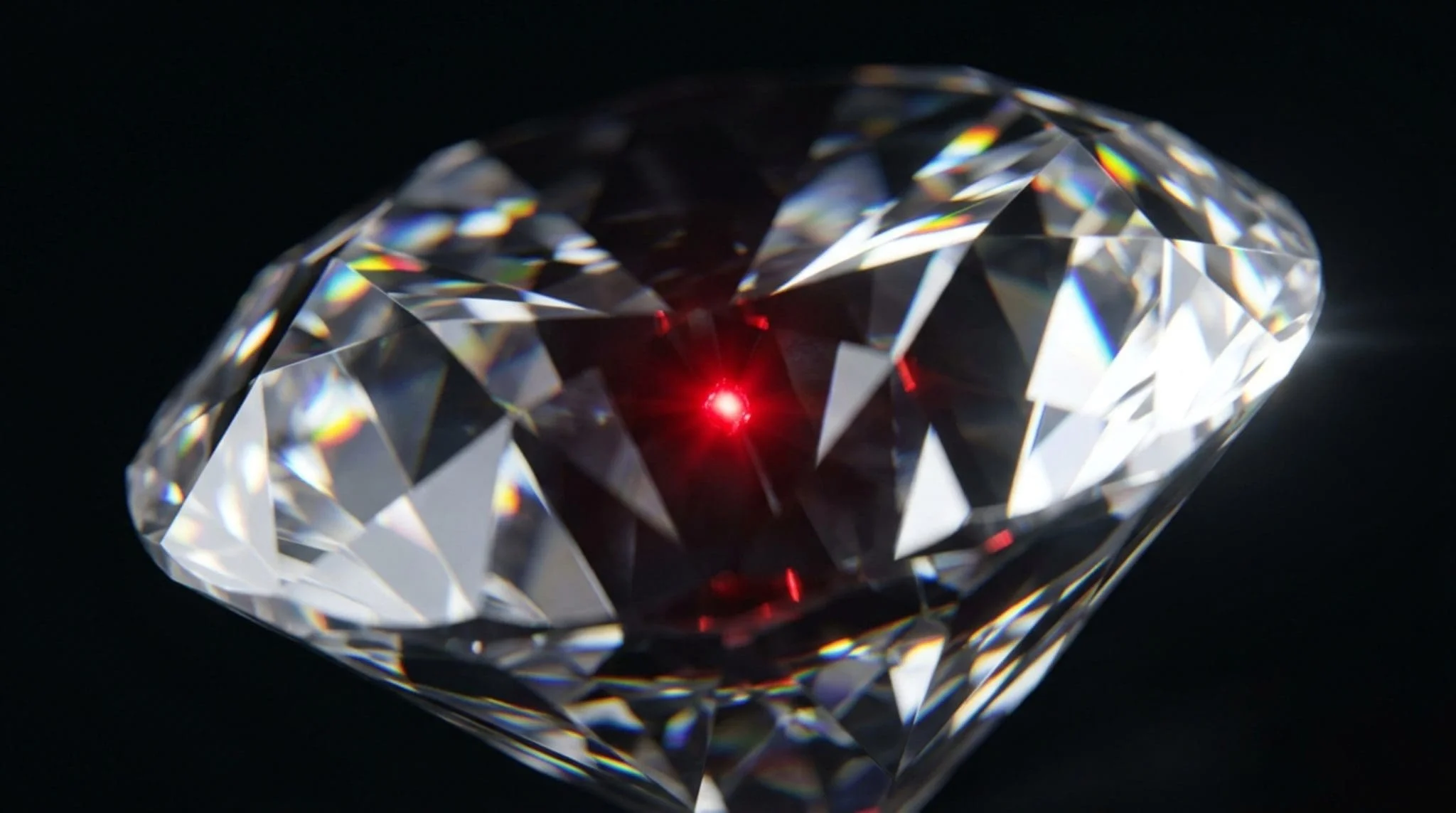
Recent developments at the Felix Bloch Institute and SaxonQ have led to a substantial improvement in the efficiency of light extraction from nitrogen-vacancy (NV) centers in diamond. This breakthrough utilizes additive solid immersion lenses (SILs) to surmount the traditional constraints imposed by poor photon collection efficiency caused by internal reflection.
The challenge of internal reflection has long hindered optimal signal collection from NV centers, which are crucial for emerging quantum computing technologies. The research team addressed these limitations by designing miniature lenses made from yttria-stabilized zirconia (YSZ), which facilitate more effective signal capture by optimizing the light's exit path from within the diamond structure.
This approach resulted in an impressive 63% increase in saturation intensity, coupled with a reduction in the laser power required for detection by 33%. These advancements signal a marked improvement in the information extraction capabilities from NV centers, which serve as artificial atoms vital for storing quantum information.
Revolutionizing Light Collection with Solid Immersion Lenses
The introduction of solid immersion lenses has enabled NV centers to achieve superior readout performance without needing deep implantation into the diamond. Traditional methods necessitated depths of hundreds of nanometers, complicating the fabrication process. In contrast, this innovative method allows for NV centers to be placed just ten to twenty nanometers below the surface, enhancing the feasibility of production and efficiency simultaneously.
Simulations conducted prior to the experimental validation suggested that using SILs with high refractive indices could yield a 63% increase in signal intensity compared to bare diamond surfaces. The findings confirmed that these lenses effectively mitigate issues associated with total internal reflection, allowing light to escape more easily from the diamond.
Even when using lenses larger than 2.5 micrometers in diameter with lower refractive index dielectrics, the performance improvements remained significant. Adjustments in aspect ratio up to 20% showed minimal impact on light extraction efficiency, underscoring the adaptability of this solution.
The utilization of yttria-stabilized-zirconia as the lens material represents a constructive evolution in the production of quantum computing components, directly addressing one of the critical inefficiencies in NV center-based technologies.
Implications for Quantum Technologies
This research signifies a considerable leap forward for applications utilizing NV centers in quantum computing and quantum communication. Since these centers function like artificial atoms, the enhanced light output can directly improve their capability to perform computations and process information more effectively.
By mitigating internal reflection losses, researchers have simplified the signal readout process, paving the way for the development of more efficient quantum systems. This progress in solid immersion lens technology could ultimately streamline the integration of NV centers into larger quantum networks and devices.
In practice, the ability to read signals at significantly lower power requirements without sacrificing efficacy allows for broader applicability in quantum computing frameworks, where energy efficiency is critical. The advancement represents a much-needed stride towards the practical realization of scalable quantum systems reliant on NV technology.
This work not only enhances the current understanding of light extraction techniques but also serves as a strong foundation for future innovations in the field. The scalable fabrication process of these lenses—predicated on pulsed laser deposition and photolithography—holds promise for widespread deployment in practical quantum computing applications.
👉 More information
🗞 Additive solid immersion lenses for enhanced collection efficiency of shallow NV centers by pulsed laser deposition and structurization of high-k amorphous oxides
✍️ Michael S. Bar, Andreas Koenig, Marius Grundmann and Holger von Wenckstern (Leipzig University); Nicole Raatz and Max Kneiss (Affiliation: SaxonQ)
🧠 ArXiv: https://arxiv.org/abs/2610.01183
As researchers continue to refine these methodologies, further enhancements may emerge, potentially surrounding the interface of quantum technologies and improving their functionality in both computation and communication systems. The path forward remains bright, with substantial implications for the future of quantum information technologies.



Discussion
Sign in to join the discussion.