A novel imaging method harnesses hybrid entanglement between light and sound waves, enhancing material analysis and cross-scale observation techniques.
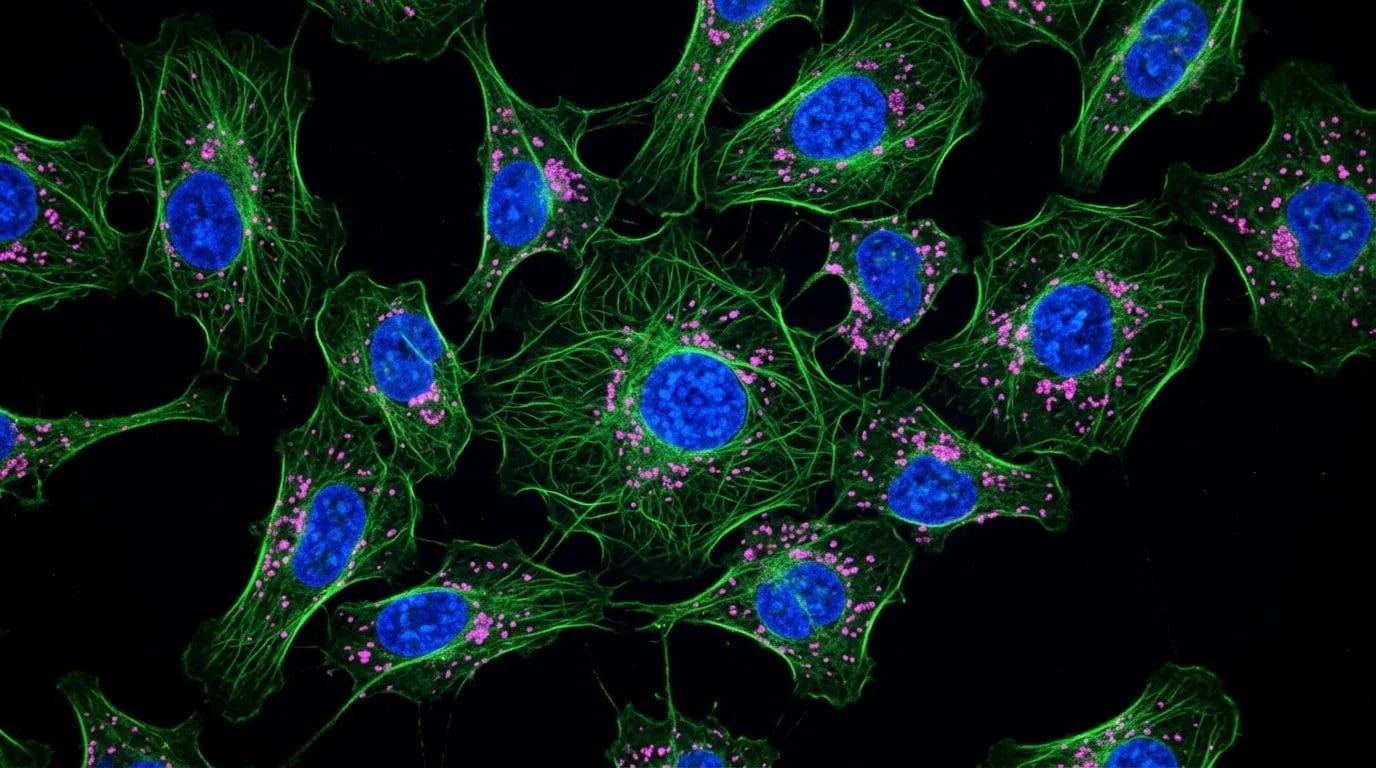
Researchers from Tsinghua University and the Chinese Academy of Sciences have developed an advanced imaging technique that significantly enhances the ability to observe materials at varying scales. By establishing a correlation between microwave photons and surface acoustic wave phonons, this method allows scientists to address limitations present in traditional imaging approaches.
The fundamental principle behind this breakthrough is hybrid entanglement, a phenomenon that connects microwave photons—particles of light energy—with surface acoustic wave phonons, which represent sound vibrations across materials. Instead of relying on comparable wavelengths in probing and readout fields, this new approach enables the use of distinct fields optimized for their respective functions. This flexibility enhances the accuracy and resolution of material analysis, essentially enabling scientists to manipulate magnified structures and detect minute changes in properties.
Bridging Diverse Scales with Hybrid Entanglement
What sets this research apart is its capacity to bridge diverse scales through correlation imaging, achieving an extraordinary demagnification factor of up to ten million and a magnification factor of a million. Prior to this innovation, effectively transitioning between macroscopic observation and microscopic analysis was constrained by the requirement for uniform wavelengths in both fields.
Utilizing microwave photons and acoustic phonons permits researchers to project exterior characteristics of large objects onto small chips or vice versa, thereby creating a versatile system for quantum sensing. Such precision opens new avenues in applications ranging from materials science to non-destructive testing, where detecting imperfections or fine structural details is vital.
Pioneering Cross-Scale Quantum Sensing
The researchers implemented this methodology using superconducting quantum circuits, which facilitate sensitive measurement by providing an environment with zero electrical resistance. This allows for stable manipulation of quantum states, essential for generating the required entangled pairs of microwave photons and surface acoustic waves.
The experiment showcased a notable disparity in wavelengths, exceeding five orders of magnitude, allowing for a seamless interface between free-space microwaves and on-chip acoustic waves. This unique interplay marks a significant advancement in quantum imaging technology, but challenges remain. Particularly, generating a sufficient number of entangled pairs is critical for reliable image reconstruction.
Transformative Potential for Defect Characterization
A major implication of this technique is its potential to revolutionize defect characterization within materials. By correlating signals across vastly different scales, the method can reveal flaws or structural anomalies that conventional imaging techniques may overlook. This increased resolution, paired with enhanced capabilities for non-destructive testing, allows for a holistic view of objects ranging from tiny semiconductor components to larger structural materials.
While the theoretical framework is promising, practical applications and validations in more complex and realistic environmental scenarios remain to be fully explored. Further research is required to ensure the reliability and effectiveness of this imaging technique in real-world contexts, particularly for biological samples where environmental factors may pose challenges.
Overall, this method not only promises significant advancements in materials characterization and defect detection but also lays the groundwork for further development in quantum sensor technologies. The ability to manipulate and analyze materials across different scales could catalyze innovations in various fields, positioning this approach at the forefront of quantum imaging research.
👉 More information
🗞 Correlation Imaging via Hybrid Entanglement between Microwave Photons and Surface Acoustic Wave Phonons
✍️ Yu-Yuan Chen and Yu-xi Liu (Tsinghua University); Ling-An Wu (Chinese Academy of Sciences)
🧠 ArXiv: https://arxiv.org/abs/2610.01252


See today’s quantum computing news on Quantum Zeitgeist for the latest breakthroughs in qubits, hardware, algorithms, and industry deals.



Discussion
Sign in to join the discussion.