Studies in Taiwan and France examine why patients seek integrative cancer care, but their focus on academic centers leaves independent clinics underexamined.
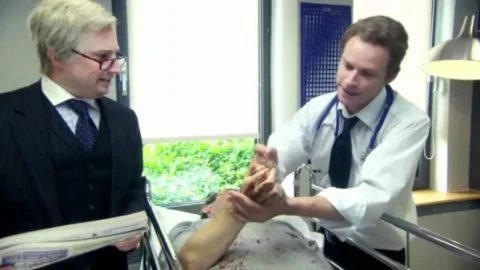
A New York Times article about a journalist’s father described how he turned to Envita, an “integrative oncology” clinic, after a lung cancer diagnosis. The clinic took substantial sums from him; he later died in an intensive care unit nearby, away from home and most of his family and friends. I discussed that case alongside the broader pattern of clinics preying on desperate patients in an earlier article. These clinics often advertise extraordinary results, including supposed cures, to people with advanced cancers for which conventional oncology may offer palliative treatment. But my own reporting can show what I’ve encountered, not how common those experiences are. That’s why two studies—one in Taiwan and one in France—caught my attention: they ask who seeks these services and why. The Taiwan research examines women with breast cancer who choose traditional Chinese medicine. The French study looks more broadly at patients seeking integrative oncology. Both raise a concern: they don’t clearly distinguish evidence based supportive care from treatments that amount to quackery. They also focus on academic medical centers, where “integrative” services tend to emphasize symptom relief rather than cancer treatment. That distinction isn’t always reliable, as some university affiliated programs have promoted high dose vitamin C for cancer. Still, standalone clinics deserve more scrutiny. They face fewer limits from scientific evidence or the reputational pressures of a university hospital. An ETP News investigation that followed an investigator posing as a patient with stage IV colon cancer offers a glimpse of that world.
What the French study can—and can’t—show
The French study, “Integrative oncology consultation and patient referral to complementary therapies: results from the prospective study THERAC,” appeared in Supportive Care in Cancer. Its authors work at the Interdisciplinary Department of Supportive Care in Oncology at Centre Léon Bérard in Lyon. THERAC’s prospective design is a real strength: researchers gathered information as patients moved through care, instead of asking them to reconstruct events later. But the study included only 50 people, and its framing deserves skepticism. The authors describe limited scientific evidence as a barrier to integrative oncology. That turns the problem around. If a therapy lacks evidence of safety and benefit, clinicians have reason to be cautious. The study may still offer useful information about who seeks these consultations; it also reads, at times, like an effort to understand how to expand the service. The study’s rationale points to the growth of integrative oncology programs. It says that such services at U.S. National Cancer Institute designated comprehensive cancer centers rose from about 50% in 2009 to 80% in 2016. It also cites training and educational resources at centers such as Memorial Sloan Kettering and MD Anderson. In France, the authors describe efforts to add integrative oncology to conventional care and the creation of the University College of Integrative and Complementary Medicine in 2017. The French Society of Integrative Oncology followed in 2023, after the Society for Integrative Oncology was founded in 2003. The authors argue that patients may hesitate to tell their oncologists about complementary therapies, while clinicians may avoid discussing them because of the evidence gap. They present dedicated consultations as a way to improve communication, referrals, individualized care, and quality of life. Those are plausible aims. The study’s description doesn’t establish that the therapies themselves improve cancer outcomes. THERAC was a single center, exploratory observational study at the Léon Bérard Comprehensive Cancer Center. It enrolled consecutive adult patients who could read, write, and understand French and who attended an integrative oncology consultation. The target was 50 participants, recruited over roughly six to twelve months; all received study information and gave informed consent. The study followed France’s MR-004 framework, established by the national data protection authority, CNIL, for certain analyses of personal health data that don’t actively change patient care. The institution certified that the work complied with those rules. Clinicians assessed participants at enrollment, three months, and six months. Collecting information at fixed points during care can reduce reliance on patients’ later memories, but the small sample limits what the results can tell us. Recruitment ran from November 2021 through January 2023, nearly a year. The group was also far from a cross section of France. Forty five participants were women (90%); the median age was 52, with a range of 26 to 76. More than half had breast cancer. Most lived in urban areas (80%), and 44% came from wealthy metropolitan areas that account for 22% of France’s population. Only 36% lived in districts the authors classified as “precarious.” The paper also describes participants as having high socioeconomic status. That pattern fits the economics of a service often marketed to people with money, though the study can’t explain why each person chose it. The gender skew is striking: I would have expected women to make up 60% to 70% of this group, not 90%. And because 56% of participants had breast cancer, the sample’s profile matters when interpreting what patients said they wanted. The next chart breaks down those expectations.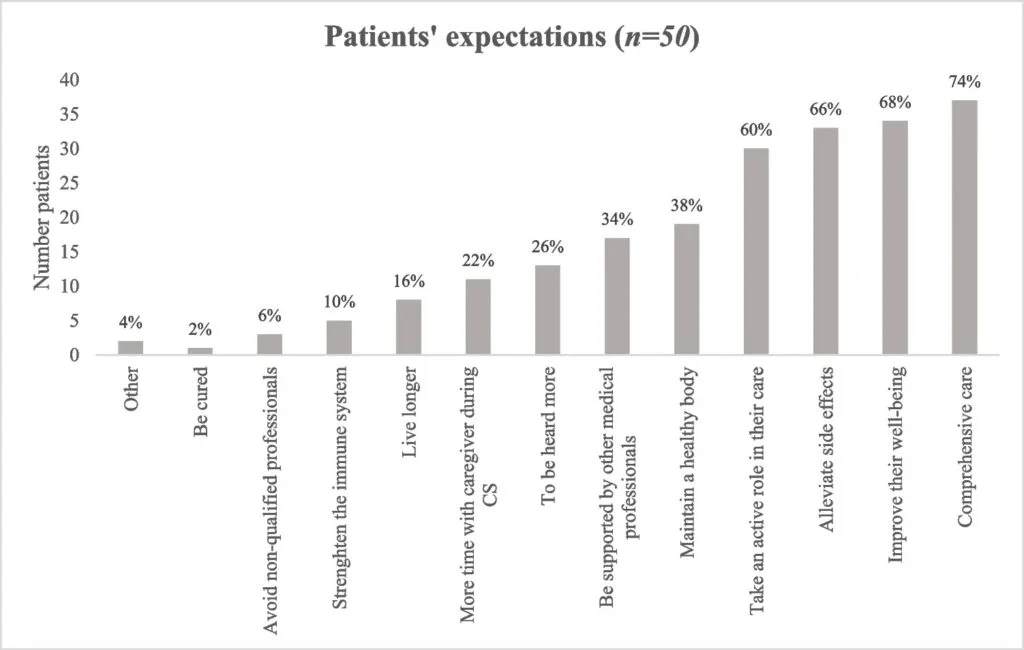
Patients’ expectations for “integrative” oncology look familiar: earlier research found that many people seeking these services confuse holistic care with integrative care. The satisfaction figures are high, too: among patients who completed follow-up, 27 of 29 (93%) were very satisfied with their consultation at three months, and all 11 who completed six-month follow-up (100%) were satisfied. Those numbers are encouraging, but the small follow-up groups make them hard to generalize. And time with caregivers ranked relatively low among patients’ expectations, complicating the familiar claim that people turn to integrative medicine mainly because they want clinicians to spend more time with them.
The therapies offered in the study are revealing in their own right:
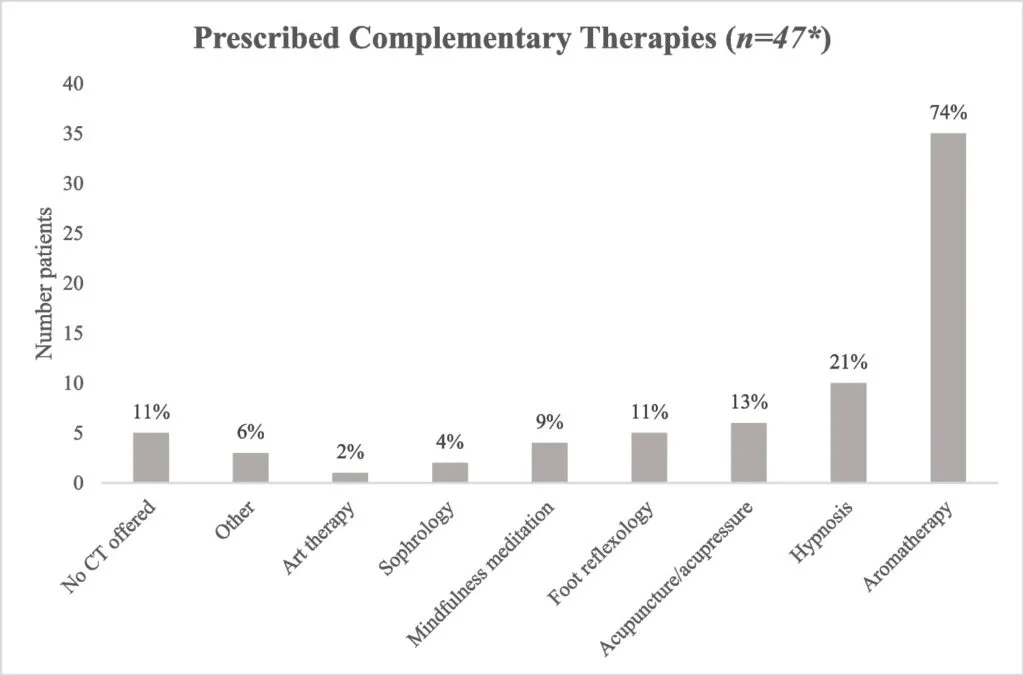
Aromatherapy was offered to 74% of patients, while hypnosis reached 21%. I expected more acupuncture and mindfulness. But the mix appears to reflect what the cancer center could readily provide, rather than a comparison of which therapies patients needed most.
Aromatherapy is easily available within the Centre Léon Bérard through established protocols in both inpatient and outpatient settings, supported by the development of a dedicated clinical aromatherapy service in 2017 [26]. The relatively low cost and simplicity of administration of essential oils may also explain the widespread use of aromatherapy. The main indication in our study was anxiety management and sleep management, in consistence with current international IO recommendations [27].
That explanation is straightforward: the Centre Léon Bérard had protocols, staff, and a dedicated aromatherapy service, so aromatherapy was easy to offer. Cost and simplicity likely helped. That says more about local infrastructure than about comparative therapeutic value. The study describes acupuncture, reflexology, hypnosis, and sophrology too; sophrology is presented as a “dynamic relaxation” practice drawing on phenomenology, hypnosis, yoga, Buddhist meditation, Zen, muscle relaxation, psychology, and neurology. The label is unfamiliar, but the ingredients overlap with meditation and relaxation techniques.
The authors also make a case for building a coordinated network around complementary therapies (CTh). They say patients often use these treatments without telling clinicians, leaving care fragmented. Their proposed response is coordination among practitioners, with nurse coordinators and oncologists helping patients understand risks, limits, and possible referrals. They also acknowledge a concern that patients may expect integrative oncology (IO) to cure them, and that clinicians may struggle to address the psychological impact of those expectations.
Patients often resort to CTh on their own, without informing medical professionals, which isolates disciplines [32]. A collaborative organization involving different CTh professionals would instigate a synergy probably more relevant than strict superpositions of individual therapies [33] and would contribute to the development of an identified integrative care network at a national scale. Nurse coordinators and oncologists particularly concerned with CTh risks should be able to appraise patient understanding and feelings, and to detail CTh-related constraints and limitations, and appropriately refer patients to IO consultation. Medical professionals need to build confidence to convince patients to adequately protect themselves, through providing improved information regarding CTh-related potential risks. Lastly, medical professionals feared “patient unrealistic expectations” and patient perception of “hoping to get cured,” as previously reported [3], suggesting they may be challenged in addressing IO psychological impact.
The paper’s closing argument is that French cancer centers should expand IO consultations to meet patients’ needs and improve satisfaction. But satisfaction isn’t proof that the therapies work, and coordination doesn’t establish that adding them improves cancer outcomes.
IO consultations implementation in our French comprehensive cancer center constitutes an innovative approach which need to be further develop to better address patients’ needs and expectations, and contribute to patient healthcare satisfaction. Such initiatives need to be developed and encouraged to promote an advanced comprehensive care of cancer patients in a reassuring relational context.
Here’s the thing: cancer care should address the whole patient, including distress, sleep, and the need for clear information. But those needs don’t require incorporating treatments without good evidence into oncology. In the US, time and resource constraints can make attentive care difficult; filling that gap with unproven therapies doesn’t solve the underlying problem. The French study shows how an integrative service can organize care around patient concerns. It doesn’t show that its therapies improve cancer treatment.
That raises a broader question: what does this look like in Taiwan?
Now, on to Taiwan…
A study published in BMC Complementary Medicine and Therapies examines traditional Chinese medicine (TCM) for breast cancer through interviews with TCM physicians. Its title is Intentions, effects, and challenges associated with the use of traditional Chinese medicine for breast cancer: a qualitative study from TCM physicians. A press release describes it as an insider view of Taiwan’s “dual-track” system. The study focuses on practitioners’ accounts of combining TCM with what it calls “Western medicine” (WM), a framing that assumes the combination is worth pursuing before establishing what it adds.
The researchers recruited attending physicians who had treated breast cancer patients or related conditions within the previous year. They began with purposive sampling at a municipal public hospital in northern Taiwan, including physicians in its TCM Cancer Special Clinic and Enhanced Daycare of TCM for Cancer Treatment. They then used participant referrals to reach physicians across hospitals, stopping recruitment when interviews no longer produced new themes. All participants gave written consent.
To be eligible for participation in this study, TCM physicians were required to be currently assuming the position of an attending physician and to have treated patients with breast cancer–related conditions within the previous year. Purposive sampling interviews were conducted with TCM physicians from a municipal public hospital in northern Taiwan, who comprise the “TCM Cancer Special Clinic” and “Enhanced Daycare of TCM for Cancer Treatment.” Physicians who met the research criteria were included in this study and scheduled for in-depth interviews. During the initial recruitment phase, attending physicians with sufficient clinical experience were purposively approached. Subsequently, snowball sampling, base on the participants’ referrals, was conducted to explore the perspectives of TCM physicians across hospitals. Data collection was discontinued once saturation was reached; specifically, the recruitment of additional participants via snowball sampling ceased when no new factors emerged from the data. All interviewees provided written informed consent before their interviews.
The interview guide asked about physicians’ experience treating cancer, why breast cancer patients (BCPs) seek TCM, whether cancer stage affects that choice, TCM’s effectiveness, conversations with patients also receiving WM, and limits or possible improvements in current TCM care.
Interview recordings were transcribed verbatim for further analysis. The interview guide comprised the following questions:
- What is your experience with cancer treatment?
- What do you think are the reasons for BCPs using TCM?
- How do you think the stage of breast cancer affects the use of TCM by BCPs?
- How effective is TCM in treating breast cancer?
- If the patient is simultaneously seeking WM, how would you discuss TCM use or recommendations with the patient?
- Do you think there are any limitations in the current use of TCM in breast cancer care? Do you have any suggestions for improvement?
The answers to the effectiveness question matter most, yet this is a qualitative study of physicians’ views, not a clinical trial testing whether TCM treats breast cancer. A practical question for patients is whether a chosen product or practice could interfere with standard treatment. TCM shouldn’t delay or replace evidence-based cancer care.
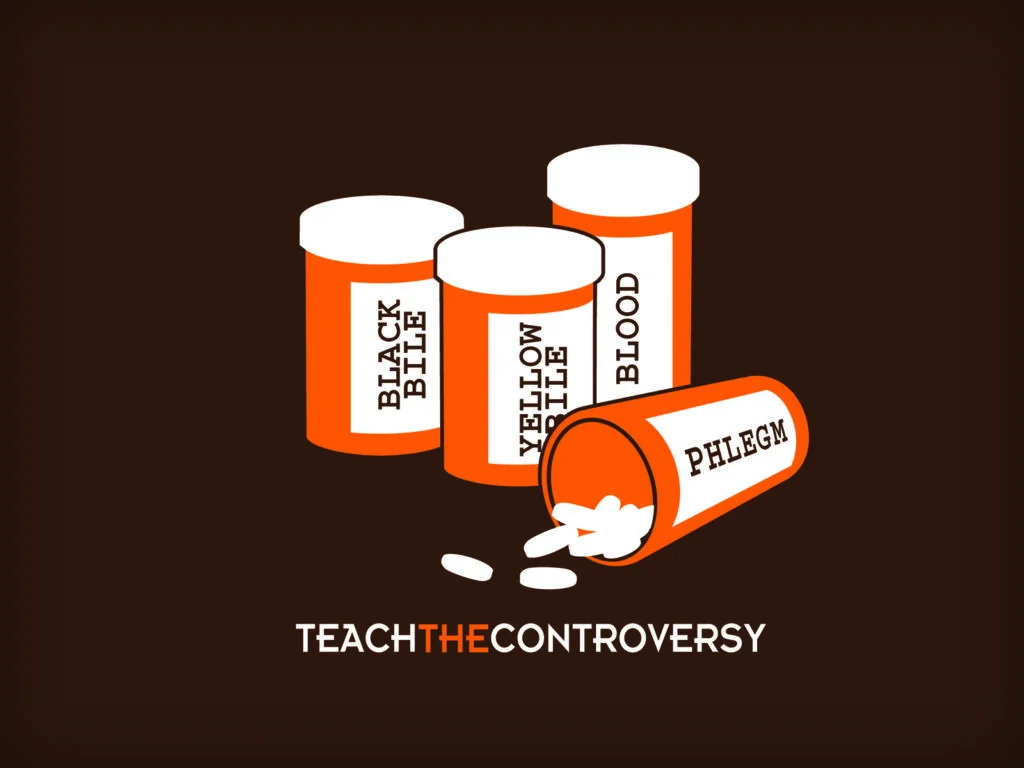
The study describes TCM through a theory of bodily balance. That framework has some resemblance to European humoral theory, where health was once explained through balances among blood, yellow bile, black bile, and phlegm. The TCM account instead invokes Yin and Yang, five fundamental substances, and five viscera:
In TCM, body constitution is interpreted as a reflection of individual health status, determined by differentiating the Yin-Yang balance of the five fundamental substances (essence, Qi, blood, body fluids, and spirit) as well as the five viscera (heart, liver, spleen, lung, and kidney). Because TCM considers disease to be caused by a Yin-Yang imbalance, such deviations in body constitution can influence a patient’s overall health and may affect the survival rate of cancer patients [26–28].
The theory is a reminder that TCM’s account of disease rests on concepts that aren’t established measures of cancer biology.
One finding does speak to why patients seek TCM: physicians identified distress and side effects from conventional treatment as common motivators. Taiwan’s system licenses, insures, and provides TCM through dedicated hospitals and clinics, according to the press release, making it possible for patients to use TCM alongside standard care. But the study’s central claims about benefit come from interviews with TCM physicians, not direct measurements of patient outcomes.
To the best of our knowledge, this is the first study to comprehensively explore the intentions, effects, and challenges associated with the use of TCM by BCPs from the perspective of TCM physicians. Our findings indicated that many BCPs tended to seek TCM care primarily to relieve the side effects of conventional treatment. According to TCM physicians, TCM care improves the body constitution of BCPs, potentially enabling the management of their tumors. However, certain challenges remain in TCM care. For example, some TCM physicians mentioned that TCM often encountered rejection from WM physicians. Nonetheless, the TCM physicians acknowledged that WM remains the primary treatment for breast cancer. They believed that TCM and WM can complement each other to improve health outcomes for BCPs. Medication use, health insurance, and policy restrictions of TCM emerged as key challenges in current breast cancer care.
The authors report that practitioners see TCM as a way to ease treatment side effects and improve patients’ “body constitution.” They also say some TCM physicians feel rejected by WM physicians, while acknowledging that WM remains the primary breast cancer treatment. Those are useful accounts of how practitioners understand the system. They don’t establish that TCM improves tumor control, health outcomes, or quality of life.
The discussion repeats the idea that patients turn to TCM for needs they feel conventional medicine doesn’t meet, including a desire to address the “root” of disease. It also cites prior work and physicians’ beliefs that combining the approaches can stabilize patients and improve quality of life:
Depending on their culture and personal experiences, patients with cancer often consider TCM for their healthcare needs [21]. We previously reported that after receiving their diagnoses, BCPs often seek means to alleviate the side effects of conventional treatment, which becomes their primary intention for seeking TCM [15]. Similarly, a systematic review revealed that patients with cancer in Taiwan often seek TCM to address what WM cannot achieve—for example, eliminating the root of the disease [22]. These patients seek to improve their body constitution and well-being through TCM. Health insurance may influence how patients with cancer use TCM [22]. In the present study, some TCM physicians indicated that TCM care can address the limitations of conventional treatment and stabilize the condition of BCPs. The physicians also highlighted that combining WM with TCM can improve health-related outcomes and quality of life.
There’s a distinction here the paper doesn’t resolve: studying plant-derived compounds for possible anticancer effects is pharmacognosy, a field that can be pursued without adopting TCM’s broader theories. Many cancer drugs originate in natural products or are modified versions of their compounds. Evidence about a particular substance would need to stand on its own; it wouldn’t validate the entire system around it.
The authors call for closer collaboration and more evidence-based research, arguing that TCM could serve as an adjunct to WM. They also cite a study in which WM students viewed TCM more favorably after a semester-long TCM-based curriculum. That may show that teaching changes attitudes. It doesn’t show that the therapies improve patient outcomes.
The present study revealed a gap between WM and TCM. Some TCM physicians mentioned that TCM and WM may be complementary. They highlighted the use of WM as the subjective treatment and TCM as an adjunct therapy as the best approach for breast cancer treatment. Therefore, further WM–TCM collaboration and additional evidence-based research into TCM are required to avoid potential health impairments and conflicts in the healthcare system [40, 47] and improve the health outcomes and quality of life of patients with cancer [48, 49]. A study reported that after completing a semester involving a TCM-based medicine curriculum, WM students could develop a better understanding of TCM and viewed TCM knowledge as beneficial to WM practice [50].
Across the French and Taiwanese studies, the recurring pattern is clear: patients have real needs, and clinicians are trying to respond. But neither study demonstrates that adding unproven therapies improves cancer outcomes. More time, support for distress, and better communication could address many of the needs described without asking patients to accept claims that these studies haven’t tested.
The next question is what happens beyond academic medical centers, where oversight and coordination may be weaker. For that, consider oncologist Dr. Alex Morozov’s report at ETP News, Selling Hope Chapter I: Going Undercover. (Full disclosure: I’ve been asked to join ETP News’s board of directors and expect to do so soon.)
What is the reality? Probably more like Alex Morozov’s experience
Earlier, we looked at integrative cancer clinics in the US and in countries such as Mexico, where medical regulation can be less stringent. We also discussed a New York Times interview with Trisha Thadani about her father’s experience at an alternative cancer clinic. The NYT article examined how such clinics can draw in desperate patients. Thadani was asked:
He couldn’t get a clear prognosis from his oncologist because every patient is different. That propelled him on a search for alternatives. What did he find?
When cancer searches become a sales funnel
Patients searching for cancer information can quickly become targets for clinics selling unproven treatments. My dad saw ads for alternative cancer clinics across the U.S. and Mexico after searching for cancer-related terms. Some clinics pay to target searches such as “Stage 4 cancer survival rate” and “chemotherapy side effects.” He contacted several providers, including some with troubling records, before choosing a clinic in Arizona.
That competition matters. Academic medical centers may offer integrative oncology under the cover of institutional credibility, but patients also encounter clinics whose claims have much less connection to evidence based care. Both can appeal to people worried about the side effects of chemotherapy, radiation, surgery, and other cancer treatments. The studies discussed earlier suggest those worries help explain why patients seek “integrative” care in the first place.
A doctor goes undercover
Dr. Morozov’s investigation offers a rare look at how one of these clinics operates. He posed as a patient with stage IV colorectal cancer, using fabricated medical records to support the story:
To see first-hand how and why these supplements are prescribed to patients, I went undercover, posing as a cancer patient myself. I prepared a fake colonoscopy report showing that I was diagnosed with colon cancer, a CT scan report showing liver metastases, and an imaginary oncologist’s note recommending chemotherapy.
I then saw a series of clinicians. I did not tell them that I am a physician myself. If they asked what I did for a living, I told them that I have an interest in AI and computers, which is true. My goal was to make sure that my experience would be similar to that of most patients, without any kind of special treatment.
He argues that the deception was justified because interviews alone couldn’t reconstruct the patient experience. Undercover reporting has a long history, and the Society of Professional Journalists’ ethics code permits it when open methods can’t obtain information vital to the public. I find Morozov’s case persuasive. I’d have been a terrible undercover reporter myself; my acting and poker face wouldn’t survive the first appointment.
His full account is worth reading. The early pattern is familiar: costly tests, supplements, and other treatments, alongside eye watering consultation fees. Morozov begins with a visit to Dr. Ben Edwards in Lubbock, Texas:
My first stop was Lubbock, Texas, to see Dr Ben Edwards. His company, Veritas Wellness, “started as a small functional medicine clinic and has now evolved into a worldwide online wellness and education platform,” according to a local business organization. Veritas sells its own line of branded supplements, which means that the bottle says “Veritas Wellness” on the label.
Edwards referred me to a former colleague, also in Texas, who follows a “metabolic approach to cancer”. I then went for a second, third, fourth and fifth opinion at other providers, always bringing my growing pile of prior records and recommendations. I saw a naturopathic doctor (ND) who serves as Clinical Professor at a major academic medical center; a senior board-certified medical oncologist at the same center; a functional medicine physician at another major academic center; a registered dietician at the same center; a board-certified medical oncologist at a third major academic center; and an AI bot on a wellness platform. More on each visit in the following chapters.
Edwards has appeared on this blog before, including for using quack treatments with measles patients during the West Texas measles outbreaks last year. His clinic, Veritas Wellness, appears to rely mainly on subscriptions, starting at $29 a month, with lab work and supplements adding to the bill.
The clinic’s claims about evidence deserve scrutiny. Edwards has written about Masaru Emoto’s idea that water responds to human “intentions,” and Jacques Benveniste’s discredited experiments. His post on water memory reads like homeopathy without naming it; another post appears to promote live blood cell analysis without using that label. His “Theory vs. Truth” post casts a similarly broad doubt over medical evidence. Morozov traces Edwards’ path from a family doctor who moved to an underserved part of Texas in 2009 to his current work in alternative and cancer care.
The message patients receive
After Morozov submitted his intake information, Edwards emailed him:
I believe you are making a very wise decision to look into some complementary and alternative modalities for overcoming cancer. Here is exactly what I tell my patients who get a diagnosis of cancer…
Proceed with your oncologist to get the official diagnosis… Conventional medical techniques typically do really good with stage 1 (just cut it out basically). But, once it has spread at all, then in general the rates of survival with conventional techniques start to go down pretty fast. This is when I really, really encourage looking at adding in complementary and alternative things. SOMETIMES the conventional protocols do pretty good with SOME cancers that are stage 2, 3 and 4, but for the most part the more advanced stages/spread are not “curable”, and the conventional protocols just “extend life a little”… Consider asking some alternative clinics if they have data on their 5 year survival rates for your particular cancer.
The pitch is blunt: conventional oncology is presented as useful mainly for early disease, while alternative clinics are positioned as the answer once cancer has spread. That framing is standard cancer quackery. It also understates what oncology can do for patients with advanced disease.
What troubles me more is the referral chain. Morozov was sent to two oncologists, a functional medicine practitioner, and a naturopath across three academic medical centers. Their identities aren’t yet public, and the fragment doesn’t establish how those referrals happened. Still, referrals from clinicians connected to major centers can lend alternative cancer care an undeserved air of legitimacy. It’s a reminder that institutional affiliation alone doesn’t tell patients whether a treatment is supported by evidence.
Morozov, at least, had a sharp response to Edwards’ email.



Discussion
Sign in to join the discussion.