The 2026 Nobel Prize highlights the pivotal advancements in optogenetics, shaping our understanding of brain functions and mental health.
## The Impact of the 2026 Nobel Prize in Physiology or Medicine
Every year, the Nobel Prize in Physiology or Medicine offers a spotlight on groundbreaking scientific advancements that can reshape our understanding of health and illness. This year's recipients—**Karl Deisseroth, Peter Hegemann, and Georg Nagel**—are recognized for their pioneering contributions to **optogenetics**, a technique that’s revolutionizing the study of brain functions. This isn’t just another accolade; it’s a testament to how science can radically alter the landscape of medical research, especially in understanding complex disorders.
### From Algae to Optogenetics
The journey toward optogenetics doesn’t just stem from the winners’ recent achievements; it traces back to Hegemann's research in the 1990s on **Chlamydomonas**, a type of algae that displays an astonishing ability to navigate its environment using light. Hegemann’s curiosity arose from observing the algae's quick response to light stimuli—far quicker than the processes seen in vertebrate eyes. This speed prompted him to hypothesize about alternative mechanisms at play.
Unlike the discernible pathways in vertebrate phototransduction—where various proteins sequentially react over hundreds of milliseconds—Hegemann's initial findings indicated that the algae possessed a biophysics-based function to signal light much more promptly. When electrodes were attached to the algae, Hegemann recorded electrical responses occurring in as little as **half a millisecond**, a revelation that sparked his search for the underlying protein responsible for this remarkable speed.
### Collaborative Discovery
The path to identifying the proteins, later known as **channelrhodopsin-1 and channelrhodopsin-2**, wasn’t solo work. Hegemann enlisted Nagel, who, building on a Japanese team’s groundwork on Chlamydomonas DNA, tested the genes in frog eggs. The result? Cells that expressed these light-responsive proteins, opening the door to further explorations of their capabilities—including the ability to create rapid electrical signals.
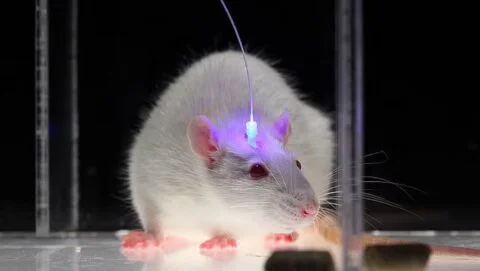
Deisseroth’s involvement comes into play as he sought a means to map the brain more effectively to understand mental health issues like **schizophrenia**. A physician-scientist, he quickly recognized that integrating channelrhodopsin-2 into neurons could enable him to stimulate specific brain circuits using light. His initial experimentation with modified rat neurons proved that this approach could lead to groundbreaking insights into neural activity.
### Transforming Neuroscience
The advancements in optogenetics, facilitated by collaborations among researchers across multiple disciplines, exemplify the essence of modern science: complexity and cooperation. Deisseroth’s subsequent efforts to refine this technique allowed scientists to selectively activate specific neuron populations. Such precision has immense implications, enabling researchers to unravel the intricate web of brain functions and dependencies.
The Nobel Committee rightfully lauds this work as transformative. Beyond being a mere scientific milestone, the evolution of optogenetics showcases the collective endeavor of diverse researchers harnessing unique expertise to confront fundamental questions in neuroscience. This collaboration is a reminder that significant progress isn’t often a product of isolated genius but rather a tapestry of shared knowledge and teamwork across borders.



Discussion
Sign in to join the discussion.