The 2026 Ebola outbreak in the DRC highlights critical failures in global health preparedness, as cases surge amid dwindling resources and political instability.
**Rethinking Ebola: The Urgent Challenge of the 2026 Outbreak**
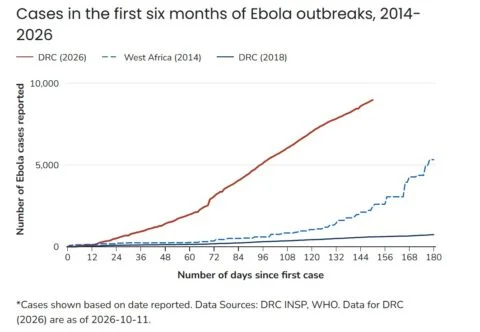
As the world grapples with the ongoing 2026 Ebola outbreak in the Democratic Republic of Congo (DRC), the specter of previous crises hangs heavy over our efforts to contain this virus. With reported cases skyrocketing to 9,066 and fatalities reaching 4,381, we are witnessing the second-largest Ebola outbreak in history—one that presents significant learning opportunities and stark warnings about our current public health infrastructure and readiness.
### A Deadly Resurgence
Ebola, caused by the orthoebolavirus group, is notorious for its high mortality, claiming 80-90% of those infected. Although it spreads through direct contact with bodily fluids, rather than through the air, it has thrived in regions plagued by inadequate health systems and cultural practices that exacerbate contagion. Prior to the unprecedented outbreak of 2014-2016, most Ebola incidents were minor, often confined to rural villages. The 2014 outbreak marked a pivot point, unleashing over 28,000 infections and resulting in more than 11,000 deaths.
Fast forward to today, and we face an alarming speed of spread: the current outbreak surpassed 1,000 cases in just 40 days, dwarfing the 235 days it took for the 2018-2020 episode to reach that milestone. This rapid transmission isn't merely a concerning statistic; it hints at systemic failures in our global health responses that could have dire consequences.
### A Shift in Outbreak Dynamics
Why are contemporary Ebola outbreaks so much larger? The available data indicates that while the virus is not evolving to become deadlier, the human elements influencing its spread have worsened. In vulnerable regions, population density is on the rise, alongside increased mobility among communities. Moreover, the presence of active conflict zones further complicates the situation, leading to population displacements that facilitate transmission.
Yet perhaps the most troubling aspect is the degradation of our capacity to respond effectively. Political instability has eroded trust in healthcare systems, leaving populations skeptical about adhering to crucial safety measures. Post-2016, many anticipated an overhaul of our outbreak response—a shared commitment to innovating our health infrastructure to manage future crises better. Unfortunately, the reality has proven quite different.
### Deteriorating Infrastructure
If someone had predicted in 2016 that we’d be facing fewer resources and less preparedness in 2026, many would have found that implausible. Yet here we are, amidst a pandemic that has already claimed millions, and a backdrop of disinvestment in global health readiness. The Trump administration’s withdrawal from the WHO and a gutting of USAID have severely undermined our previous capabilities, stalling efforts to detect and contain outbreaks like this one.
The figures are stark: during the last major outbreak, the CDC deployed 2,000 health workers; now, only 100 are stationed in the field with a primary focus on preventing the spread into the U.S.—not on containing the outbreak locally. Despite the U.S. having allocated over $182 million in aid to DRC, pouring money into a system stripped of its expertise and trust has proven inadequate.
### The Critical Moment for Change
The rapid spread of the 2026 outbreak is emblematic of a much broader failure—one rooted in political decisions and a lack of foresight. Experts warn that we are likely less prepared for a future pandemic than we were for COVID-19, highlighting an unsettling trend: society often reacts only after disaster strikes. The current state is alarming; the backlash against expertise and scientific authority has grown, hindering necessary public health responses.
This situation demands both recognition and mobilization. Effective advocacy for a return to evidence-based health policies and accountability within our health infrastructures is critical. As the fastest-spreading Ebola outbreak unfolds, the risk of it being the least of our challenges looms large, urging us to readjust our approach before it's too late.



Discussion
Sign in to join the discussion.