Research reveals that collagen-eating microbes may shed light on the gaps in our understanding of early animal fossil preservation.
The quest to unravel the mysteries of the fossil record has long been hindered by its incompleteness, particularly regarding soft-bodied organisms. Recent research from the University of Cambridge posits that this gap may be attributed to the evolution of specific microbes capable of degrading collagen, a vital protein in animal tissues.
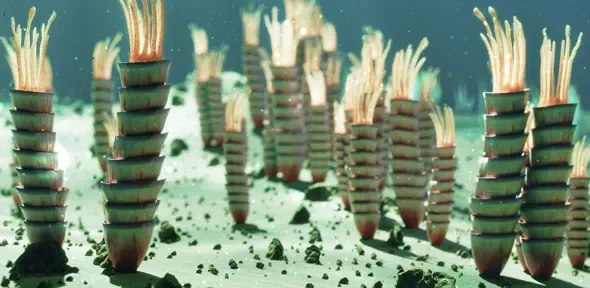
The fossil record predominantly features hard structures like shells, bones, and teeth, which are more likely to endure over time compared to their softer counterparts. However, fossils from the late Ediacaran Period (around 579 to 539 million years ago) stand out, offering detailed representations of some of the oldest complex animal life forms, even in the absence of hard parts. Ediacaran ecosystems are particularly noteworthy for their exceptional preservation, providing insights into early animal evolution and diversity.
For years, scientists have speculated about the reasons for the common preservation of soft tissues during this era. Various hypotheses have included unique chemical conditions in Ediacaran oceans, distinctive tissue compositions, or the influence of microbial slime on the seafloor. Yet, these explanations have failed to apply universally across different fossil sites.
Now, the Cambridge team suggests that the evolutionary development of collagen-degrading microbes producing collagenases may offer new answers. Their findings, published in Current Biology, highlight the impact of these microbial enzymes on the preservation potential of various animal tissues.
Collagen plays a crucial role in providing structural integrity to animal tissues. Upon the death of an organism, the action of collagenases can swiftly degrade these tissues, diminishing their chances of fossilization. Lead author Philip Vixseboxse points out the analogy of modern jellyfish, which decompose within days when washed ashore and are unlikely to leave fossils behind. In contrast, soft-bodied animals from the distant past exhibited far better fossilization rates, largely due to environmental conditions that suppressed collagen degradation.
Researchers conducted an extensive analysis of 700 bacterial genomes to trace the evolutionary timeline of collagenase genes. They discovered that these enzymes are ancient and were initially present in anaerobic microbes. In the oxygen-rich waters of the Ediacaran, dead organisms could maintain their collagen until the surrounding sediments depleted their oxygen, allowing for an extended preservation period.
However, a significant shift occurred near the end of the Ediacaran and the onset of the Cambrian Period. During this transition, collagenases began to appear in aerobic bacteria, which are now associated with modern decay processes. This influx of collagen-degrading microbes coincided with a steep decline in the number of soft-bodied animal fossils.
"As aerobic bacteria acquired the ability to degrade collagen, these organisms faced a newfound threat to their preservation, which likely contributed to the dwindling fossil record during this period," says Vixseboxse. The implications are profound: as the capacity to break down collagen spread, more animals would require rapid fossilization to avoid decay, leading to a noticeable decrease in the preservation quality of soft tissues.
While exceptions do exist where soft tissues are occasionally preserved in younger strata—often due to rapid burial under sediment—these instances remain rare and highly contextual. Co-author Professor Alex Liu remarks that this research highlights a potentially overarching biological mechanism influencing soft tissue fossil preservation throughout Earth's history.
Looking towards the future, Vixseboxse draws a parallel between ancient collagen and the modern environmental challenge of plastic pollution. Just as collagen remained undecomposed until organisms capable of breaking it down evolved, plastic persists in the ecosystem until similar mechanisms develop. "As bacteria didn’t initially have a need to degrade collagen, they eventually adapted once it became abundant. We could one day see microbes evolve to tackle the ever-increasing plastic debris we generate," he suggests.
This investigation into microbial evolution and its ramifications for the fossil record underscores not just the complexities of paleobiology but also the interconnectedness of life, both ancient and contemporary.
Reference:
Philip B. Vixseboxse et al. ‘Temporal heterogeneity in the animal fossil record driven by proliferation of microbial collagenases.’ Current Biology (2026). DOI: 10.1016/j.cub.2026.09.045



Discussion
Sign in to join the discussion.