New techniques utilizing modulated microwaves have significantly improved coherence times in silicon hole spin qubits, paving the path for more reliable quantum computing.
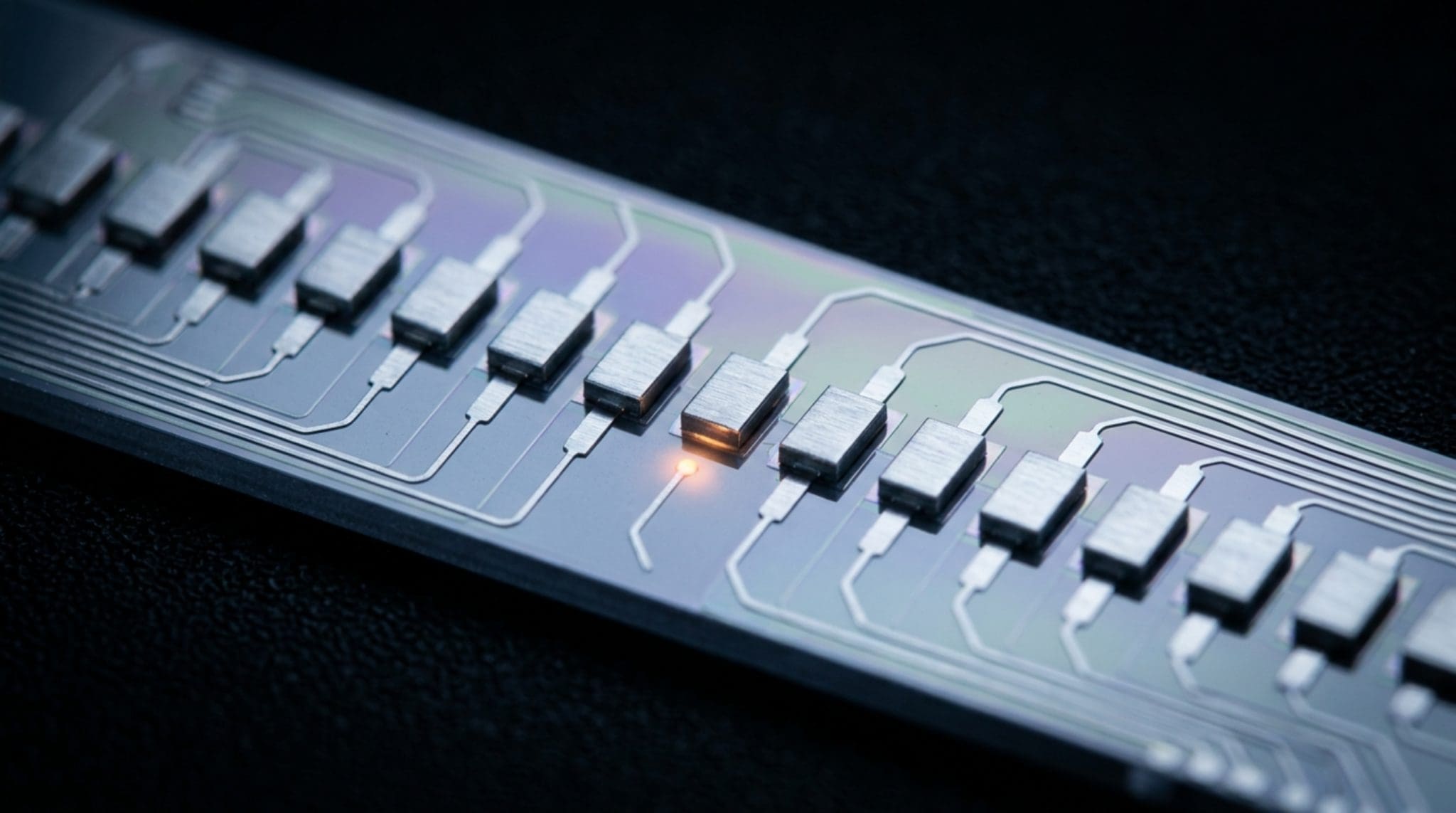
Silicon quantum dots, particularly those utilizing hole spins, have emerged as promising candidates for advancing quantum computing. Their inherent potential for rapid electrical control arises from strong spin-orbit coupling. However, this makes them sensitive to environmental disturbances like charge noise, which limits their capability to maintain coherent information storage. Recent advancements from researchers at the Institute of Science Tokyo, in collaboration with Hitachi and the University of Tokyo, tackle this challenge by implementing precisely timed microwave pulses to mitigate these external disruptions.
These hole spins serve as fundamental carriers of quantum information, but their efficacy is often compromised by interference, thereby constraining reliable data retention. The innovative method developed by the research team stabilizes these spins, significantly extending their coherence time, a central factor in building stronger, more reliable quantum computers based on silicon technology.
Enhancements in Coherence Using Rabi Oscillations
Through the stabilization of Rabi oscillations—which can be likened to the gentle rocking of a child in a cradle—the team has achieved remarkable outcomes. They managed to elevate the decay time of these oscillations from 177 nanoseconds to over three microseconds by employing a method called concatenated continuous driving, which targets those pesky low-frequency noises that typically hinder qubit stability.
This breakthrough was realized at the Institute of Science Tokyo, where researchers actively modulated microwave signals to suppress the low-frequency noise, thereby enhancing the coherence of qubits during gate operations. The approach not only stabilizes the hole spins but also ensures protection during various operational phases—an essential step toward the practical realization of quantum computing using this silicon-based technology.
Upon conducting electric-dipole spin resonance analysis, the researchers identified an effective hole g-factor of 1.79, which is crucial for understanding how microwaves govern interactions with spins. Initial coherence measurements indicated limitations as short as 58 nanoseconds, but the introduction of Hahn echo techniques led to substantial improvements in stability and coherence.
Challenges and Future Directions
While achieving extended coherence times brings clear advantages, the research team also acknowledged the accompanying challenges. The concatenated continuous driving method relies heavily on precise microwave control, which could serve as a technical hurdle. Despite this, it’s more of an engineering obstacle than an insurmountable barrier. Efforts at UNSW Sydney have similarly aimed to refine these techniques, further pushing the boundaries of qubit stability within the silicon framework.
The ability to achieve sustained coherent control and simultaneous noise protection signifies notable progress in the pursuit of practical quantum computation. This advancement specifically addresses the detrimental impacts of charge fluctuations and nuclear spin interactions. The implementation of advanced microwave signal modulation actively defines a qubit's operational environment, moving beyond traditional passive approaches.
Ultimately, the researchers succeeded in extending the Rabi oscillation decay times to exceed three microseconds through their phase-modulated microwave driving technique. Given that low-frequency noise represents a major limiting factor in qubit coherence, this work holds significance for enhancing qubit usability in computations. Ongoing efforts aim to optimize signal precision and deepen our understanding of enhancing qubit performance, aiming for more resilient quantum systems.
👉 More information
🗞 Coherence protection of a silicon hole spin qubit with phase-modulated microwave driving
✍️ Sayyid I. Ibad, Yusuke Sato, Takuma Kuno, Itaru Yanagi, Toshiyuki Mine, Ryuta Tsuchiya, Digh Hisamoto, Hiroyuki Mizuno, Raisei Mizokuchi, Jun Yoneda, and Tetsuo Kodera
🧠 ArXiv: https://arxiv.org/abs/2608.19696


See today’s quantum computing news on Quantum Zeitgeist for the latest breakthroughs in qubits, hardware, algorithms, and industry deals.



Discussion
Sign in to join the discussion.