Diraq and Dell's collaboration aims to merge classical and quantum computing in a new HPC environment, paving the way for advanced computational workflows.
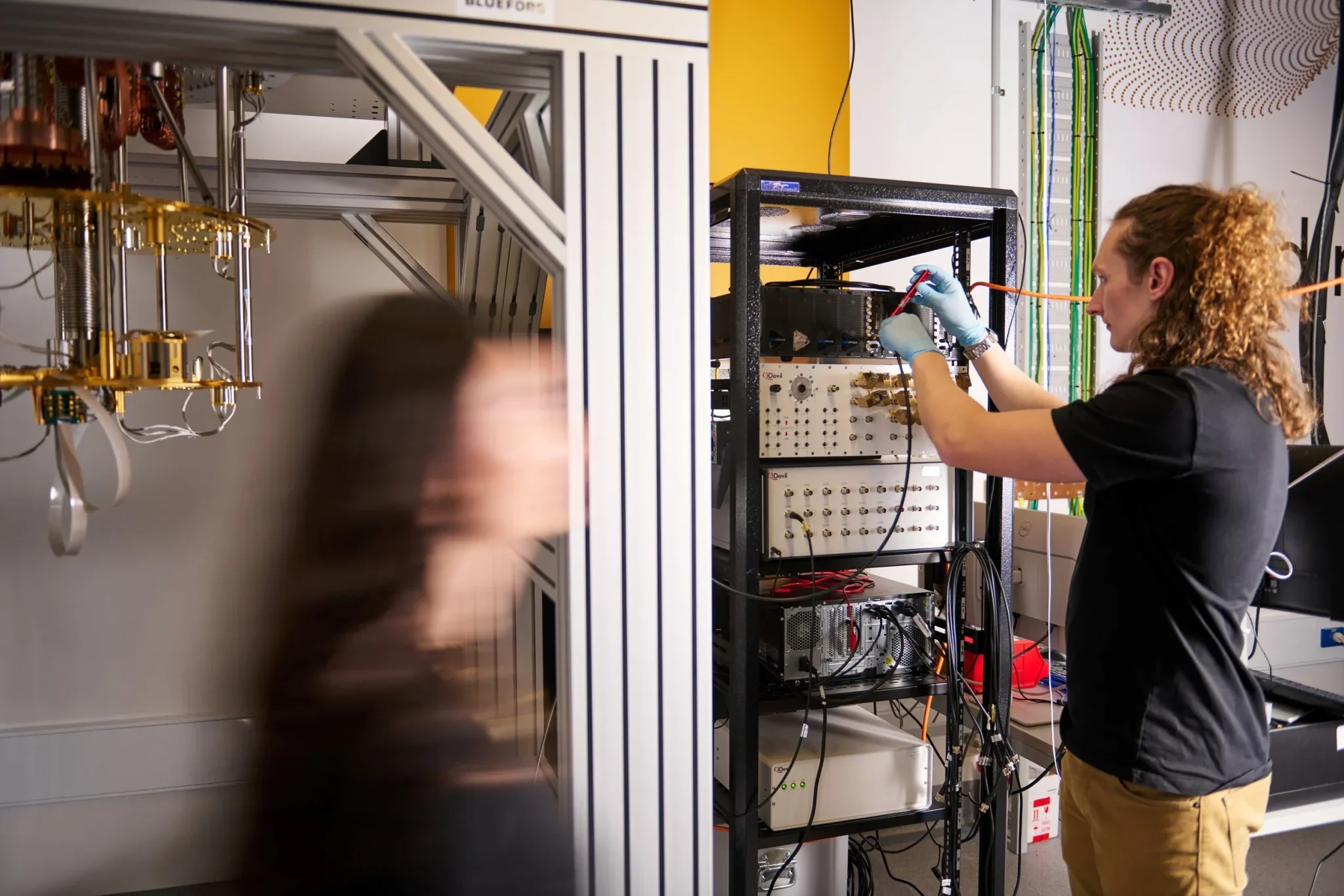
Dell Technologies is officially collaborating with Diraq to create a high-performance computing (HPC) cluster within Diraq's laboratory in Sydney. This partnership is focused on effectively linking quantum systems with classical computing, aiming to address a significant barrier in quantum technology: the practical integration with existing high-performance infrastructure.
According to Diraq CEO and Founder Andrew Dzurak, the partnership is about building integrated systems that leverage classical AI and conventional CPUs for extensive numerical computations, while reserving quantum processing units (QPUs) for particularly complex problems. This strategy allows each system to operate in its optimal domain, enhancing overall efficiency.
Optimizing Quantum-Classical Interaction with Co-Located Systems
The newly established HPC cluster is positioned directly within Diraq's facility, creating a unique configuration that allows rapid communication between quantum and classical systems. This physical closeness is crucial for reducing latency, an important factor for validating hybrid workflows. Diraq's silicon spin qubits necessitate this low-latency setup to ensure efficient feedback loops between quantum computations and classical controls.
The initial phase of the collaboration focuses on validating latency and executing basic test circuits to confirm the operational compatibility of Dell's HPC infrastructure with Diraq’s quantum processor, thus establishing a stable interface between these fundamentally different technologies.
Diraq's silicon spin qubit technology, manufactured on conventional CMOS foundries, plays a central role in this integration strategy. This framework not only simplifies qubit manufacturing processes but also supports a higher qubit density, working towards the goal of fitting millions of qubits onto a single chip while minimizing traditional overhead.
In addition to hardware compatibility, Dell is also enhancing its orchestration systems to efficiently manage task distribution between classical and quantum components. This orchestration will enable a smooth workload transition, integrating classical computations with quantum processes and ensuring efficient result collection.
One promising early application of this technology lies in automated qubit calibration and tuning, where classical systems analyze performance data to fine-tune quantum devices rapidly. Dzurak points out that the specific types of problems suitable for quantum computation often surpass even the capabilities of advanced AI, indicating a future where quantum and classical computing are seen as complementary rather than competitive.
Dell's Global CTO and Chief AI Officer, John Roese, highlighted the need for diverse computational resources, asserting that complex global challenges will rely on systems that harmoniously integrate various computational types. He believes Diraq's scalable silicon technology is well-positioned to tackle the integration challenges facing hybrid quantum-classical systems.
Roese is optimistic about the advancements we're making, remarking, “We’re getting closer to real systems.” He emphasized the possibilities that viable and scalable quantum systems could unlock across fields such as mathematics and artificial intelligence, dubbing quantum technology as potentially transformative when compared to generative AI which has dominated recent discussions in technology.
We’re working with Dell to create integrated systems that call classical AI and CPUs for the big number crunching.
Andrew Dzurak, CEO and Founder of Diraq
Adapting HPC for Enhanced Quantum-Classical Workflows
Diraq, which received more than $140 million in funding since its founding in 2022, is expanding its horizons with a new tech hub in Los Angeles. This facility will focus on developing silicon spin qubit technology and supporting its growing team. This expansion, alongside partnerships with companies like NVIDIA and Iceberg Quantum, highlights Diraq’s determination to establish a comprehensive quantum computing ecosystem.
Dzurak expresses a strong vision for the future, stating, “Once we have viable, cost-effective, at-scale quantum systems, it changes everything.” The emphasis on developing hybrid solutions reflects the current trend in quantum computing, as it becomes clear that quantum enhancements can coexist with classical capabilities in domains like drug discovery, where computational demands are extensive.
It’s vital that we create hybrid systems with quantum computers working alongside high-performance AI.
Andrew Dzurak, CEO and Founder of Diraq
Scalable Data Center Integration with Silicon Qubits
The ongoing work between Diraq and Dell aims to solidify the integration of quantum processors within traditional high-performance computing frameworks. The choice of Diraq's silicon-based design emphasizes the potential for higher qubit density actionable within existing operational models, steering away from architectures that require extensive additional infrastructure.
The partnership seeks to demonstrate the feasibility of incorporating quantum processors into standard HPC operations, ultimately aiming for efficient integration into global data centers through permitting infrastructure, such as using a single cryogenic refrigerator to house substantial quantum computing capabilities. This strategy not only reduces costs but also efficiently translates quantum potential into actionable, scalable solutions.
Diraq’s focus on industry-wide collaboration strengthens its position in the quantum ecosystem, as evidenced by ongoing relationships with major players like NVIDIA, GlobalFoundries, and imec. These partnerships are crucial for translating the theoretical advantages of quantum computing into practical, widely utilized technological solutions.
The term of the day is hybrid quantum-classical computing.
John Roese, Dell Global CTO and Chief AI Officer



Discussion
Sign in to join the discussion.