Fraunhofer EMFT's new foil-based superconducting cables optimize quantum computing by minimizing heat input and maximizing qubit density in cryogenic environments.
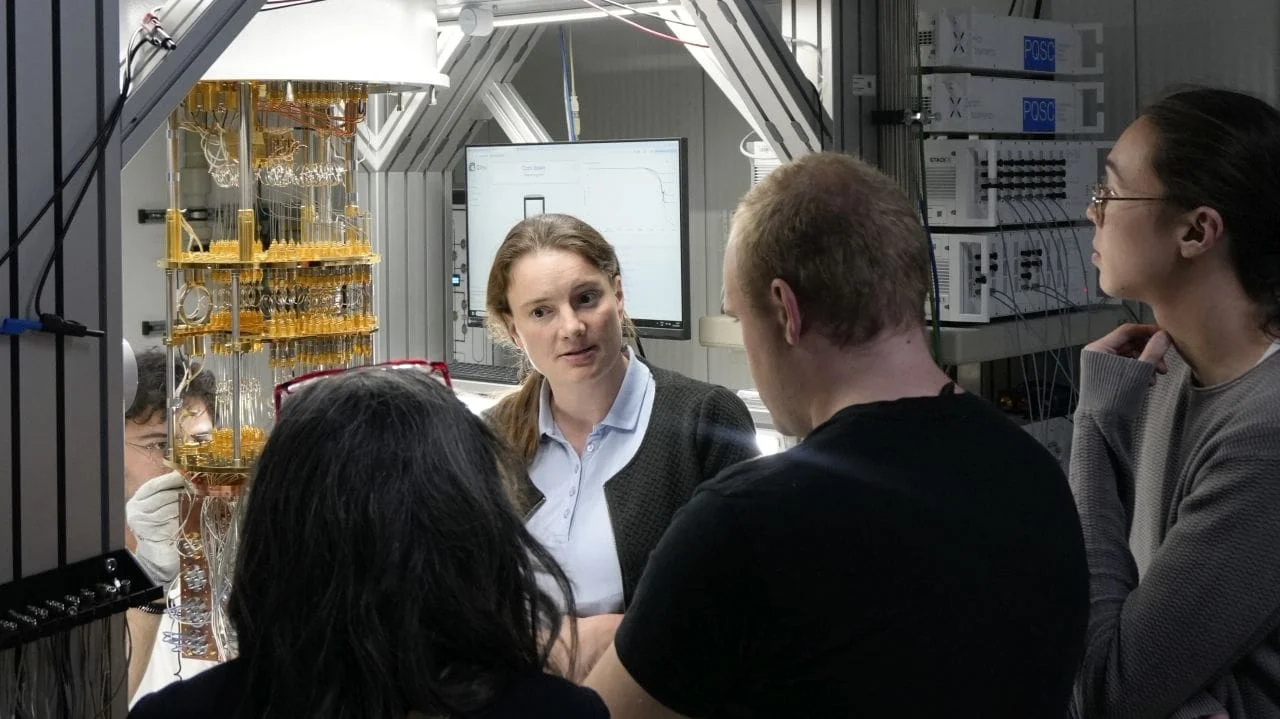
Fraunhofer EMFT is advancing quantum computing technologies with the introduction of flexible, foil-based superconducting cables. Designed to tackle inefficiencies, these cables significantly reduce thermal input while optimizing space in cryostats, the ultra-cold environments where superconducting qubits function at around -273 degrees Celsius, just above absolute zero.
Daniela Zahn and Elias Meltzer showcased these innovations at a recent event, providing attendees with a firsthand look at the technology and its implications for controlling and reading qubits within the extreme conditions of a cryostat. The ultimate aim is to pave the way for practical, fault-tolerant quantum computers capable of managing a substantial number of qubits with reliable control.
Design Innovation in Qubit Management
Operating at temperatures close to absolute zero poses unique challenges for maintaining signal integrity and power within superconducting qubits. The foil-based cables from Fraunhofer EMFT not only enhance thermal management but also allow for greater density of qubits in cryostats. This design minimizes thermal conductivity, thereby lowering heat absorption and fostering enhanced performance across quantum processors.
The flexibility of these cables is a significant development, offering essential advantages for packing more components into the already cramped environments of quantum processors. As the quest for fault-tolerant quantum computation continues, this ability to create denser arrangements becomes even more critical. During the “MQV-Einblicke – Quantenwissenschaften vor Ort erleben” event, visitors explored the cable technology’s application while gaining insights on the transmission of signals to and from quantum processors, which is a key factor in ensuring the efficient operation of these complex systems.
This showcase underlines Fraunhofer EMFT’s commitment to public engagement, emphasizing the importance of sharing knowledge in a rapidly advancing field. The research institute indicates that these superconducting cables are foundational for increasing the number of qubits usable in future quantum systems, essential for achieving higher computational capabilities. The implications here are profound—without advancements in this area, the promise of scalable quantum computing could remain unfulfilled.
But who benefits? Researchers, developers, and anyone involved in quantum technology development might find these innovations particularly impactful. Increasing the number of qubits that can be effectively managed is key for practical applications in various fields, including cryptography, material science, and complex modeling. Thus, the research at Fraunhofer EMFT isn’t just academic; it’s paving a path toward real-world applications that could transform industries.
Challenges in Quantum Scaling
The cold reality of quantum computing is that achieving practical applications isn’t just about creating advanced materials; it’s also about overcoming numerous technical hurdles. Maintaining qubit coherence in such frigid conditions is inherently difficult. Quantum decoherence is often cited as one of the most formidable barriers to practical quantum computing.
To combat decoherence, various strategies must be employed. This includes, but isn't limited to, enhancing thermal management—an area where Fraunhofer EMFT’s new cables shine. By reducing the thermal load on qubits, the new cabling systems can potentially extend the coherence time, allowing more complex computations to be performed before the system loses its quantum properties. So, while heftier qubit counts are essential, ensuring that they can still function correctly under operational parameters is where the real potential lies.
What's also striking is the potential ripple effects throughout the industry. If Fraunhofer’s advancements translate into practical implementations, you can expect not just academic interest but also commercial applications to spring up. This is an area where every incremental improvement can lead to significant shifts, sparking innovation across sectors reliant on computational power.
Implications for the Quantum Future
The emergence of these foil-based cables from Fraunhofer EMFT stands to redefine how researchers approach quantum computing systems. It’s not just about making systems that work; it’s about creating systems that can scale, offering meaningful advancements over today’s classical computing frameworks. This is more significant than it looks on the surface.
If you're working in this space, you might want to pay attention to these developments. The integration of advanced thermal management systems and flexible cabling could pave the way for the next generation of quantum processors that can handle higher qubit counts while maintaining operational integrity. This could accelerate the timeline for practical quantum computing significantly—something that's anxiously awaited by various sectors from finance to pharmaceuticals.
We’re at a juncture now where the technical capabilities of quantum systems are beginning to match the theoretical potential long touted in scientific literature. As improvements like these come to fruition, the ecosystem surrounding quantum technologies could grow at an unprecedented rate, leading to applications that were once deemed science fiction.



See today’s quantum computing news on Quantum Zeitgeist for the latest breakthroughs in qubits, hardware, algorithms, and industry deals.



Discussion
Sign in to join the discussion.