Raj Panjabi's new book, "Safer," turns pandemic lessons into everyday tools, from if/then triggers at home to shared protections in a crisis.
The most dangerous assumption in a crisis is that tomorrow will look like today. Public health specialists call February 2020 "the lost month," the stretch when a novel coronavirus moved from person to person and across borders largely unnoticed. Hospitals were already straining, yet most people and most governments kept going as if nothing had changed.
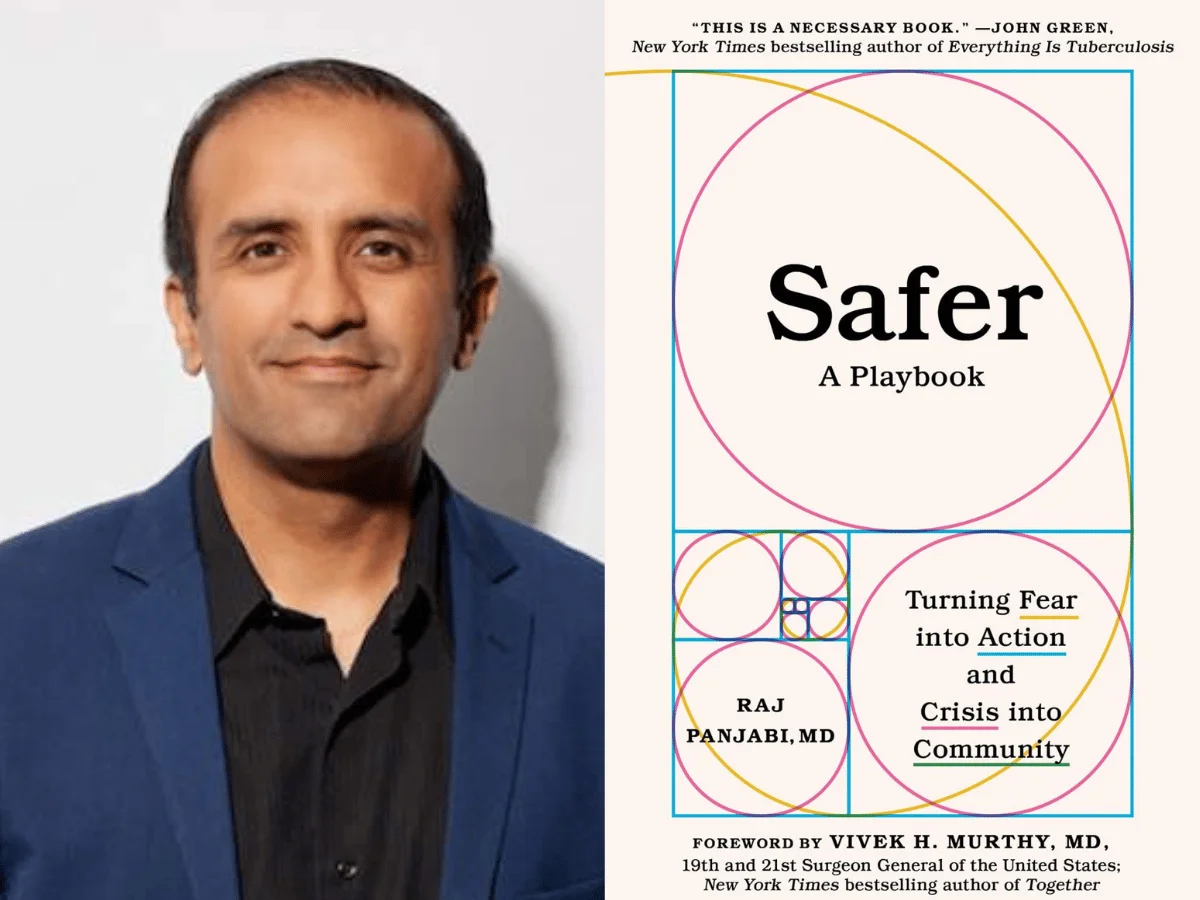
That reflex has a name, normalcy bias, and it sits at the center of a new book by Raj Panjabi, a physician and part-time Harvard Medical School lecturer on medicine at Brigham and Women's Hospital. His argument is that the same instinct that delayed the pandemic response also shapes how families handle illness, aging, and money trouble. And the fix looks surprisingly similar at every scale.
A month of looking away
Normalcy bias, Panjabi writes, is the tendency to "assume that things will continue as they always have been." The trouble is that the assumption feels reasonable right up until it isn't.
He fell for it himself. During the lost month, Panjabi flew to London for a conference, flew home, and then took his family to Disney World, including a young daughter with a serious heart condition. Looking back, his verdict is blunt.
"What would I have done differently if I had grasped the gravity of the situation? Nearly everything."
Raj Panjabi
That admission gives the book its credibility. It isn't a lecture from someone who saw the storm coming. It's from someone who missed it and spent the next several years working out why.
Safer: A Playbook — Turning Fear into Action and Crisis into Community aims at healthcare workers, government officials, and ordinary people alike. Its target is the gap between a true emergency and a bad week, which Panjabi describes as the thing people most often struggle to tell apart.
From Liberia to the frontline
Panjabi knows the stakes firsthand. Born in Liberia, he watched his country slide into authoritarianism and civil war as a child. His family kept asking whether each new wave of violence or dysfunction was the one that meant it was time to leave. That question, whether this is the moment to act, runs through the whole book.
After the family resettled in the United States, Panjabi trained as a physician and moved into public health. He returned to Liberia during the 2013–2016 Ebola outbreak, and years later he served on the frontline of the COVID pandemic. He also helped the Biden administration build a playbook for future public health emergencies.
The personal experience of COVID is where the book gets its texture. Panjabi worked in head-to-toe protective equipment at the MGH Chelsea Community Healthcare Center. When he got home, he stripped off his clothes in the garage and went straight to a scalding shower. Lockdowns, mask mandates, and social distancing made the work feel impossible to do safely, and yet he came to a conclusion that anchors the book.
"It was very hard to feel safe, but it was always possible to become, and to feel, safer. That's the way we think about risk in public health: We can sometimes not get risk to zero — risk is rarely zero — but you can always reduce it."
Plays instead of platitudes
The book is organized as a series of "plays," borrowed from the idea of a playbook. Each one is a tool or way of thinking that hospitals and governments use, adapted for the smaller emergencies people face at home.
The first play, "Turn Denial into Action," is built on triggers. Decide in advance on an observable signal and a specific response, then agree to act when the signal appears. That structure is meant to cut through normalcy bias before the crisis arrives, when people are still arguing about whether there is one.
At the government level, it might sound like: "If case counts rise above X, we declare a national emergency." Inside a family, Panjabi offers a version tied to his own daughter's health: "We review our daughter's periodic heart ultrasound results, and if her heart's ability to pump blood drops below normal, we will act before she develops heart failure."
The same logic works for an aging parent who shouldn't be driving. Rather than repeatedly nagging about safety or waiting for a crash, Panjabi suggests agreeing ahead of time on warning signs, such as an unexplained dent in the car or getting lost on a familiar route. "The trigger does the watching," he said, "and you sit down and talk about other ways to get around when one appears."
What makes this approach work is that it removes the need for a heated debate in the moment. Nobody has to win an argument about whether things are bad enough. The threshold was set when everyone was calm.
Protection is a shared job
A second play, "Dial Up Protections," starts from a different premise: "risk in a crisis isn't just individual, it's social."
Panjabi draws on the late Paul Farmer, the Harvard Medical School physician and Partners in Health co-founder whose "biosocial" model of disease reshaped global health. Farmer argued that no one carries risk alone. A person's exposure depends on access to healthcare, socioeconomic standing, and the people around them.
Panjabi saw that dynamic play out in Chelsea, a low-income community with a large immigrant population that recorded some of the highest per-capita infection rates in the country during the height of the pandemic. Official guidance often assumed a home setup that many residents didn't have.
"Chelsea residents were being told, like in many parts of the country, that if they got COVID they should isolate in a separate bedroom. Well, if you've got seven or eight people living in a two-bedroom apartment, you can't do that," he said, frustration still audible years later.
The lesson, he argues, is that protection has to be designed around the actual conditions people live in. Advice that ignores those conditions doesn't reduce risk. It just shifts the burden onto the people least able to carry it.
The same principle applies to a personal crisis. Imagine a family member going through a divorce, facing loneliness, financial strain, and legal questions all at once. For each risk, what counters it? Is someone checking in on Sunday nights, when loneliness tends to peak? Does that person know their custody rights? Would a counselor or therapist help? Each answer is a protection, and most of them come from other people.
Connection over retreat
Panjabi's central point is that our instincts in a crisis push the wrong way. People want to pull inward, lock the door, and wait it out. The research he cites points in the opposite direction.
"A throughline of the book is that while our natural instinct in a crisis is to retreat, to pull inward, to lock the door, to wait it out, decades of research point the other way: Our greatest protection is not isolation, but connection," Panjabi said. "I wanted us to feel like there was agency and hope, that there are actions we can take to navigate fear and turn it into action, navigate crisis and turn it into community." That framing is what separates "Safer" from a standard emergency-preparedness guide. It treats fear as information to act on rather than a feeling to manage, and it treats community as infrastructure. My read is that the next crisis will test this idea more than any single piece of technology or policy. The question for families, hospitals, and governments is whether they've decided ahead of time what they'll do when the signal finally shows up.

Discussion
Sign in to join the discussion.