Alpine Quantum Technologies is now part of a €122 million effort to develop a 1,000-qubit fault-tolerant quantum computer in Germany.
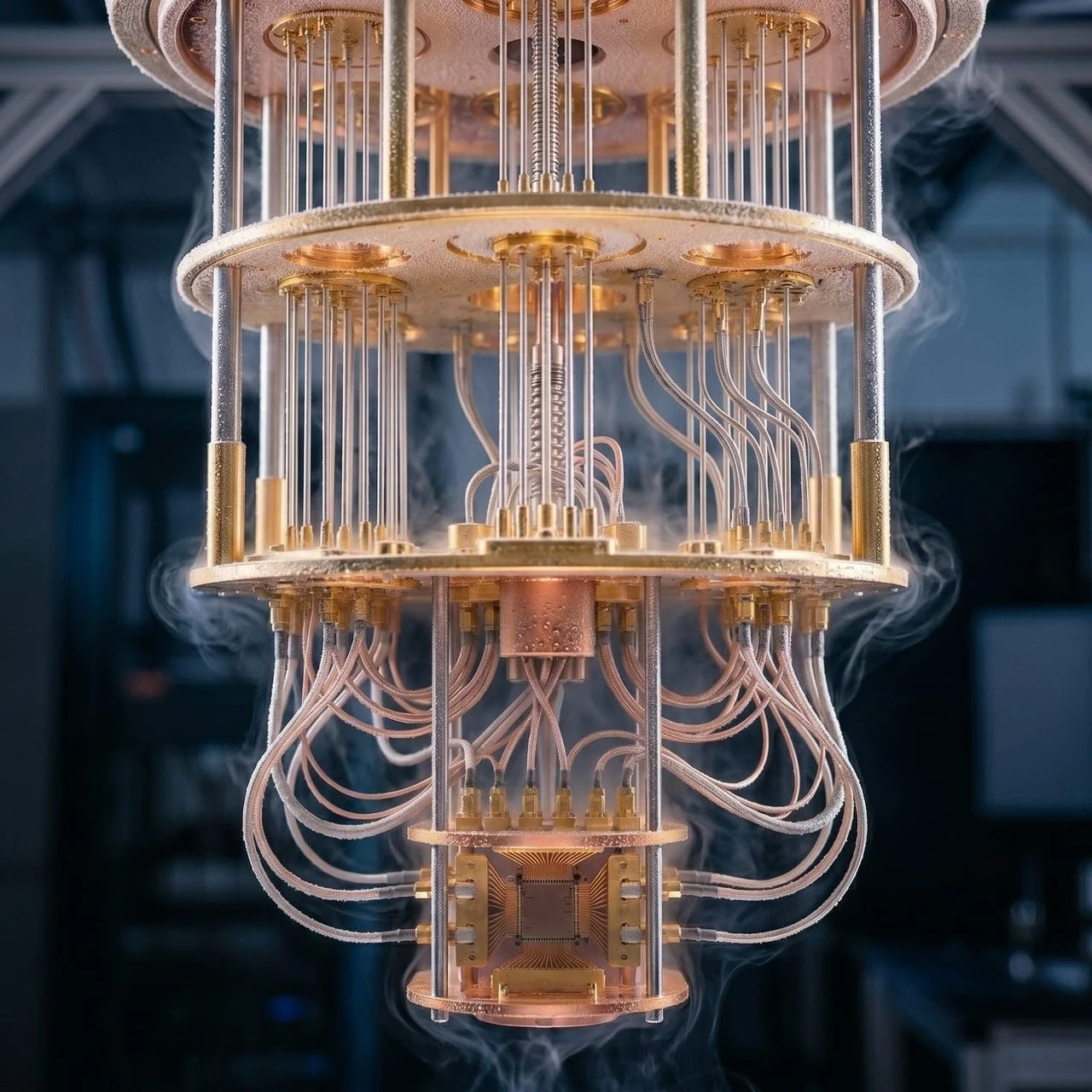
Alpine Quantum Technologies has joined a significant collaborative initiative worth €122 million, spearheaded by QUDORA, aimed at constructing a 1,000-qubit fault-tolerant quantum computer. This effort is part of Germany’s strategic push in quantum technology, with funding from the Federal Ministry of Research, Technology and Space. The project, titled NFQC-1k, involves a consortium of seven research entities and industrial partners focused on developing one of Europe’s leading quantum computing technologies utilizing trapped-ion methodology.
Ambitious Goals of the NFQC-1k Project
This venture highlights Germany's determination to secure a prominent role in the quantum technology sector. The government has prioritized this area within its High-Tech Agenda Deutschland, which places quantum technology second among six key technologies. It's not just about increasing the number of qubits; the project aims to deliver a demonstrator with at least 1,000 individually addressable physical qubits. This ambitious target signals a shift toward practical applications in quantum computing, a field long seen as being stuck in the realm of academia and theoretical possibilities.
Importantly, the project also targets achieving 50 logical qubits with a logical gate error rate below 0.01%. Such precision is vital, as any error in quantum calculations can result in catastrophic failures for complex algorithms. Meeting this performance criterion will involve implementing a Quantum Fourier Transform (QFT), a cornerstone operation in various quantum algorithms and essential for unlocking the full potential of quantum computing.
Beyond these ambitions, the consortium will work on establishing a pilot production line for high-performance quantum processing units (QPUs) based on ion-trap technology. This is critical because the transition from theoretical demonstrations to real-world applications hinges on scalable production capabilities. As the lead partner, QUDORA will coordinate the system's complete development, leveraging the specialized strengths of its partners to ensure effective collaboration.
Collaborative Framework and Notable Contributions
Key players in this collaboration include Hannover and the Technical University of Braunschweig, which will contribute vital research. Their foundational work in quantum algorithms and computing theory positions them as indispensable assets to the project. NXP Semiconductors Germany GmbH, known for its semiconductor technology expertise, will also provide significant contributions, particularly in the development of the integrated circuits necessary for QPUs. Meanwhile, Physikalisch-Technische Bundesanstalt, the national metrology institute, will play a crucial role in ensuring that measurement standards meet the astronomical levels of precision required in quantum computing.
“Fault tolerance doesn’t stem from improving a single qubit,” stated Amado Bautista-Salvador, CEO of QUDORA. “What’s essential is creating an architecture capable of reliably managing thousands of resilient qubits without system failure as we scale.” In other words, this isn't just a technical challenge; it's a systems engineering problem that needs solving. The financial backing of this project will be ensured through the BMFTR’s “Mission-Driven Hardware Competition: Fault-Tolerant Quantum Computing with Pilot Line Development” program, which is designed to provide sustained support over five years. This government initiative underscores a broader trend of public investment in quantum technologies, showcasing how seriously authorities are taking global competition in this field.
Henning Hahn, COO of QUDORA, pointed out, “NFQC-1k builds on our NFQC technology to develop a fault-tolerant quantum computer in collaboration with leading German research institutions and businesses.” Statements like these reflect the confidence shared among partners, but they also call into question whether such ambitious targets can indeed be met within the given time frame and budget. Their contributions are focused on enhancing the demonstrator’s capability to manage a substantial number of logical qubits while maintaining extremely low error rates. This complexity showcases the practical challenges ahead, particularly with trapped-ion technology, which while promising, has been historically challenging to scale efficiently.
Aiming for Economic Viability in Quantum Computing
The consortium’s ultimate ambition is to deliver a quantum computing system ready for actual economic application in Germany and beyond. This represents not just a technological milestone but also a potential economic shift, which could place Germany at the forefront of a rapidly advancing field. Achieving commercial viability is crucial; the quantum computing sector has long suffered from hype without substantial progress to show. A successful practical implementation would validate many years of research and investment.
Following a successful conceptual phase, the consortium is set to submit a detailed application to kickstart the tangible realization of the NFQC-1k project. If you're working in this space, the outcome of this proposal could influence future funding strategies and collaborations across Europe. The implications for industry and academia are profound; quantum computing stands to revolutionize numerous sectors by providing speed and power that classical machines cannot match.
Implications and Future Outlook
The NFQC-1k project represents more than just a collaborative effort; it's a signal of shifting priorities in global technology development. With the commitment from the German government and the diverse expertise pooled together in this consortium, there's a possibility of setting new benchmarks for quantum computing within Europe. That's significant. As other countries ramp up their investments, advancements in this field could redefine what’s possible across various industries, including pharmaceuticals, finance, and AI.
The focus on fault tolerance and economic viability reflects an understanding of what needs to be achieved for quantum computing to transition from theoretical experiments to practical applications. If successful, the NFQC-1k could serve as a template for other initiatives worldwide, shaping the contours of international competition in quantum technologies.
NFQC-1k builds on our NFQC technology to develop a fault-tolerant quantum computer alongside leading German research institutions and companies. That our project has been selected shows the confidence of the German government in our technology and the expertise of our partners.
Henning Hahn, COO of QUDORA



Discussion
Sign in to join the discussion.