Recent research showcases how quantum computation can improve signal detection in sensors, leveraging more than 128 photon states for enhanced measurements.

Recent advancements in quantum sensing reveal an experimental approach that combines quantum algorithms with a spin-oscillator architecture to enhance signal detection. By utilizing a microwave cavity as a high-dimensional quantum register alongside a superconducting qubit as a sensing element, researchers can utilize Grover's search algorithm in real-time signal analysis.
Broadening Frequency Resolution with Bosonic Grover Search
The team successfully implemented Grover's algorithm in a bosonic framework comprising over 128 photons. This approach significantly increased the resolution of frequency candidates compared to classical search methods, highlighting the efficiency of quantum algorithms in extracting relevant information from complex signals. Traditional analyses involve testing each frequency independently, which typically scales linearly. The quantum method, on the other hand, harnesses amplitude amplification to yield quadratic scaling, thereby needing fewer iterations to achieve results.
The fundamental challenge in this research lies in the nature of the unknown signals involved. While Grover's algorithm traditionally utilizes a predetermined oracle to identify target states, the incoming signals in this case are uncertain and cannot be encoded beforehand.
To tackle this, the researchers devised a novel signal-driven oracle where the incoming signal actively generates the required phase operations for the algorithm. Each interaction with the signal functions as an oracle query, facilitating the amplification of the quantum state corresponding to the detected frequency.
High-Dimensional Quantum Register via Microwave Cavity
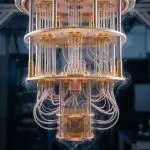
The experimental setup featured a three-dimensional microwave cavity linked to a superconducting transmon qubit. This configuration offers a bosonic, high-dimensional Hilbert space capable of housing a significant number of photon states. The interaction between the cavity and qubit is characterized by strong cross-Kerr coupling, enabling a direct correspondence between photon-number states and candidate frequencies.
This design allows for the deterministic preparation of Fock states through quantum amplitude amplification. The research expanded this process to encompass over 128 photons, dwarfed previous experiments limited to roughly 16 particles and significantly augmented the accessible Hilbert space.
During their experiments, the researchers achieved a five-fold increase in gate fidelity when executing the Grover-enhanced sensing, further validating their method within the superconducting framework.
Linking Computation and Sensing through Dynamic Oracles
A standout aspect of the research is the realization that the oracle operation is generated by the unknown signal itself, as opposed to being preprogrammed. This dynamic interaction allows the signal's frequency-dependent response to influence the stored photon numbers within the cavity, enhancing the probability concentration on the relevant quantum states.
As a result, Grover's amplitude amplification effectively connects the quasiphysical characteristics of the incoming signal with a computational algorithm, thus merging the worlds of computation and measurement seamlessly.
Through this technique, it became evident that the quantum protocol could identify more frequency candidates than its classical counterparts, showcasing the potential for integrating computational resources directly into the sensing framework.
Future Directions for Quantum-Enhanced Sensors
This experiment represents a compelling example of blending quantum computation with sensing mechanisms. By allowing the physical properties of the signal to guide computational processes, the researchers have opened avenues for advancing sensor technology.
While the specific architecture utilized in this study features unique properties tied to superconducting qubits and microwave cavities, these characteristics could limit its broader applicability. As the photon count increases, maintaining coherence and control over the system will be a key challenge to address.
Nonetheless, the findings illustrate the potential for employing quantum algorithms in dynamic sensing environments. The integration of high-dimensional bosonic registers, signal-driven oracle functions, and amplitude amplification sets the stage for developing sophisticated sensing protocols that effectively merge quantum computational power with practical measurements.
👉 More information
🗞Experimental realization of quantum-computing-enhanced sensing
✍️Yifang Xu, Hongwei Huang, Yilong Zhou, Yunlai Zhu, Chuanlong Ma, Lida Sun, Lintao Xiao, Ziyue Hua, Weiting Wang, Zijie Chen, Weizhou Cai, Hekang Li, Haohua Wang, Xiaoting Wang, Ming Li, Chang-Ling Zou and Luyan Sun
🧠 ArXiv: https://arxiv.org/abs/2609.07613





Discussion
Sign in to join the discussion.