Harvard researchers reached an impressive 99.941% fidelity in entangled quantum circuits, maintaining stability for over ten hours, a breakthrough for quantum computation.
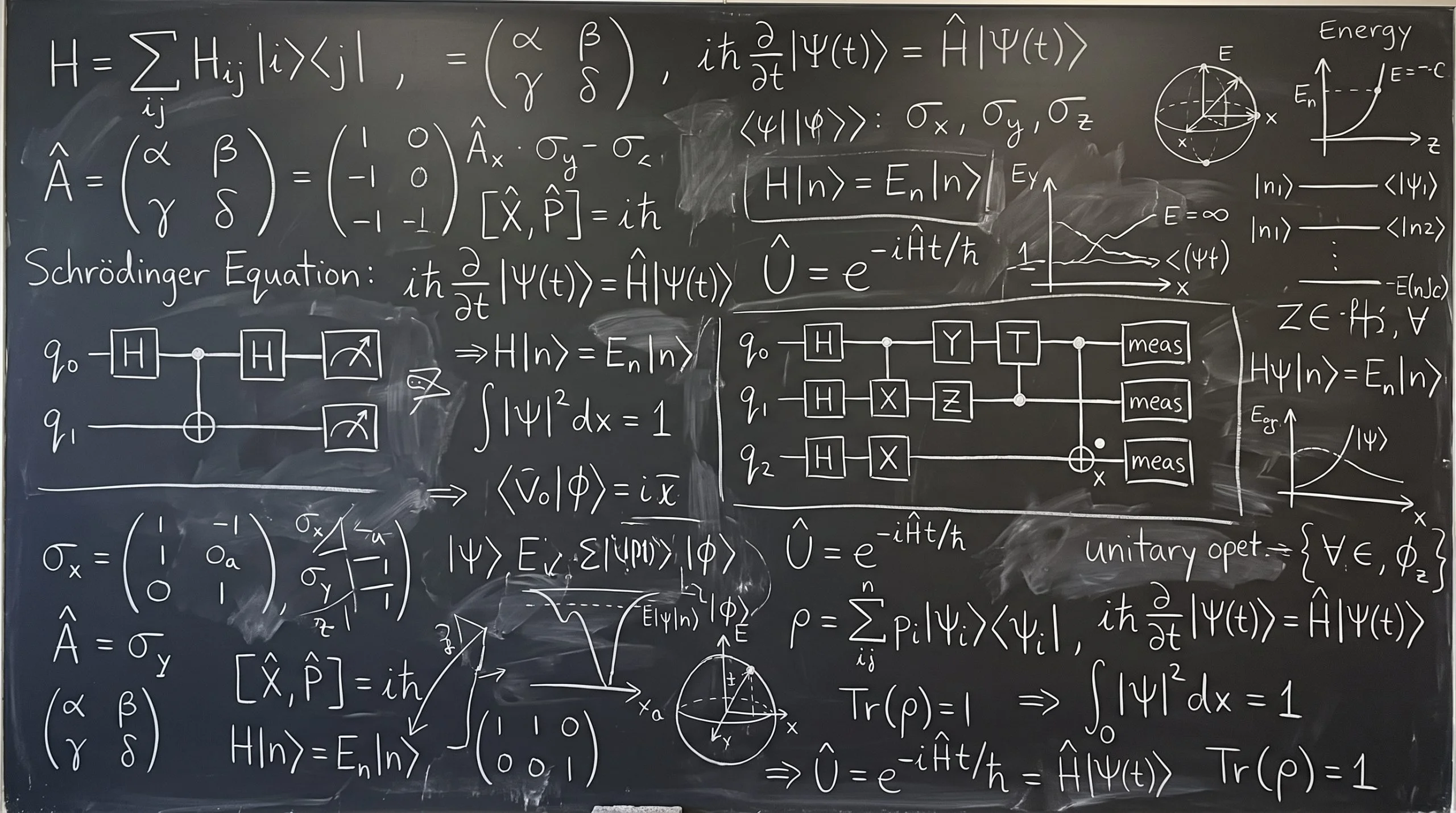
Researchers at Harvard University have made significant advancements in quantum computing, achieving an impressive 99.941(3)% fidelity in entangling controlled-Z (CZ) gates using a neutral atom quantum processor. This achievement, detailed in a recent paper, addresses the critical challenge of stability in quantum systems, demonstrating consistent performance over ten hours. Notably, the initial raw fidelity was 99.854(4)%, but innovative techniques allowed for a remarkable improvement.
Techniques to Enhance Gate Fidelity
The researchers utilized a method called loss postselection, which selectively focuses on successful gate operations that involved no atom losses. By filtering out instances where atom loss occurred, they effectively increased the fidelity of entanglement processes. This advancement is a pivotal development toward reducing errors in quantum circuits, thus enhancing reliability without needing to modify the existing hardware greatly.
The architecture employed in this experiment leverages the long-lived hyperfine clock states of rubidium-87 atoms to encode information, featuring a reconfigurable design that ensures optimal performance. The system includes a reservoir zone for the rapid cycling of atoms and specific sites designated for entanglement and state-specific readout functionalities.
Demonstrating Control Over Quantum States
Beyond establishing entanglement, the research team has shown precise capabilities in managing its destruction, which is critical for evolving quantum algorithms and effective error correction protocols. They successfully created and disentangled cluster states, a benchmark that validates their control mechanisms within the neutral atom system. The implementation of scrambling circuits with long-range connectivity allowed exploration of non-locally entangled states resulting from chaotic dynamics. According to the researchers, “High-fidelity entanglement is at the heart of quantum science and technology, enabling applications in computing, simulation, metrology, and sensing.”
Optimization Through Rydberg States
This latest approach revolves around detecting atom loss and using that as a basis for erasure information to refine overall circuit fidelity. Significant enhancements were made to key parameters, including a 1.7-times increase in Rabi frequency while minimizing unwanted couplings to Rydberg states, as well as securing stronger blockade effects. These optimizations are essential for extending Rydberg coherence times, which, in turn, bolstered the fidelity of the gates and improved rapid gate pulse calibration.
Stability Over Extended Periods
The neutral atom circuits not only maintained a high level of performance but did so without requiring recalibration for over ten hours. During this timeframe, the team confirmed the system’s reliability by continuously generating and dismantling 20-atom cluster states, meticulously showing their capacity for both creating and extinguishing quantum correlations within the system.
Multiple benchmarking techniques confirmed the CZ gate fidelity, indicating consistent performance despite complex atom motion. The researchers were able to maintain low-error regimes even in challenging conditions, demonstrating a significant capability for quantum error correction.
Facilitating Deep-Circuit Quantum Computing
Maintaining high-fidelity gate operations is imperative for executing deep-circuit quantum computations where many operations occur in succession. This study demonstrated high-fidelity entanglement over extended durations, paving the way for extensive computational tasks essential for practical applications in quantum computing. The circuits devised incorporated coherent atom motion and established long-range connectivity, resulting in a phenomenon referred to as super-ballistic scrambling of quantum information, crucial for certain quantum algorithms.
Validating Quantum State Dynamics
The observed scrambling effect facilitates a rapid distribution of quantum correlations throughout the system, fulfilling requirements for effective quantum algorithms while combating potential error effects. The outcomes pointed to near-maximal randomness indicative of an optimally scrambled quantum state, aligning closely with theoretical benchmarks for entanglement entropy.
Numerical simulations further validated the experimental results, showing saturation of entanglement entropy at anticipated values correlating with increasing system size. The findings highlight that such circuits can efficiently scramble quantum information, a process notoriously difficult to simulate using classical methods.
Further analysis involved scrutinizing the eigenvalue distributions of reduced density matrices, which showed congruence with the Marchenko-Pastur distribution anticipated for Haar-random pure states—indicating strong evidence of successfully achieving super-ballistic scrambling. This progress marks a notable step toward realizing fault-tolerant quantum computation with expanded connectivity and complex algorithms.




See today’s quantum computing news on Quantum Zeitgeist for the latest breakthroughs in qubits, hardware, algorithms, and industry deals.



Discussion
Sign in to join the discussion.