The "health freedom" movement's leaders often threaten public health, prioritizing political agendas over individual rights and safety, risking vulnerable populations.
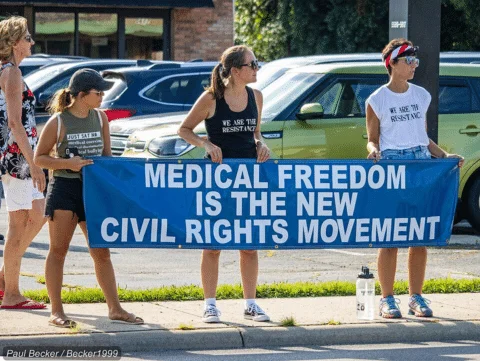
There's an unsettling truth lurking beneath the surface of the so-called "health freedom" movement—its leaders often embody the very authoritarianism they claim to oppose. This movement, which positions itself as a champion of individual rights, manages to simultaneously undermine public health and place vulnerable populations at risk. If you're entrenched in healthcare or public policy, this should raise serious alarms for you.
### A Disturbing Agenda
Recently, a coalition of **160 physicians, scientists, and activists** took an alarming stance outlined in an open letter they addressed to Secretary Kennedy and President Trump. Their grievance? The government's tepid response to the mRNA vaccine platform. They demanded the **removal of mRNA shots**, warning that failure to comply would mean withdrawing political support. The language used in this letter is revealing: it’s more about political leverage than genuine concern for public health. Ignoring the overwhelming evidence of the safety and efficacy of vaccines indicates a troubling mentality among these so-called health advocates.
What makes this even more perplexing is the ironic twist where the very proponents of "health freedom" advocate restricting access to vaccines that have tangible benefits. Their rhetoric about individual choice overlooks the critical responsibility we have toward public safety.
### The Human Cost
The dark implications of this movement extend beyond abstract debates; the consequences are devastatingly real. In Idaho, for instance, children from faith-healing families have died tragically because their parents eschewed medical treatment—believing instead in divine intervention. ProPublica has reported on **at least 15 deaths** in such sects since 2015, with many more unrecorded. The protection these parents receive under Idaho law creates a chilling environment where medical neglect flourishes, often with fatal outcomes.
The harsh reality is that while leaders like Kennedy trumpet their idea of “health freedom,” they often disregard the rights of children—who cannot advocate for themselves in situations like this. Instead, Kennedy disproportionately focuses his energy on accusations of "medical tyranny" rather than addressing the systemic issues allowing for such neglect.
### A Climate of Threat
The climate cultivated by the health freedom movement has far-reaching implications. Historical patterns of violence and retribution against public health officials signal a dangerous shift. This isn’t an exaggeration; advocates within this space have a track record of hostile and threatening behavior toward scientists and health officials. An alarming **76% of public health leaders** report experiencing harassment.
Now imagine you're a public health leader tasked with managing a pandemic or enforcing vaccination protocols in a community filled with anti-vaccine sentiment. It’s no wonder that individuals operating in this field express fear for their safety and the safety of their families. The willingness to intimidate and threaten those who attempt to uphold scientific integrity reveals the true nature of the health freedom agenda: it's a campaign rooted not in advocating for individual rights, but in enforcing a particular ideology at any cost.
As we analyze this movement, it’s imperative to recognize the reality—that beneath the guise of empowerment lies an authoritarian impulse that aims to dictate not only how individuals make health decisions for themselves but also for their children. In this context, discussing “health freedom” becomes a contradiction in terms, revealing a deeply troubling agenda that we cannot afford to ignore.



Discussion
Sign in to join the discussion.