A recent study shows that climbing Mount Everest is becoming safer, with a significant decrease in mortality rates attributed to improved technology and practices.
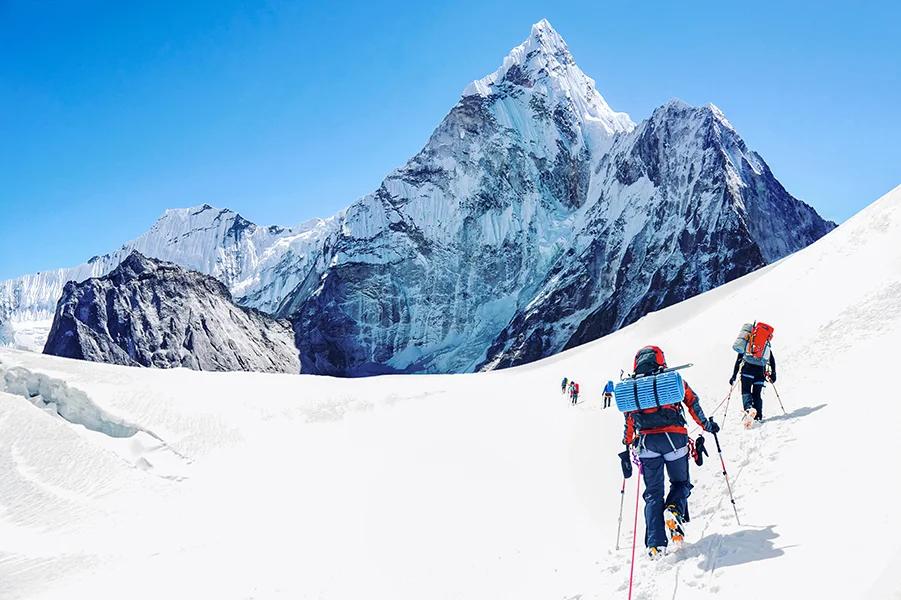
Climbing Mount Everest is becoming increasingly safer, as highlighted by a recent study led by Paul Firth, an associate professor of anesthesia at Harvard Medical School. Despite this progress, the mountain remains perilous, with nearly one in every 100 climbers failing to return home.
Firth's research extends from previous studies into high-altitude mortality, examining trends from the first recorded summit attempt back in 1921. His goal is to enhance the safety of climbers by better understanding how the body reacts to extreme elevations. His initial research, published in 2009, revealed that cerebral edema contributes to many high-altitude fatalities, a finding that's reshaped understanding of climbing risks.
This latest work, featured in The Journal of Physiology at the end of April, indicates a marked decline in death rates among climbers. Between 1921 and 2006, the mortality rate stood at 1.4 percent, but this plunged to 0.7 percent from 2007 to 2024. These results show a 50% reduction in fatalities during climbing expeditions.
Several factors are credited for this reduction in risk, including the prevalence of standard routes equipped with fixed ropes. Additionally, advancements in weather forecasting and communication technology facilitate better decision-making in hazardous conditions. Moreover, improvements in logistics, clothing, nutrition, hydration, and oxygen delivery systems significantly mitigate risks associated with the harsh environment.
"The data indicate fewer accidents and less isolation leading to fatalities," Firth noted. He speculated that improved teamwork and the systematic use of ropes have played a role, although many variables remain unmeasured.
The journey to the top of Everest has always come with significant danger. The first successful ascent was achieved by Tenzing Norgay and Edmund Hillary in 1953, but many other expeditions faced tragic ends. For instance, the 1921 attempt resulted in two fatalities before reaching the mountain, while an avalanche during the 1922 expedition claimed seven porters' lives. The last attempt by George Mallory and Andrew Irvine in 1924 saw their disappearance, and their remains were only discovered much later.
As of 2024, a total of 426 climbers have lost their lives during Everest expeditions. Of these deaths, over half occurred in the so-called "death zone" above 26,200 feet, where the oxygen levels are alarmingly low. Firth explained that most fatalities today occur during favorable weather conditions, primarily due to oxygen deprivation and extreme cold rather than inclement weather, thanks to enhanced forecasting.
Interestingly, the popularity of climbing Everest has surged in recent decades, with recorded summits jumping from 1,921 over the 85 years leading to 2006 to an astonishing 9,823 in just 18 years post-2006.
Despite the declining mortality rate, fatalities occur almost every year on the mountain, with some years seeing multiple deaths. One notable instance was in 2004, when seven climbers perished, including during an expedition led by Firth himself. A malfunction with his oxygen equipment prompted him to recognize early warning signs, which ultimately allowed his team to avoid disaster.
Firth organized his party and sent one climber equipped with sufficient oxygen onward to summit, while he and the rest of the group made the prudent decision to descend. The climber ascended to become the first Norwegian woman to reach the Everest summit safely.
The research also sheds light on the disparity between deaths among climbers and native sherpas, who serve as guides and porters. A significant number of climber deaths happen during their final ascent or on the return trip, whereas the majority of sherpa fatalities occur at lower altitudes while preparing the ascent path for climbers.
While Firth felt disappointed not to reach the summit himself, he recognizes the wisdom in turning back that day, a sentiment reinforced by subsequent tragedies on the mountain. He also finds fulfillment in knowing his studies have tangibly advanced safety within the climbing community, stating, "To me, actually doing the study gave me more of a sense of achievement than climbing Everest. This was my, ‘Hey, I didn’t climb Everest, but I did the study instead.’”



Discussion
Sign in to join the discussion.