Joan Brugge's personal loss sparked a passionate commitment to cancer research, leading her to significant discoveries that shape the field today.
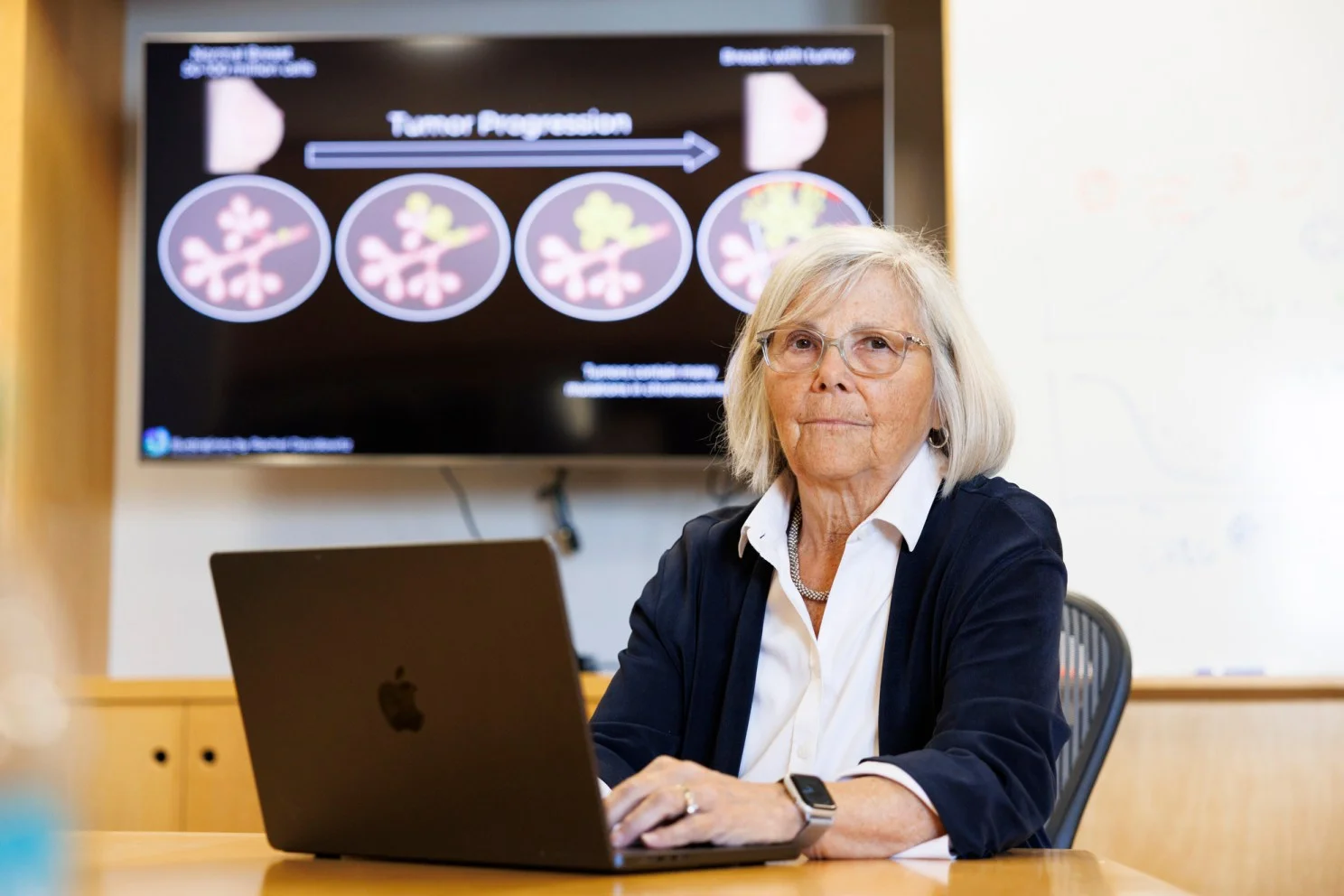
Joan Brugge's academic journey took an unexpected turn during her sophomore year at Northwestern University, dictated by a life-altering phone call. As she was preparing for a future in teaching mathematics, the news from her family shifted her focus completely. Her sister had been diagnosed with a malignant brain tumor, a revelation that prompted her immediate return to her hometown of Cincinnati.
The situation was dire. Brugge’s sister, only 21 years old, underwent a series of radiation treatments that ultimately affected her cognitive function, reducing her to a state where she could no longer care for herself. Tragically, less than a year after her diagnosis, her sister passed away. This heart-wrenching experience sparked a quest for answers. Brugge began questioning the medical professionals treating her sister, seeking insight into the causes of such a devastating illness.
"The doctors told us they didn’t know the cause, but they were beginning to investigate potential links with viruses," Brugge recalls. This revelation marked the beginning of her foray into the scientific community. Returning to Northwestern, she requested to conduct an independent study on the relationship between viruses and cancer.
This initial engagement with scientific literature captivated Brugge and shifted her career trajectory away from mathematics to cell biology. Today, she holds the position of the Louise Foote Pfeiffer Professor of Cell Biology at Harvard Medical School and serves as director of the Ludwig Center. Her role embodies the intersection of interdisciplinary research dedicated to understanding and combatting cancer.
Despite her earlier ambitions, Brugge reflects positively on the redirection of her career. "I enjoyed solving mathematical problems, but I think I would have struggled with advanced concepts," she said, revealing her eagerness to tackle complex biological puzzles instead.
Her academic path shifted from mathematics to biology, culminating in a Ph.D. in virology from Baylor College of Medicine. During her postdoctoral fellowship in the 1970s, Brugge contributed to a pivotal discovery in cancer research. Alongside renowned scientists Harold Varmus and Michael Bishop, she helped unveil that a cellular gene—SRC—could transform into a tumorigenic agent when hijacked by a virus. This breakthrough illuminated how normal cellular processes could become erratic and lead to cancer.
"Discovering that SRC was involved in various cellular functions helped us realize that simply targeting it might not yield a singular cure for cancer," Brugge explains. Her perspective has evolved into understanding cancer as a multifaceted disease, one that requires a broad exploration of cancer pathways to discover effective treatments.
Brugge’s career has seen her transition between academia and industry. She held academic positions at SUNY-Stony Brook and the University of Pennsylvania before working as the scientific director at ARIAD Pharmaceuticals. She rejoined academia at Harvard Medical School in 1997, serving as chair of the cell biology department from 2004 to 2014 before co-directing the Ludwig Center.
Throughout her professional journey, Brugge’s personal experiences have remained a core motivator. "Witnessing what my family and my sister endured propelled me into research," she shares. This drive deepened following the loss of her mother to ovarian cancer in 1998, encouraging her to focus on research that examines human tumors both before and after chemotherapy.
Her hope lies in the application of advanced methodologies, including 3D organoid cultures and single-cell analysis, to better understand cancer cells' resistance to treatments. These strategies allow for a more realistic representation of tumor environments, moving beyond traditional Petri dish cultures.
Brugge is particularly focused on the BRCA1 and BRCA2 mutations that are notorious for their association with breast cancer. "We believe we can identify the cells that may precede cancer development, understand what changes they induce, and pinpoint their vulnerabilities," Brugge notes, emphasizing the goal of intercepting cancer progression at an early stage.
Nonetheless, navigating the landscape of cancer research is fraught with challenges, primarily the issue of funding. "The funding landscape can be discouraging, especially in times of budget cuts. It's tough when you're on the verge of significant breakthroughs," she remarks. Last year, her laboratory faced substantial federal funding losses, prompting them to explore private funding solutions to continue their work.
Despite these hurdles, Brugge remains hopeful about the future of cancer research, particularly regarding immunotherapy advancements. "There’s tremendous potential in checkpoint inhibitors, which activate immune responses in certain tumors, but we still have a long way to go in understanding how to manipulate immune systems in resistant cases," she acknowledges.
In moments of doubt or when faced with obstacles, Brugge draws strength from her sister's memory. "She’s always on my mind, reminding me why this work is so vital," she concludes, embodying the personal commitment that pervades her research efforts.



Discussion
Sign in to join the discussion.