Benjamin Franklin's reputation as a scientist played a pivotal role in shaping American independence and his diplomatic successes during the Revolution.
Benjamin Franklin remains a pivotal figure in American history, revered for his contributions as a diplomat, printer, and inventor. However, historian Joyce Chaplin argues that Franklin's identity as a scientist was instrumental not only in his personal ascent but also in the fight for American independence. This multifaceted reputation provides a unique lens through which we can examine the interplay between scientific discovery and political change.
Scientific Reputation Amid the Enlightenment
In the 18th century, the Enlightenment sparked a cultural shift in Europe, elevating the status of science within society. Philosopher and intellectuals advocated for rational thought and empirical evidence, which dramatically changed how knowledge was perceived. Chaplin, who holds the James Duncan Phillips Professorship of Early American History, points out that Franklin recognized this burgeoning interest and capitalized on it effectively. His 1751 publication, “Experiments and Observations on Electricity,” not only showcased his inquisitive mind but also cemented his reputation as one of the era's foremost scientific thinkers. This recognition proved advantageous during the tumultuous years of the American Revolution, providing him with social and political leverage.
Franklin's work in the field of electricity, particularly his investigations into its nature and behavior, helped him stand out. In an era where scientific authority was highly respected, Franklin's expertise fortified his position against a perceived tyrannical monarchy. This was not merely a personal victory; it acted as a catalyst for a broader political revolution that would reshape the nation. Chaplin's insights suggest a fascinating link between scientific inquiry and the ideological underpinnings of the Revolution.
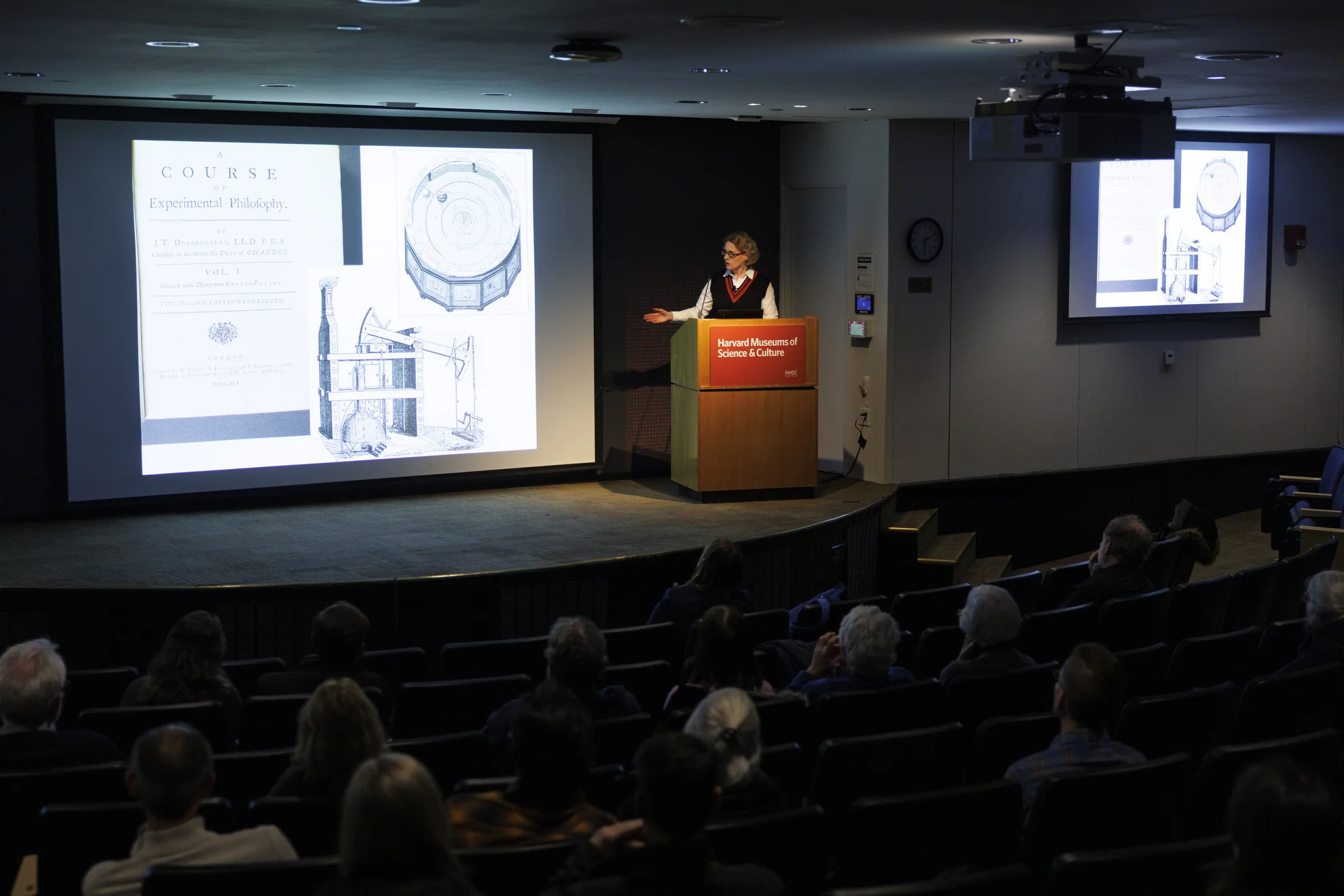
At a recent event celebrating the 250th anniversary of the Declaration of Independence, held at the Geological Lecture Hall, Franklin's scientific achievements were highlighted, illustrating how they intersected with the political climate of his time. Science wasn't viewed solely as a theoretical pursuit; it was seen as a tool for empowerment.
“Franklin was interested in science because he was ambitious and knew he needed some extraordinary accomplishment to achieve any kind of prominence.”
Joyce Chaplin
A Journey from Printer to Principal Scientist
Born in Boston in 1706, Franklin moved to Philadelphia at 17 to forge his path as a printer. His early career choices were pivotal; they set the stage for his scientific ambitions. His journey took him to London, where his yearning to meet Isaac Newton fueled a profound interest in science. Chaplin notes that Franklin realized the societal impact of scientific reputation during this period, understanding that "a reputation in science" could elevate one's status significantly. This was the age when scientific icons weren’t just revered; they were often transformed into symbols of enlightenment and progress.
Upon returning to Philadelphia, Franklin quickly established himself as a notable printer, purchasing “The Pennsylvania Gazette” in 1729 and launching “Poor Richard’s Almanack” in 1732. This publication not only showcased his literary talents but also reflected his fascination with scientific phenomena, often incorporating meteorological insights. His efforts to foster scientific inquiry were proactive; he established the Library Company of Philadelphia in 1731, inspired by the Royal Society of London, and co-founded the American Philosophical Society. These organizations played essential roles in promoting science and scholarship in the colonies, creating a community of knowledge-sharing that was vital for the intellectual climate of the time.
Breaking New Ground with Electricity
Franklin's groundbreaking work with electricity, epitomized by the infamous kite experiment, earned him widespread acclaim across the Atlantic. His fame wasn't limited to the colonies; as Chaplin remarks, it extended “into Russia and through the Americas, including Spanish and Portuguese colonies.” This broad recognition illustrates that Franklin's scientific contributions were international in scope, influencing thinkers and policymakers beyond the borders of the emerging United States.
The German philosopher Immanuel Kant characterized Franklin as a modern Prometheus for his ability to harness electricity, suggesting a significant defiance of natural laws. This theme resonates with Mary Shelley, who arguably drew inspiration from Franklin when creating the character of Victor Frankenstein. The connection between Franklin and Shelley’s narrative highlights not only the anxieties surrounding the advancements of science but also the moral and ethical considerations that came with such power. It's a nuanced perspective that captures Franklin’s complexity not just as a scientist but also as a harbinger of the repercussions of scientific ambition.
Political Ascendancy Through Scientific Credibility
As Franklin's recognition grew, so too did his political influence. In 1753, he became deputy postmaster general for North America, which was a strategic position allowing him greater access to communications across the colonies. His subsequent election to the Pennsylvania assembly and representation at the Albany Congress marked a significant shift in his career—an opportunity that had eluded him while he was merely known as a printer. Here's the thing: his ascent wasn't just about personal ambition; it was intertwined with the rising importance of scientific legitimacy during critical political discussions.
During the American Revolution, Franklin’s scientific stature proved invaluable for his diplomatic missions. His ability to impress French officials played a crucial role in garnering support from France for the revolutionary cause. This support was instrumental for the fledgling nation, and Franklin's contributions were pivotal. He also played a key role in drafting both the Declaration of Independence and later the Constitution, with his political power heavily rooted in his scientific achievements. He wasn't just a figurehead; he was a cornerstone of the political landscape.
The Lasting Impact of Franklin's Scientific Legacy
Chaplin asserts, “I do think the United States of America would have come into existence even if Benjamin Franklin never existed, but I believe most Americans today are unaware of the significant role Franklin's scientific reputation played starting in 1776.” This statement underscores an important insight: while Franklin was not the sole architect of American independence, his scientific credentials significantly impacted the nation’s foundational moments. Perceptions of science at that time weren’t mere academic pursuits; they were crucial in shaping political realities.
Significance and Future Outlook
What this means for you—whether you're an educator, a student, or someone simply interested in history—is that the interplay of science and politics has always been relevant. Franklin's legacy serves as a reminder that scientific inquiry can transcend the lab, influencing societal structures and norms. Today, we see similar dynamics at play in various fields, from climate science to technology policy. Understanding how Franklin navigated this environment may offer lessons as we confront complex global issues where scientific advancements intersect with public policy.
This nuanced view of Franklin's legacy signifies that the scientific community holds a position of influence that should not be underestimated. While his time has passed, the implications of his work are still felt today, inviting us to consider how scientific reputations can shape our societal and political frameworks. As we navigate the future, Franklin’s journey reminds us to remain vigilant in appreciating the potential consequences that scientific progress can bring.



Discussion
Sign in to join the discussion.