Megan Kate Nelson's new book dismantles traditional myths of westward expansion, highlighting a rich tapestry of diverse voices and experiences.
Challenging the Frontier Narrative
Megan Kate Nelson's exploration of the American West revisits long-held misconceptions about who shaped the region. Growing up in Littleton, Colorado, Nelson encountered a stereotype that assumed all Westerners led rustic lives, a view she quickly dispelled by recounting her suburban upbringing. She highlights a contrast often overlooked—while the rugged individual is celebrated, many who lived in the West embraced a far more complex existence. Her experiences form the groundwork for rethinking the dominant narrative around westward expansion, which often oversimplifies the complexity of historical figures and their stories. This insistence on nuance is timely as popular media continues to perpetuate one-dimensional portrayals of American history.
New Perspectives on Historical Figures
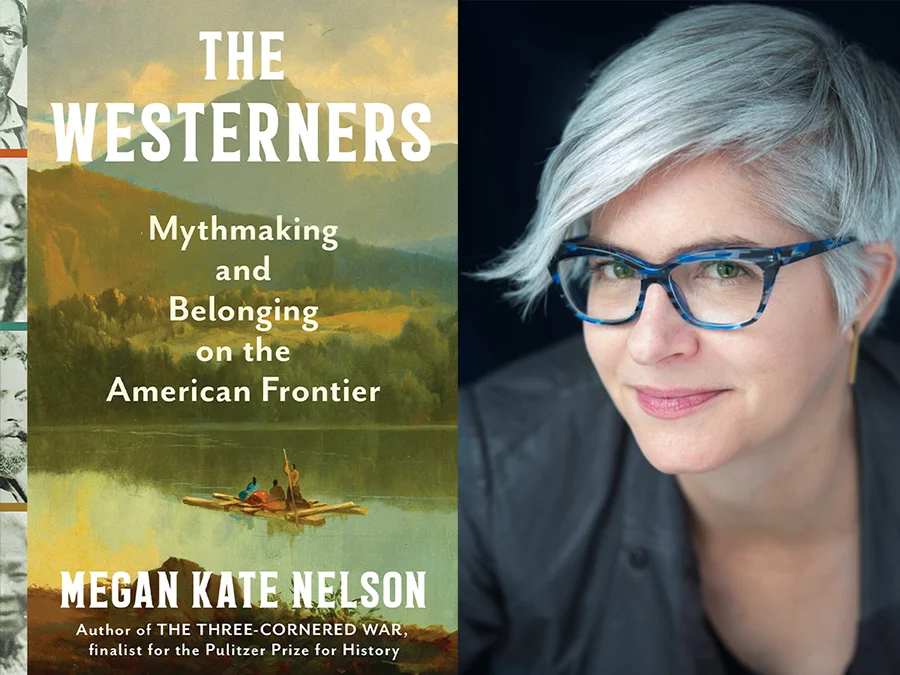
In her book, “The Westerners: Mythmaking and Belonging on the American Frontier”, Nelson weaves together the lives of seven main characters whose experiences reinvigorate the narrative of American westward expansion. Each figure—some familiar, like Sacagawea, and others lesser-known, such as saloon owner Maria Gertrudis Barceló—adds layers to the collective story of the West. Nelson's choices are deliberate; they serve to disrupt the monolithic portrayal of pioneers as primarily European settlers. By bringing in varied voices, she illustrates how the West was not just a stage for Euro-American exploration but a confluence of diverse cultures and viewpoints.
The Interconnected Lives of the Protagonists
Nelson intricately connects these individuals, revealing how their paths intersected throughout the 19th century as the U.S. expanded. Sacagawea's story, often limited to her role in aiding Lewis and Clark, is presented in a broader context, emphasizing her earlier life experiences marked by movement and complexity. By exploring her life before the famous expedition, Nelson underscores the importance of understanding historical figures in their own right rather than simply as vessels for others' stories. This refreshing perspective invites readers to acknowledge that the legacies of these men and women were shaped by their interactions with each other and their environments.
Connecting the Dots of Frontier History
One standout figure is Jim Beckwourth, described by Nelson as the “Forrest Gump of the 19th century.” His journey—one that included fur trading, collaborations with the Crow Nation, and pivotal roles during the Gold Rush—creates a narrative thread that links multiple stories together. This highlights the notion that, despite the vastness of the West, the 19th-century population density made interactions among different groups quite likely. Beckwourth's diverse experiences mirror the lives of many who at the time navigated a world rife with both opportunity and conflict. It's a reminder that, for all the idealized images of solitary homesteaders, community and interconnectedness were often at the heart of survival.
A Multi-Faceted West
Maria Gertrudis Barceló exemplifies the powerful women who emerged in this era, demonstrating how a single individual shaped the economic landscape as a saloon owner in Santa Fe. Her life reflects the constant influence of people passing through her community—traders, soldiers, and settlers—all of whom left an indelible mark. As ownership of the territory shifted from Spanish to Mexican to American control, Barceló's saloon was both a refuge and a marketplace, revealing how women often found ways to assert their agency even in restrictive societal structures. This nuanced portrayal of women in the West challenges traditional narratives that often marginalize their contributions, showing how they were foundational to the socio-economic ecology of the frontier.
The Diversity of Experiences
The narrative furthers with characters like Polly Bemis, a Chinese immigrant whose journey from trafficking to semi-celebrity in rural Idaho sheds light on the underrepresented Chinese presence in the frontier mythos. Nelson observes that this exclusion plays a role in perpetuating the narrow narrative of the West that has long dominated historical discussions. Bemis’s story exemplifies a broader issue: the silencing of marginalized voices that contributed richly to the fabric of Western life. If you're working in this space, understanding this complexity is critical for seeing how historical narratives are constructed and who gets celebrated in them.
Debunking Traditional Myths
Nelson's work dismantles the archetypal rugged individualism of the Western myth. Instead, it portrays a tapestry of interconnected lives that reveal a region shaped not solely by a singular narrative but by a multitude of experiences, identities, and cultural influences. Through this lens, the American West becomes a richer, more complex tableau reflecting its diverse history. (And this is the part most people overlook.) These stories remind us that history isn't just a series of isolated events but a web of interactions that resonate through time. It forces us to question our inherited narratives and consider who remains outside the frame—an important reflection in a society often fixated on traditional success stories.
Looking Ahead: Implications of a Revised Narrative
The figures in Nelson's narrative challenge conventional notions, offering insights that contribute to a fuller understanding of how the American West evolved into the culturally and politically intricate region it is today. By presenting a more inclusive history, she not only honors those often left out of the story but also invites readers to rethink their own perceptions of this iconic American landscape. This shift isn't just about honoring the past; it’s an invitation to interrogate how we shape the future. Reconceiving the West invites a dialogue on the stories we tell ourselves and how they reflect—and influence—current societal values and dynamics.



Discussion
Sign in to join the discussion.