Arthur Kleinman argues that information cannot teach us how to live; wisdom grows through caring for others, facing loss, and questioning how to help.
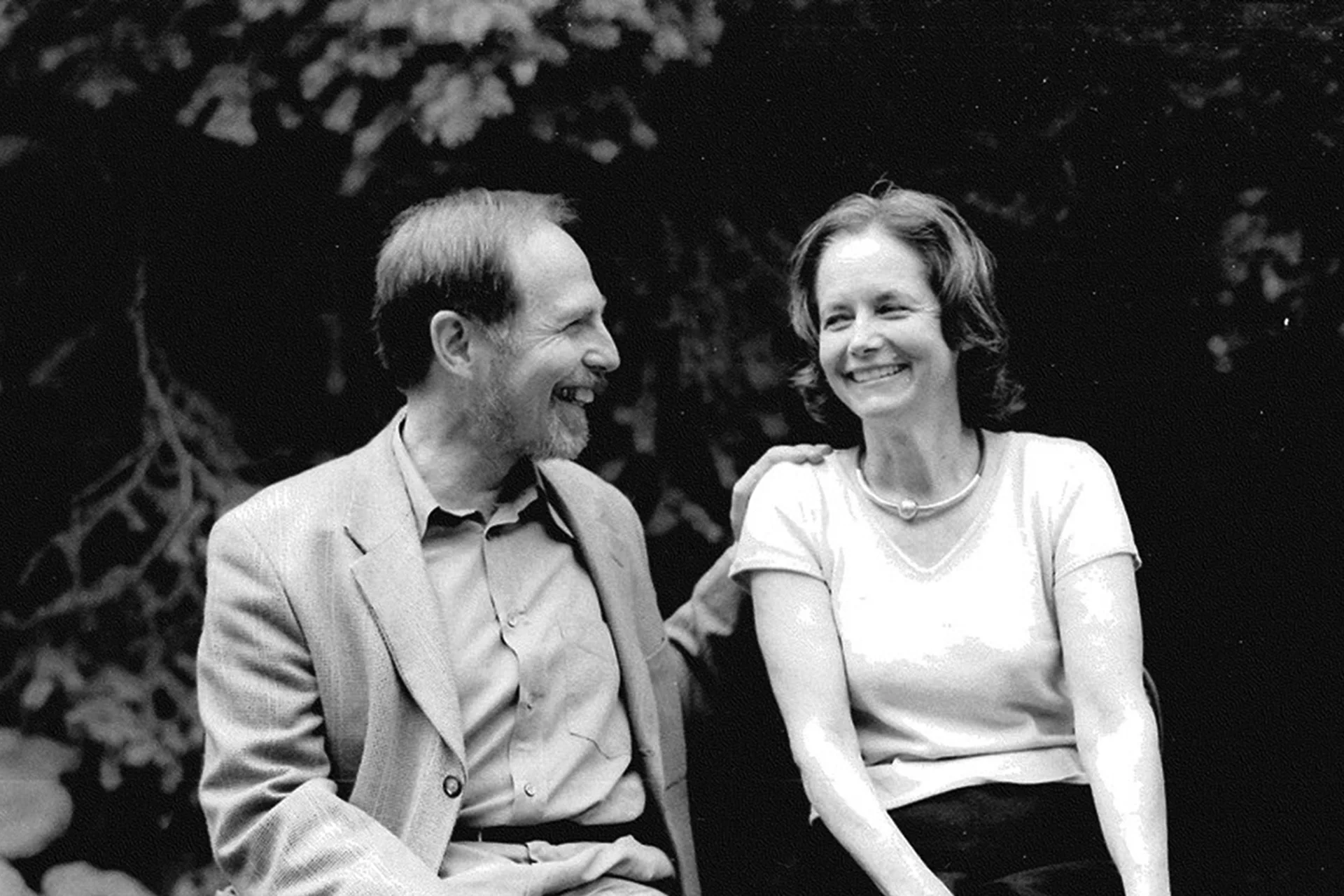
Arthur Kleinman’s measure of wisdom: how we care for one another
Arts & Culture · October 22, 2026 · Long read

Arthur Kleinman’s account of wisdom begins with a limit: information can help us do things faster, but it can’t tell us how to live. His answer, shaped by caregiving and loss, is that wisdom grows through the work of attending to other people—and through doubt about whether our efforts to help will actually do good.
This excerpt, “The Quest for Care,” comes from The Practice of Wisdom: Five Quests, written by David Carrasco, Neil L. Rudenstine Professor of the Study of Latin America; Kleinman, Esther and Sidney Rabb Professor of Anthropology, Professor of Medical Anthropology in Global Health and Social Medicine, and Professor of Psychiatry; Stephanie Paulsell, Susan Shallcross Swartz Professor of the Practice of Christian Studies Emerita; and Michael Puett, Walter C. Klein Professor of Chinese History and Anthropology. Published by The Belknap Press of Harvard University Press, the book grew out of the authors’ long-running course, “Quests for Wisdom: Religious, Moral, and Aesthetic Experiences and the Art of Living in Perilous Times.”
Information can’t tell us how to live
Digital technology has made some things astonishingly effective: weather forecasts are more accurate, distant friends are a device away, and vaccines for COVID-19 were developed rapidly. But efficiency and wisdom aren’t the same thing. We still need experience-based knowledge to make sense of strong feelings, face tragedy and grief, find meaning in relationships, pursue joy, and prepare for death.
Aristotle called this practical understanding phronesis, and regarded it as the highest form of knowledge: knowing how to live. Today’s flood of technological information can make life more efficient without making it more purposeful, ethical, or beautiful. Information alone can’t supply practical wisdom.
But AI complicates that claim. Systems such as ChatGPT can gather, recombine, and rephrase ideas from wisdom traditions and from people trying to make sense of their lives. They can pass along someone else’s insight. The harder question is whether a machine can seek meaning through lived experience, then apply what it finds in the world.
That remains uncertain. Philosophers, engineers, and business leaders are working to narrow the distance between machine learning and the human search for ways to enrich, repair, and reshape lived experience. We still have to work out what it would mean to close that distance. Kleinman’s tentative view is that if machines ever attain wisdom, they’ll do so by becoming more fully human.
The pandemic made plain what people already knew: life contains danger and uncertainty we can’t always control. Poor people and those subjected to racial and other forms of stigma have fewer resources to meet those threats, and face them more often and with worse outcomes. But vulnerability belongs to everyone.
People respond by trying to stay safe, prevent harm, and care for one another. In the post-pandemic years, political disorder, inaction on the climate crisis, wars, and other violence have kept that work urgent. COVID-19 didn’t create our exposure to danger. It made an enduring human condition harder to ignore.
Seeking wisdom is one way we respond. It can help us decide what to do and when, but also help us fit necessary actions into the shape of a life—to understand why they matter. Kleinman describes learning this through his wife Joan’s early-onset Alzheimer’s disease. As she declined, he searched for ways to help himself and his family endure each day. It was the most demanding decade of his life. He felt they might be overwhelmed and give up, but they had to find a way forward despite their powerlessness and sense of inadequacy. Many people know, or will know, a version of that struggle.

Other turning points had also sent Kleinman looking for guidance. As a medical student, he considered leaving medicine to become a laborer and pursue his ambition to write. A blue-collar mentor, who had spent decades working in New York’s foul sewer system, challenged the romantic picture Kleinman had made of that choice. Later, Joan and Kleinman sought a way to marry despite opposition from their families and faith communities. He also faced the decision to leave clinical psychiatry for social medicine.
In each case, he looked for stories, ideas, and words that could illuminate the decision from within: what to do, how to do it, and why it felt necessary. Wisdom, for him, had to reach into ordinary life.
After Joan died, nearly 46 years after they married, Kleinman faced a different search: how to live with the loss of his partner, collaborator, mentor, and lover. Grief taught him something his research and clinical work hadn’t fully shown him. Bereavement continues care, though its object becomes memory.
In mourning, memories are repeatedly examined and shaped into stories we tell ourselves and other people. That work can help contain emotions that threaten to overwhelm us. Memory is also physical: gut and muscle memory, the body’s own knowledge. Kleinman says this embodied wisdom can help a person move through grief and begin again.
In 2022, he was struck by another devastating loss: the death in Rwanda of Paul Farmer, his former student, close friend, and colleague. Kleinman sat motionless for two hours, unable to accept a world without Farmer’s moral clarity, beauty of being, and sustaining friendship. He still returns to their shared history. “Replaying,” he writes, is the wrong word: his grief remains unfinished, a way of inhabiting the world, as his grief for Joan does.
“The memories of both are not just alive within me; they are me.” To care for those memories and live within them, Kleinman says, is to bear witness to the meaning of his life. They give shape to his vitality and his continuing journey.
The memories of both are not just alive within me; they are me. Caring for and living within those memories is my testimony to the meaning of my life.
Grief shows how the search for meaning, the desire for some control, and the effort to make or remake a life can change us. Those human experiments draw on emotion, moral judgment, aesthetic feeling, and religious experience—and alter life itself.
The course behind The Practice of Wisdom wasn’t designed to teach a fixed doctrine. Its four authors didn’t claim to possess special wisdom or believe they could identify one universal kind. What counts as wisdom, they thought, depends on the circumstances and the person searching.
Their aim was to study many different quests and learn from them. They paid particular attention to times of danger: historical breakdown and communal threat, as well as private anguish and despair, where failure and transcendence are both possible.
COVID-19 moved the course online, while the racial justice movement and the political and cultural reaction to it reshaped the discussions. The pandemic gave the teaching an anxious immediacy. The movement sharpened the authors’ attention to colonial legacies and neocolonial structures that constrain dispossessed people. The backlash tested their values and forced them to reconsider how they would respond.
Across their different disciplines and reading lists, the authors came to see care as central to the search for wisdom. They wanted to understand how care is practiced and experienced emotionally, morally, and religiously. What they found wasn’t a sentimental celebration of heroism or “saving grace.” It was a clear-eyed account of human needs, the damage that causes suffering, and the difficult work of repair and healing. Care, they concluded, is a shared way of seeking wisdom about how to live.
Care needs judgment—and doubt
Kleinman’s definition is grounded in the everyday: wisdom means caring about how people live, especially those close to us. Care happens in a small world of family, friends, and some strangers we meet face to face. It means helping others, responding to their pain, shielding them from shame and humiliation, and loosening the constraints they face. That work changes the caregiver, too.
At a dinner after Toni Morrison delivered the Ingersoll Lecture at Harvard Divinity School, she told Kleinman and David Carrasco that criticism of racism and failed social projects never led her to dismiss people’s efforts to do good. She saw those efforts as among the few meaningful ways people can push back, however imperfectly, against the accumulated harms of history and daily life.
Good intentions can still hurt people. Thornton Wilder’s Depression-era novel Heaven’s My Destination follows a naive, stubborn, impractical young man whose religion drives him to improve the world. Wilder sets his idealism against the compromises and preoccupations of middle-class life in the American Midwest. Everyday failures first wear down the protagonist’s uncritical zeal, then help him find a precarious balance between principle and practical demands.
The character lacks phronesis. He imposes his notion of the good on ordinary people without understanding their lives, and his interventions cause harm. The novel’s warning is sharp: abstract moral certainty can break relationships and lives when it ignores history, context, and the compromises that let people live together. A search for wisdom needs doubt; the search itself must be questioned.

Graham Greene makes a related point in The Quiet American. The novel portrays the disastrous effects of American efforts to impose simplistic political and economic development on poor societies such as prewar Vietnam. In Greene’s account, the Americans try to “do good” through an illusory democracy that leaves people with little room to shape what good means for themselves.
So a call to do good isn’t wisdom by itself. Care has to grow through local, face-to-face relationships and sustained accompaniment. It also demands a clear view of human weakness and the unintended damage that purposeful action can cause. Ideals need to meet practical judgment—and be tempered by doubt.
That is the kind of care Kleinman sees as a human wisdom for living. Paul Farmer, the physician and medical humanitarian who died in 2022, made it the basis of his life and clinical work.
The deepest lesson here is that caregiving can remake the caregiver. Joan shaped a life of care through ordinary acts: lighting candles at dinner, reading together, planning picnics, exploring outdoors, playing games, and bringing French and Chinese traditions into family life. She did it on a tight budget, with warmth and a light touch. Those routines gave her family joy and taught them how to offer it to others. They also prepared them to live without her, though the passage doesn’t explain whether she knew her time would be short.
Her husband describes a long transformation. Raised amid violence and a harsh code of masculinity, he carried aggression and fierce individualism into academic life, where work became self-absorption. Joan’s love helped him become a more generous husband, father, and mentor. His account makes a pointed claim: care isn’t only a virtue one believes in. It’s a practice learned through family, through tending to others, and through letting them tend to you.
Paul Farmer offered a parallel example. Both he and Joan, the writer says, devoted themselves to being useful to people in need. Caring outwardly also led him inward, toward what he calls wisdom of the soul. It’s a personal conclusion, but a persuasive one: the daily work of care can change not just how we treat others, but who we become.
Copyright © 2026 by the President and Fellows of Harvard College. Used by permission. All rights reserved.
Also in this series:
Why a fight might be just what your group needs — Priya Parker says reckoning with buried tensions can help reconnect groups to their values, identity, and one another. September 29, 2026.
Total keto or veganism? Daniel Lieberman considers how humans evolved to eat. — Excerpt from evolutionary biologist’s new book, Fed Up. August 10, 2026.
Why we need to break the grip of ‘oldigarchy’ — A legal historian argues that older Americans hold power and wealth while lacking urgency to address the nation’s pressing problems. August 5, 2026.
When ‘base’ of Republican Party shifted — In his memoir, Lamar Alexander traces how the Republican base expanded from elected officials and voters to include more extreme activist groups, worsening polarization. June 22, 2026.
Constitution was made to be amended. So what’s stopping us? — Jill Lepore argues in her Pulitzer-winning history that the Constitution needs updating and traces the obstacles to doing so. June 10, 2026.
SCOTUS might surprise you — Sarah Isgur argues that distrust of the justices reflects tribalism more than changes in how the judiciary works. June 2, 2026.
Discussion
Sign in to join the discussion.